Chest Press Machine Buying Guide: Contents
- Define the commercial use case
- Compare machine designs
- Evaluate adjustment and user fit
- Plan layout and accessibility
- Inspect construction and serviceability
- Use a controlled buying process
- Frequently asked questions
A chest press machine for a commercial gym should be selected as part of a complete strength plan, not as an isolated purchase. The right choice matches the target users, training purpose, available floor area, adjustment range, traffic level, maintenance capability, and surrounding equipment.
This guide gives facility owners, distributors, developers, and project buyers a practical way to compare a chest press machine without relying on brand claims or a single specification. Final selection should follow the manufacturer’s current instructions, applicable local requirements, and a documented review by the people responsible for training, accessibility, installation, safety, and service.
Define the Commercial Use Case Before Comparing Models
Start by documenting who will use the chest press machine and what role it must play. A general membership gym may prioritize intuitive setup and broad adjustability. A hotel or apartment fitness room may value a compact footprint and simple instruction. A training center may require a different resistance profile, higher throughput, or integration with a wider strength circuit.
Estimate peak demand rather than average attendance alone. Note the busiest training periods, expected session length, supervision level, user experience, and whether members are likely to queue. One machine can appear adequate on a floor plan but become a bottleneck when several programs depend on the same movement.
Define the movement outcome in plain language. Decide whether the machine should provide a horizontal, slightly inclined, or more upright pressing path; whether independent arms matter; and whether the equipment must complement free weights, plate-loaded equipment, or other selected-strength stations. These choices affect user expectations and the balance of the strength zone.
Keep the chest press machine decision connected to the broader commercial strength training equipment plan. Review push, pull, lower-body, core, and functional options together so one popular station does not crowd out a more complete program.
Write measurable acceptance criteria before requesting quotations. Include intended facility type, operating hours, user profiles, required adjustments, available doorway and route dimensions, electrical needs if any, service access, documentation, installation responsibilities, and the evidence the supplier must provide.
Compare Chest Press Machine Designs by Operating Need
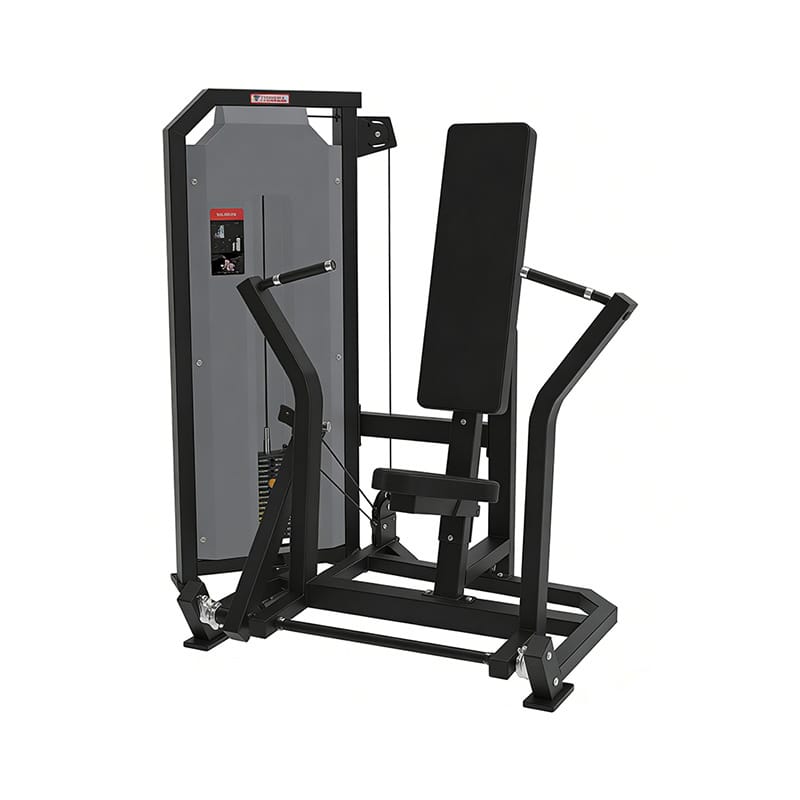
Selected-strength and plate-loaded designs serve different operating models. A selectorized chest press machine allows quick resistance changes and can support a straightforward circuit. A plate-loaded unit gives users direct control over plates and may suit facilities that already manage a free-weight area. Neither format is automatically better; the correct choice depends on supervision, user behavior, traffic, storage, and maintenance.
Examine the starting position and pressing path. Users should be able to establish a stable setup without being forced into an extreme shoulder position. Ask the supplier to explain how the seat, grips, linkage, and movement path work together across the intended user range. A catalog photograph cannot verify fit.
Independent arms can support bilateral or unilateral use, while linked arms can offer a simpler feel. Consider how the design affects instruction, user confidence, inspection, and service. Avoid assuming that more adjustment or more moving parts always creates a better commercial experience.
Compare a vertical model such as the Corexo U301 vertical chest press with a seated design such as the Corexo M301 seated chest press. Use product pages as a starting point, then confirm current dimensions, adjustments, loading method, installation information, and service documentation with the supplier.
The ISO 20957-1:2024 overview describes general safety requirements and test methods for stationary training equipment. Strength equipment also has equipment-specific provisions in the ISO 20957 series. Ask exactly which standards, editions, classifications, and test evidence apply to the offered model; do not treat a logo or broad statement as complete verification.
Evaluate Adjustment, Contact Points, and User Fit
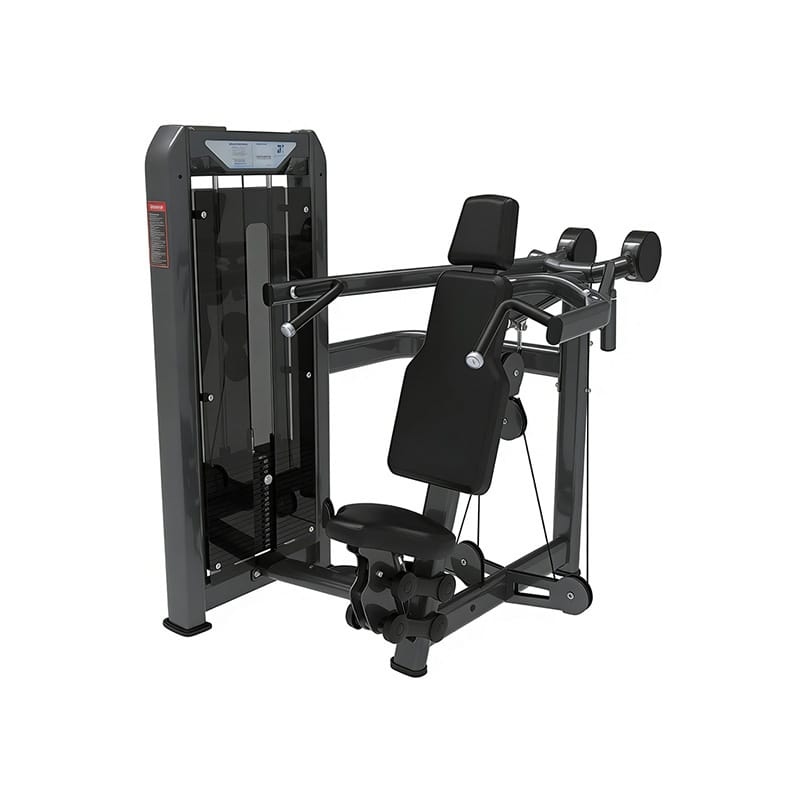
A chest press machine should support repeatable setup for the intended population. Review seat adjustment range, adjustment increments, grip options, back support, foot placement, and visibility of instructions. Check whether users can change settings while maintaining control and whether adjustment points are understandable to first-time visitors.
Run a fit review with people representing the anticipated range of body sizes and abilities. Record whether each person can approach the station, transfer if needed, establish a stable position, reach the handles, select resistance, begin the movement, finish the set, and exit without awkward contact with nearby equipment.
Grip shape and orientation influence comfort, but preferences vary. Multiple grip positions may help a mixed membership; they also require clear instructions and a design that avoids confusing setup. Evaluate the complete movement rather than judging a handle in isolation.
The resistance change should be visible and controlled. For a weight-stack chest press machine, inspect selector access, cable routing, stack guarding, labels, and potential pinch areas. For plate-loaded equipment, review loading height, plate storage, unloading behavior, and the likelihood of plates obstructing circulation.
Do not promise that one machine is suitable for every user or condition. Facilities should provide orientation and qualified guidance appropriate to their services. The ACSM facility standards and guidelines overview identifies facility equipment, supervision, operating procedures, emergency planning, and member orientation as connected management topics.
Plan Floor Space, Routes, and Neighboring Stations
Use the supplier’s verified operating footprint, not only the frame dimensions. Add space for adjustment, entry, transfer, spot assistance where applicable, plate handling, cleaning, inspection, and service. Show the full movement envelope and open panels or covers on the layout.
Position the chest press machine so a user does not step backward into a circulation route or another exerciser’s movement area. Keep loose accessories, plate trees, cleaning stations, and power cords out of approach paths. Review sightlines so staff can observe the station without creating an exposed or uncomfortable layout.
For U.S. projects, the U.S. Access Board recreation-facility provisions state that exercise machines and equipment require clear floor space positioned for transfer or use by a person seated in a wheelchair. The advisory specifically notes that clear space beside a shoulder press seat may support transfer, while a wheelchair-usable bench press can require space centered on the operating mechanism. Apply the exact requirements and local code interpretation to the project.
The Access Board’s clear-floor-space guide explains the dimensional building blocks used by the ADA Standards. Accessibility is a layout responsibility, not a label attached to one machine. Coordinate accessible routes, turning areas, doors, controls, and the complete equipment mix.
Mark the proposed chest press machine on a scaled plan and conduct a physical mock-up when the project is tight. Cardboard, tape, or temporary barriers can reveal conflicts that are easy to miss in a two-dimensional drawing. Recheck the plan after final model selection because dimensions can vary.
Inspect Construction, Documentation, and Serviceability
Commercial buyers should evaluate the complete service system around the chest press machine. Review frame construction, finish, upholstery, fasteners, bearings or pivots, cables or belts, pulleys, guards, adjustment mechanisms, labels, and wear parts. Ask how each item is inspected, serviced, and replaced.
Request current manuals before purchase. The documentation should identify installation conditions, anchoring or stability requirements where applicable, inspection points, maintenance tasks, replacement criteria, warnings, parts identification, and authorized service routes. Generic sales sheets are not a substitute for model-specific instructions.
Confirm parts support in writing. Record normal lead times, regional stocking arrangements, part-number control, warranty claim requirements, technical contacts, and the process for discontinued components. A machine that cannot be kept operational may create more business disruption than a higher initial specification solves.
Check cleanability around pads, grips, shrouds, stack areas, and floor contact points. Facility cleaning must not conflict with the product’s material and chemical guidance. Connect routine care to the existing commercial gym equipment cleaning checklist and document any model-specific restrictions.
Create the planned inspection and maintenance record before opening. The OSHA walking-working-surface rule is relevant to U.S. workplaces because it addresses orderly surfaces, intended loads, access and egress, inspection, maintenance, and correction of hazardous conditions. It does not replace equipment instructions, but it reinforces the need to manage the surrounding work environment.
Link service activity to the equipment service log checklist. Give each machine an asset identifier and preserve model, serial number, location, installation acceptance, inspections, reported issues, parts, technician actions, restrictions, tests, and release decisions.
Use a Controlled Chest Press Machine Buying Process
First, issue the same requirements to every shortlisted supplier. Second, require a compliance matrix showing how the offered chest press machine meets each requirement. Third, identify every exception, assumption, optional item, and buyer responsibility. This makes proposals comparable and reduces later surprises.
Evaluate total operating fit rather than choosing from price or appearance alone. Consider delivery, route access, assembly, installation, anchoring where specified, acceptance testing, staff orientation, documentation, cleaning, preventive maintenance, parts, warranty administration, downtime, and eventual relocation or decommissioning.
Use a sample or demonstration when possible. Observe adjustment, entry, starting position, movement, noise, stability, resistance selection, labels, cleaning access, and exit. Record findings consistently and avoid changing criteria after seeing a preferred model.
Plan receiving and acceptance before shipment. The commercial gym equipment receiving inspection checklist can help teams verify identity, visible condition, quantities, documentation, route readiness, exceptions, and controlled storage before installation.
Do not release the chest press machine for use merely because it has arrived. Complete installation according to current instructions, document required checks, confirm surrounding clearances, verify labels and adjustments, train responsible staff, record any exceptions, and authorize return to service through the facility’s approved process.
After opening, review utilization, queues, user questions, repeated adjustments, cleaning time, inspection findings, and service events. Use those observations to improve signage, orientation, equipment mix, and future procurement. Avoid interpreting a single complaint or a high use count without context.
Chest Press Machine FAQ
What type of chest press machine is best for a commercial gym?
The best type matches the facility’s users, program, traffic, supervision, floor space, maintenance capability, and surrounding strength equipment. Compare selectorized, plate-loaded, vertical, inclined, linked-arm, and independent-arm designs against written requirements.
How much space should be allowed around the machine?
Use the verified operating and service envelope for the exact model, then add required routes, transfer space, adjustment access, cleaning access, and local code clearances. Do not plan from frame dimensions alone.
Should a gym choose a weight-stack or plate-loaded chest press?
A weight stack can support quick changes and circuit use. Plate loading can fit facilities that already manage free weights and want a different training experience. Assess operations, storage, supervision, and service rather than assuming one format is universally better.
What documents should a supplier provide?
Request current model-specific installation, operation, inspection, maintenance, parts, warranty, and safety information, plus applicable standards and test evidence. Confirm which documents are included before ordering.
How should the machine be accepted after delivery?
Verify identity, condition, completeness, installation, stability or anchoring where specified, adjustments, labels, movement, surrounding space, documentation, staff orientation, and the facility’s release approval. Record defects and restrict use until resolved.
Turn Product Comparison Into a Reliable Strength Station
A chest press machine is a long-term operating decision. Define the use case, compare movement and loading designs, test user fit, plan accessible space, inspect serviceability, verify documentation, and control receiving and acceptance. That process produces a more defensible decision than choosing from an image or headline specification.
Explore Corexo’s commercial strength training equipment and contact Corexo to discuss project requirements, documentation, layout coordination, and a chest press machine configuration for your facility.