Table of Contents
Introduction
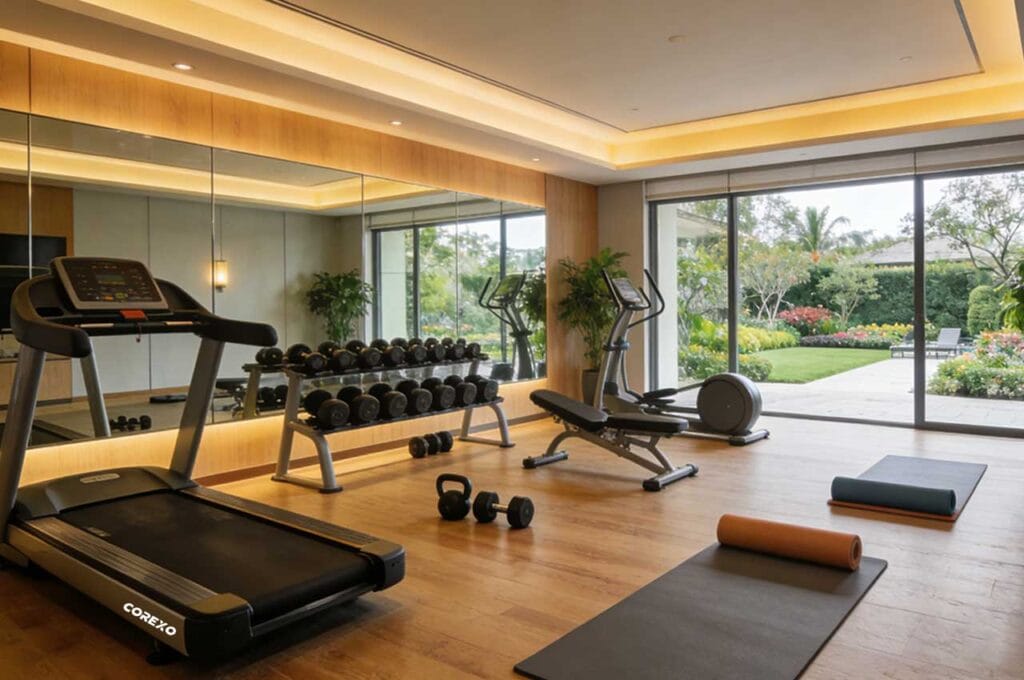
Apartment gym equipment is no longer selected only to fill an amenity room. For developers, property managers, residential communities, serviced apartments, and condominium projects, the fitness area has become an important part of the resident experience.
A well-planned apartment gym can make the property feel more complete, support convenient daily exercise, and strengthen the perceived quality of shared facilities. A poorly planned room may contain attractive machines but still remain underused because the equipment is crowded, noisy, difficult to operate, or poorly matched to residents.
The most effective apartment fitness rooms are not necessarily the largest. They are the ones that provide useful cardio, strength, free-weight, and mobility options within a comfortable and easy-to-maintain layout.
Corexo provides compact and low-noise hotel and apartment fitness equipment for residential and hospitality projects. The following seven planning decisions can help project teams select apartment gym equipment that residents will actually use.
1. Define the Resident Profile Before Selecting Equipment
The first decision should not be which treadmill or strength machine to install. It should be who will use the fitness room.
Resident needs can vary significantly between properties. A city-center apartment serving young professionals may need equipment for short, efficient workouts before or after work. A family-oriented residential community may serve a wider range of ages and fitness levels. A luxury condominium may require a more complete and visually coordinated fitness space.
Relevant questions include:
- What is the typical resident age range?
- Are residents likely to be beginners, experienced users, or a mixture of both?
- Will the gym be used mainly before work, after work, or throughout the day?
- How many residential units share the facility?
- Is the property positioned as standard, premium, or luxury?
- Will residents expect cardio, strength, free weights, or functional training?
- Is the fitness room supervised or unsupervised?
An unsupervised apartment gym should generally prioritize intuitive equipment with simple controls and adjustment systems. Highly specialized machines may have limited value when most residents want familiar and convenient workouts.
The resident profile should determine the equipment list, not the other way around.
2. Balance Cardio and Strength Equipment
Many apartment fitness rooms are designed around several cardio machines and only a small dumbbell rack. Although cardio equipment is familiar and accessible, a cardio-heavy room may not support the complete exercise needs of residents.
The CDC’s physical activity guidance includes both aerobic activity and muscle-strengthening activity. This provides a useful principle for apartment gym planning: residents should have access to both cardiovascular and resistance-training options.
A balanced apartment gym equipment configuration may include:
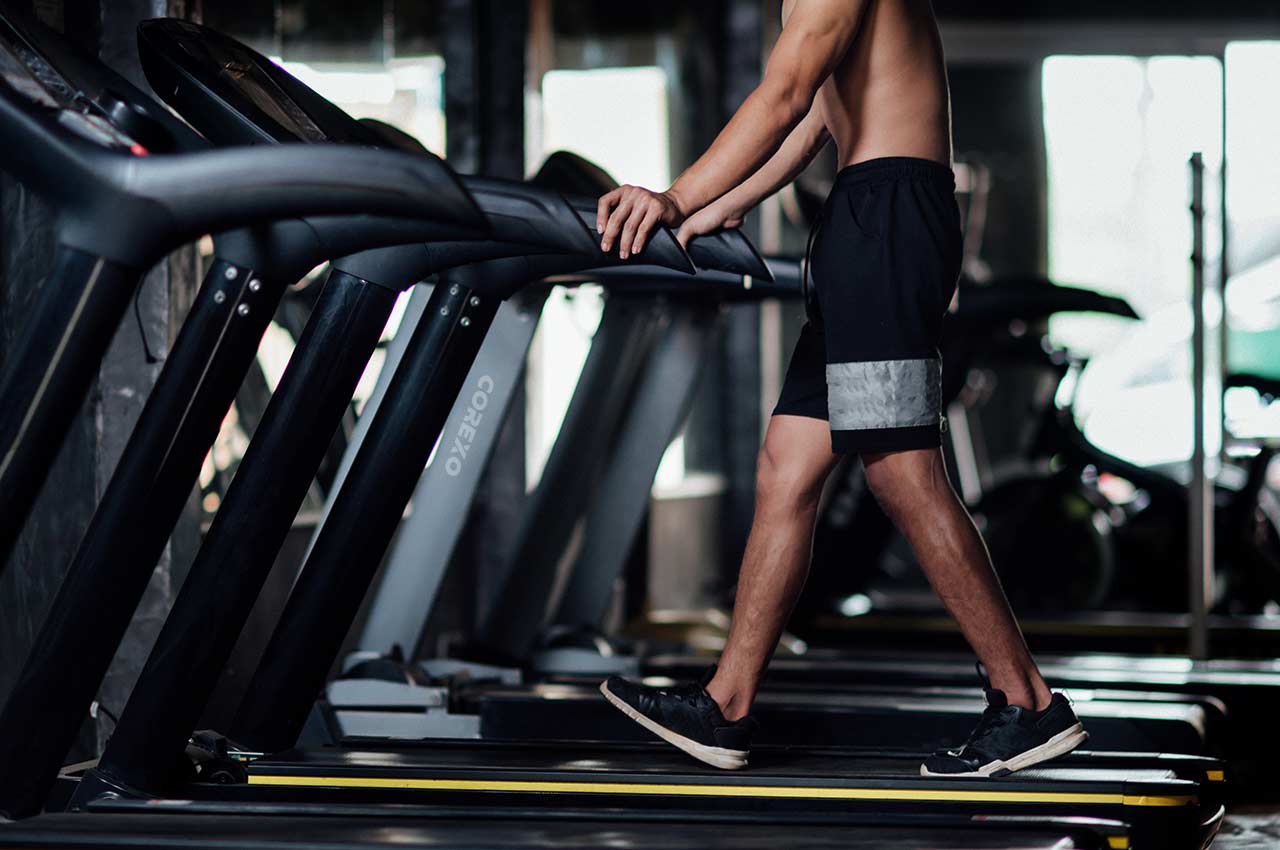
- Treadmills for walking, jogging, and running
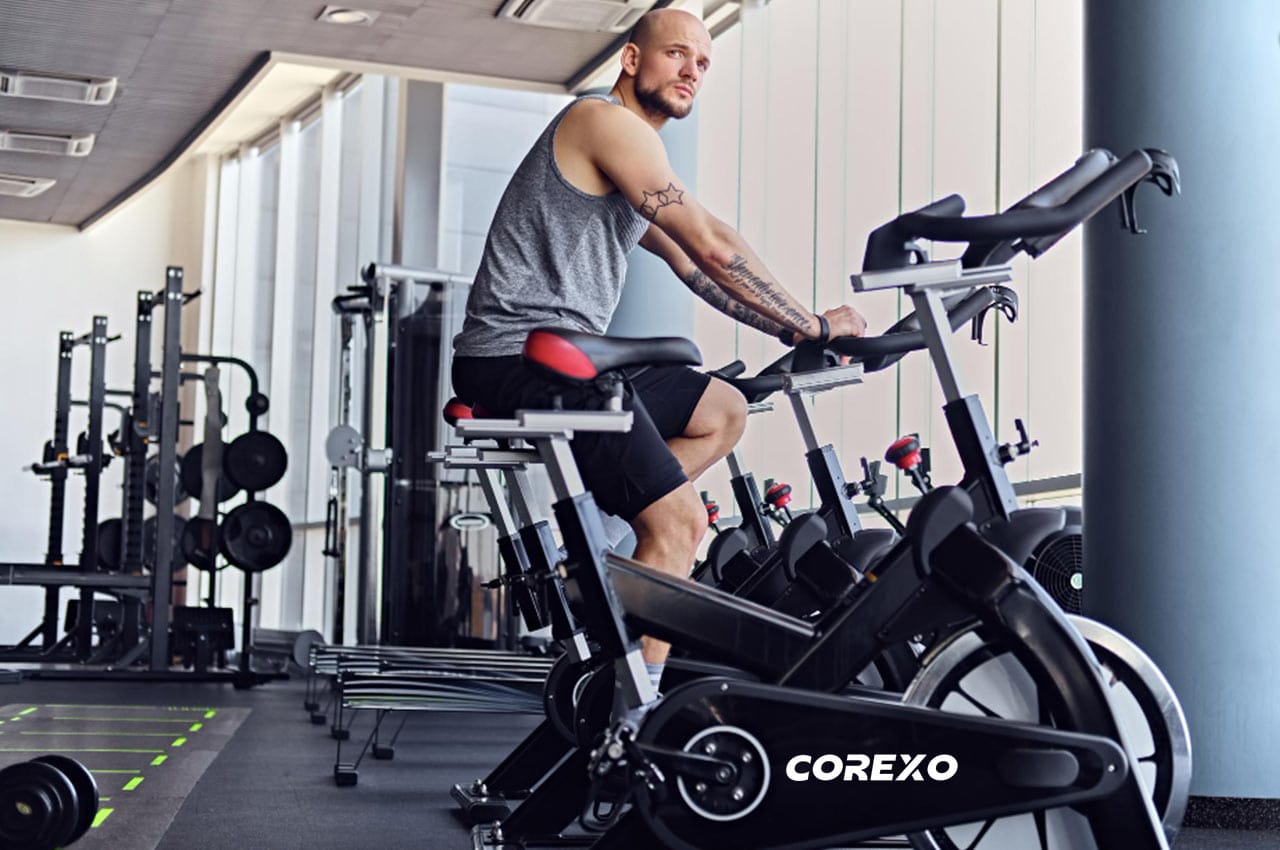
- Exercise bikes for compact, low-impact cardio
- Elliptical machines for full-body, low-impact exercise
- Selectorized strength machines for guided resistance training
- A multi-station machine for several exercises within one footprint
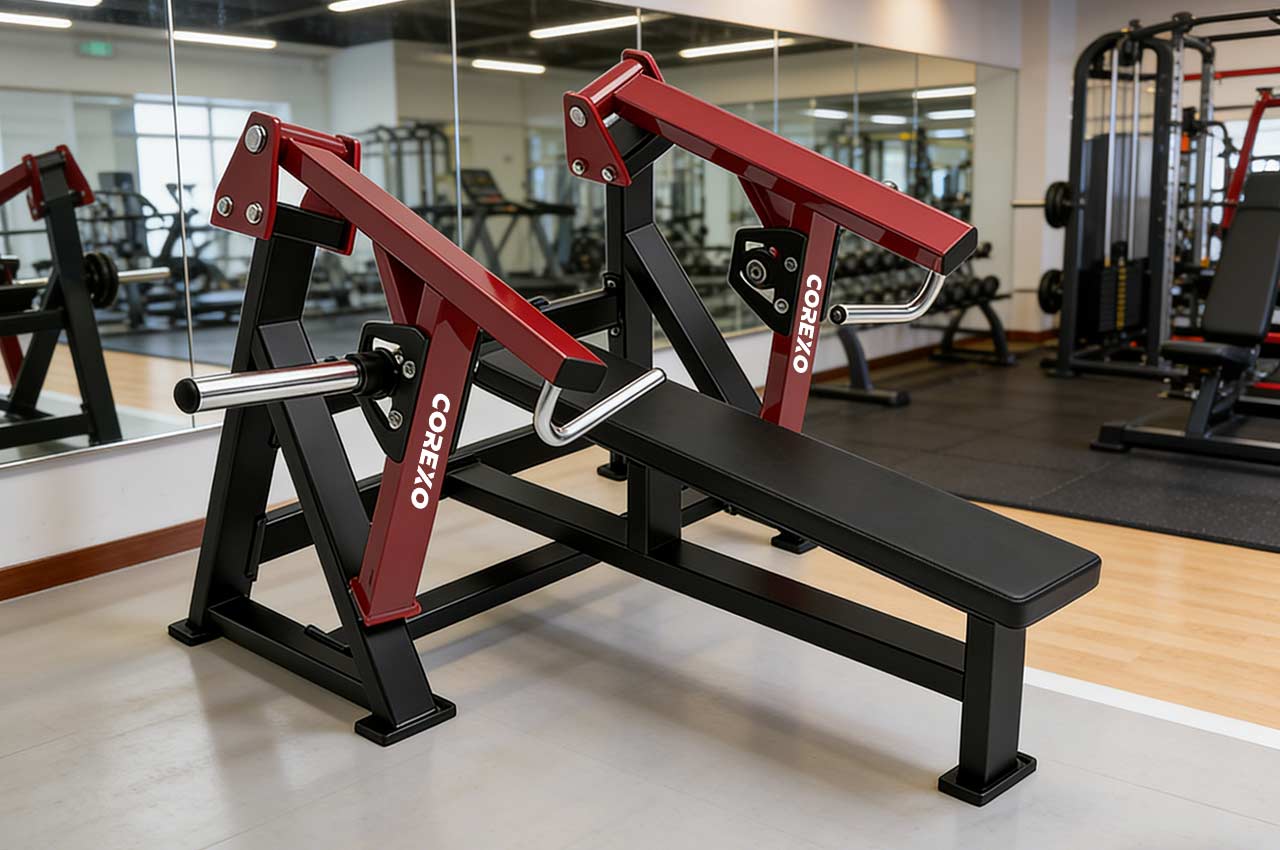
- Dumbbells and an adjustable bench
- Open floor space for stretching and bodyweight training
Corexo’s aerobic training equipment and commercial strength training equipment can be combined to create a more complete residential fitness room.
The exact ratio should reflect resident preferences and available space. The objective is not to provide every possible exercise, but to allow residents to complete a practical full-body workout.
3. Choose Equipment According to Room Size
Space efficiency is one of the most important considerations in apartment gym planning. However, space efficiency should not be confused with placing as many machines as possible into the room.
Every machine needs more than its listed dimensions. Residents require room to enter, exit, adjust, and use the equipment safely. Staff also need access for cleaning and maintenance.
The following configurations provide a useful starting point.
| Apartment Fitness Room | Cardio Equipment | Strength Equipment | Supporting Area |
|---|---|---|---|
| Compact room | One treadmill and one bike or elliptical | One multi-station machine | Adjustable bench, dumbbells, mats |
| Mid-size room | Two treadmills, one bike, one elliptical | Multi-station machine and selected strength machines | Dumbbells, benches, mobility space |
| Large residential gym | Multiple cardio machines | Selectorized machines, cable system, benches and racks | Free weights, functional area, stretching zone |
| Premium condominium gym | Diverse commercial cardio equipment | Coordinated strength and free-power equipment | Functional training, mobility and recovery space |
Compact rooms benefit from equipment that performs several functions. Corexo’s multi-station machines can provide several resistance exercises while reducing the need for numerous single-function machines.
Larger rooms should not automatically be filled with more equipment. Comfortable spacing, open training areas, storage, and circulation can provide more value than an additional machine that residents rarely use.
4. Prioritize Low-Noise Operation
Noise can become a major property-management issue when a fitness room is located near apartments, offices, lounges, or other shared spaces.
Potential noise sources include treadmill impact, machine motors, resistance systems, dropped dumbbells, loose components, ventilation equipment, and vibration passing through the building structure.
Low-noise apartment gym equipment should therefore be considered from the beginning of the project.
Cardio Equipment Noise
Treadmills can transmit both sound and impact vibration. The room location, floor construction, treadmill quality, installation, and maintenance all affect operating noise.
Exercise bikes and elliptical machines may be more suitable for noise-sensitive properties because they do not create the repeated foot impact associated with running. However, their bearings, drive systems, and frames must still operate smoothly.
Free-Weight Noise
Dumbbells improve training flexibility but require suitable flooring and organized storage. Residents may drop weights or place them down heavily, especially when the area lacks clear usage guidance.
A practical residential free-weight zone should include:
- Durable rubber flooring
- Stable dumbbell storage
- Adequate space around benches
- Clearly defined training boundaries
- Equipment appropriate for the expected user group
Corexo’s free power equipment can be incorporated into apartment projects when the room has sufficient clearance and suitable flooring.
Building-Level Planning
Where possible, avoid positioning treadmills and heavy free weights directly against walls shared with residential units. Equipment location should be coordinated with the building structure, acoustic materials, operating hours, and local requirements.
Quiet equipment improves both the fitness experience and the comfort of nearby residents.
5. Select Equipment That Residents Can Use Independently
Apartment gyms are commonly unsupervised. Residents should be able to understand and adjust the equipment without requiring a trainer or staff member.
Suitable equipment should have:
- Familiar movement patterns
- Clearly visible adjustment points
- Simple resistance controls
- Stable seats and handles
- Comfortable entry and exit
- Smooth movement
- Easy-to-read instructions
- Appropriate emergency controls
- Minimal setup complexity
Selectorized machines are often useful because residents can change resistance using a weight pin. This is generally more convenient than manually loading plates and can make strength training feel more approachable to beginners.
Multi-station machines are also effective when the exercises are clearly arranged and each user position has enough surrounding space.
Complexity does not always create greater value. In a shared residential facility, equipment that is easy to understand is often used more frequently than specialized machines with complicated setup requirements.
6. Plan the Layout Around Real Movement
The value of apartment gym equipment depends heavily on how it is arranged. Residents should be able to move between cardio, strength, free-weight, and stretching areas without crossing active exercise paths.
A practical layout may include four main zones.
Cardio Zone
Cardio equipment can be placed near windows or visually open areas when the room configuration allows. Enough clearance should be provided for entering and leaving each machine.
Power access, ventilation, screen visibility, and cleaning access should be addressed before installation.
Guided Strength Zone
Selectorized or multi-station machines should be grouped logically. Residents should be able to identify the strength area immediately and move between exercises without blocking the main walkway.
Free-Weight Zone
Dumbbells, benches, and storage should be positioned together. This zone requires more movement space because residents carry weights, adjust benches, and perform exercises with a wider range of motion.
Corexo’s commercial training benches can support flexible dumbbell exercises in residential fitness rooms with sufficient clearance.
Mobility and Functional Zone
A section of open floor should remain available for stretching, core exercises, warm-ups, balance work, and bodyweight movements.
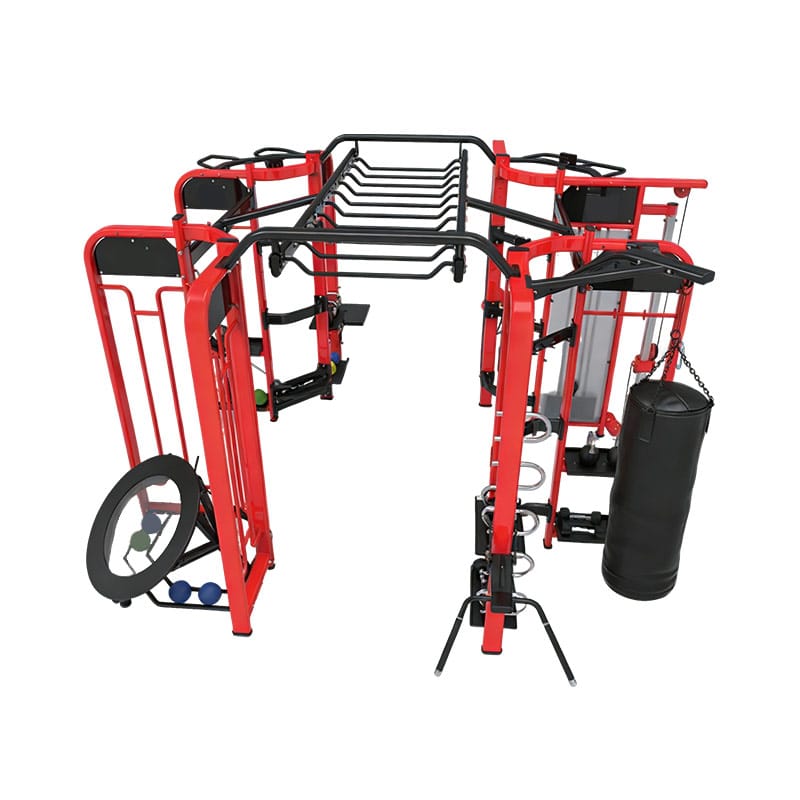
Corexo’s multi-functional training systems can support flexible training in larger residential gyms, provided that enough open movement space is maintained around the equipment.
The Health & Fitness Association’s facility layout guidelines recommend aligning facility design with the operating model and intended user experience. For an apartment gym, this means planning around resident behavior rather than arranging machines only according to visual symmetry.
7. Evaluate Maintenance Before Finalizing the Order
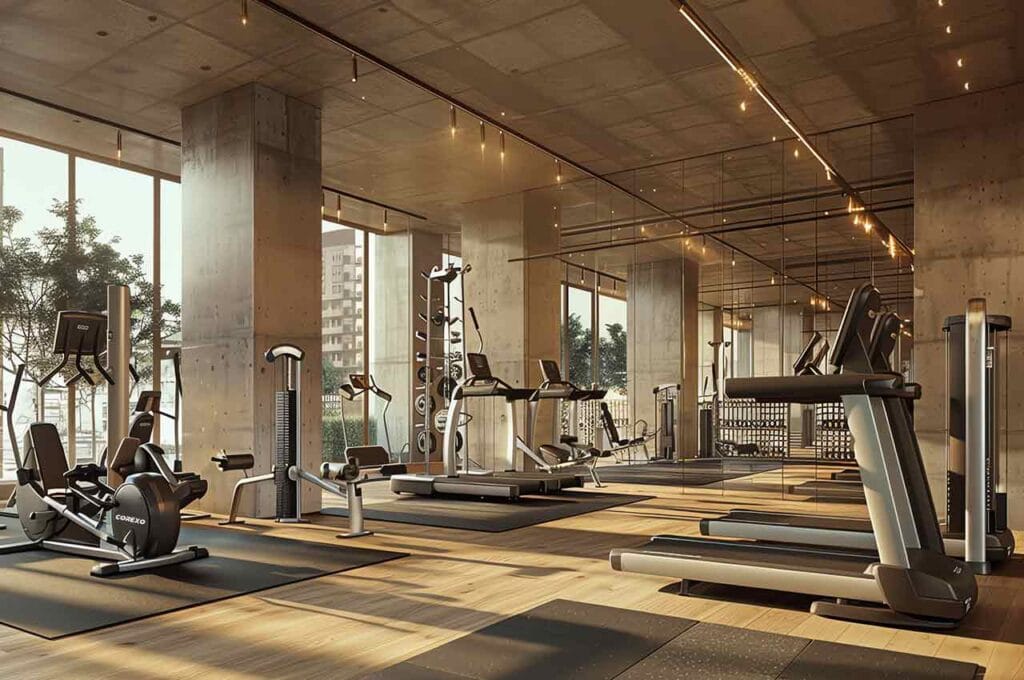
Apartment gym equipment must remain presentable and functional throughout long periods of shared use. Machines may be used by residents with very different training habits, while the room may have limited daily supervision.
Maintenance planning should begin before the equipment is ordered.
Project teams should evaluate:
- Ease of cleaning
- Upholstery durability
- Cable and pulley access
- Treadmill belt and deck maintenance
- Resistance-system reliability
- Adjustment mechanism durability
- Fastener inspection requirements
- Availability of replacement parts
- Supplier response time
- Technical documentation
- Installation support
Equipment should not be placed so closely that maintenance staff cannot reach its service points. Cleaning teams also need enough room to access floors, consoles, frames, seats, and storage areas.
Corexo’s commercial fitness equipment is designed for high-frequency shared environments, with attention to stability, low-noise operation, durability, and convenient maintenance.
A reliable equipment supplier should support the property beyond delivery by providing installation guidance, operating information, spare parts, and after-sales communication.
Accessibility and Safety Considerations
Apartment fitness rooms should be comfortable for residents with different ages, abilities, and levels of experience.
The U.S. Access Board’s exercise facility guidance discusses clear floor space and accessible routes for exercise equipment in applicable facilities. Project teams should also review the accessibility, building, fire, and safety requirements that apply in the property’s location.
Practical considerations include:
- Clear paths between equipment
- Unblocked doors and emergency exits
- Adequate floor space at selected machines
- Stable and slip-resistant flooring
- Visible operating instructions
- Appropriate lighting
- Safe cable and power management
- Secure dumbbell and accessory storage
- Enough space behind moving equipment
- Accessible sanitation materials
Equipment should never block evacuation paths, fire equipment, electrical panels, ventilation outlets, or maintenance access.
Safety is not a separate feature added after the room is completed. It should influence equipment selection and layout from the beginning.
Commercial-Grade Versus Home Fitness Equipment
Because apartment fitness rooms may be relatively small, project teams sometimes consider using home fitness equipment. This can create problems when equipment is exposed to repeated shared use.
Home machines are generally designed for a limited number of familiar users. Apartment equipment may be adjusted and operated by many residents every day.
Commercial-grade equipment is typically better suited to:
- Repeated daily operation
- Different body types
- Frequent adjustments
- Regular cleaning
- Shared residential access
- Longer operating hours
- Structured maintenance
- Replacement-part support
The machine’s footprint alone should not determine whether it is appropriate. Frame construction, moving components, upholstery, controls, serviceability, and expected usage level should all be reviewed.
Compact commercial equipment can provide the space efficiency of a smaller machine while offering construction more appropriate for a shared facility.
Common Apartment Gym Equipment Mistakes
Several planning mistakes frequently reduce the usefulness of residential fitness rooms.
Installing Too Many Treadmills
Treadmills are popular, but using most of the room for one equipment type limits strength and mobility training.
Removing Open Floor Space
Residents need space for stretching, bodyweight exercises, warm-ups, and recovery. Every square meter should not be occupied by a machine.
Ignoring Storage
Dumbbells, mats, resistance bands, and accessories quickly create clutter when they do not have designated storage.
Choosing Equipment Only by Appearance
Visual consistency matters, but stability, ease of use, noise, durability, and maintenance are more important for daily operation.
Underestimating Clearance
Machine dimensions do not represent the complete operating space. Entry, exit, exercise movement, cleaning, and servicing all require additional room.
Using Residential Equipment in a Shared Facility
Residential-style machines may not be designed for repeated use by many different residents.
Forgetting Delivery Access
Door dimensions, elevators, corridors, stairs, loading areas, and assembly requirements should be reviewed before shipment.
Avoiding these mistakes helps protect both the resident experience and the property’s equipment investment.
Apartment Gym Equipment Project Checklist
Before confirming the final configuration, review the following questions.
| Planning Area | Key Question |
| Resident profile | Who will use the fitness room most frequently? |
| Exercise coverage | Can residents perform cardio, strength, and mobility exercises? |
| Space efficiency | Does each machine provide enough value for its footprint? |
| Usability | Can residents operate the equipment independently? |
| Noise | Could equipment disturb nearby residential spaces? |
| Layout | Are circulation, clearance, and training zones properly planned? |
| Accessibility | Are applicable routes and clear floor spaces considered? |
| Durability | Is the equipment designed for repeated shared use? |
| Maintenance | Can staff clean, inspect, and service every machine? |
| Storage | Do weights, mats, and accessories have designated locations? |
| Installation | Can the equipment pass through the building access route? |
| Supplier support | Are spare parts and technical assistance available? |
This checklist helps project teams evaluate the entire fitness room rather than comparing machines individually.
How Corexo Supports Apartment Fitness Projects
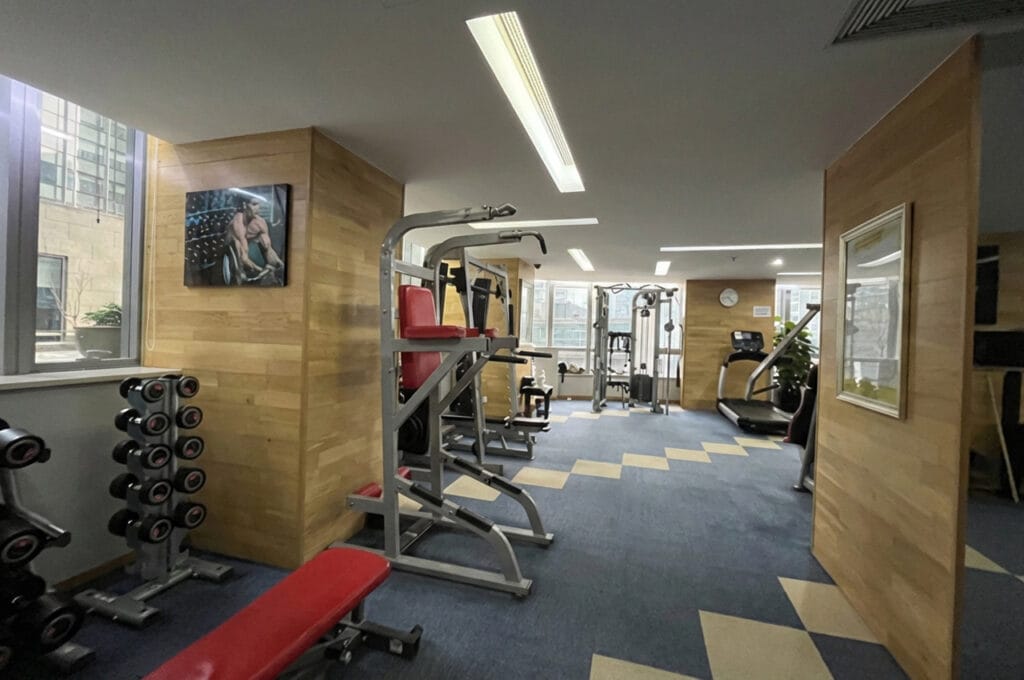
Corexo provides apartment gym equipment for residential communities, condominium projects, serviced apartments, and mixed-use properties.
Its equipment categories include:
- Commercial cardio equipment
- Selectorized strength machines
- Multi-station strength systems
- Training benches
- Free power equipment
- Functional training systems
Compact residential projects may benefit from a limited combination of cardio equipment, a multi-station machine, dumbbells, and an adjustable bench. Larger residential gyms can incorporate dedicated strength machines, free-power equipment, and functional training areas.
Corexo can help match the equipment configuration to the available room, resident profile, building environment, expected usage level, and visual requirements.
Project developers, property managers, and equipment distributors can submit floor dimensions and equipment requirements through the Corexo contact page for configuration support.
Conclusion
The best apartment gym equipment plan is not the one with the most machines. It is the one that provides useful exercise options while remaining comfortable, quiet, safe, and easy to maintain.
Successful residential fitness rooms begin with the resident profile. They balance cardio and strength training, preserve open movement space, control noise, provide intuitive equipment, and account for long-term maintenance.
Commercial-grade construction is also essential because apartment equipment is shared by many users. Stable frames, durable moving systems, reliable adjustments, easy cleaning, and spare-parts support all affect long-term performance.
Corexo provides compact and commercial-grade equipment for apartment and residential fitness projects. Explore the hotel and apartment fitness equipment solution or contact Corexo to discuss an apartment gym equipment configuration.
FAQ
What apartment gym equipment should a small fitness room include?
A small apartment gym can include one treadmill, one exercise bike or elliptical, a compact multi-station machine, an adjustable bench, dumbbells, and an open area for stretching.
Is commercial equipment necessary for an apartment gym?
Commercial-grade equipment is generally more suitable because the machines are shared by many residents and may operate for longer periods than home fitness equipment.
How can an apartment gym reduce equipment noise?
Use low-noise commercial machines, suitable rubber flooring, stable installation, regular maintenance, organized free-weight storage, and careful placement away from nearby residential units.
Should an apartment gym include strength equipment?
Yes. Strength equipment creates a more balanced fitness room and allows residents to perform resistance training instead of relying only on cardio machines.
Are multi-station machines suitable for apartment gyms?
Multi-station machines are useful for compact rooms because they can support several strength exercises within one equipment system.
How much open space should an apartment gym have?
The required space depends on the room, equipment, manufacturer instructions, and applicable regulations. The layout should preserve circulation, exercise clearance, maintenance access, and a mobility area.
What is the difference between apartment and home gym equipment?
Apartment equipment serves multiple residents and requires stronger construction, more durable adjustments, easier maintenance, and better long-term support than equipment intended for personal home use.
Can Corexo provide an apartment gym equipment configuration?
Yes. Corexo supplies commercial cardio, strength, free-power, and functional equipment for apartment projects and can help match the configuration to the room and expected resident use.