Table of Contents
Flat training bench pad height: Compare pad height, width and the way users approach the bench alongside its published footprint. Different flat benches may create different setup experiences even when they support similar activities.
The practical output is a bench fit comparison recording the intended uses, confirmed dimensions and reasons for the chosen configuration. This guide focuses on that decision for commercial facility teams, using documented product information and a repeatable review process.
What the equipment configuration changes
Training benches are often grouped together even when their intended functions differ. A flat bench, an adjustable abdominal bench and a general incline bench are not automatically substitutes. Confirm which component adjusts and which activities the manufacturer documents before assigning the bench to a station. The buying team should also ask how the load rating is defined. The bench’s own mass is a logistics figure, not a statement of the load that it is rated to support.
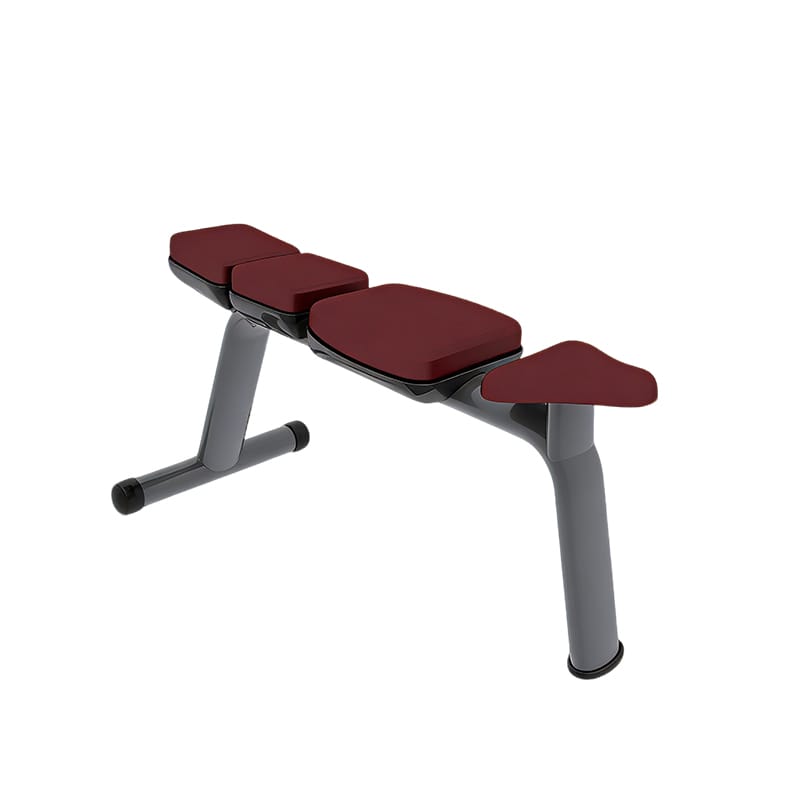
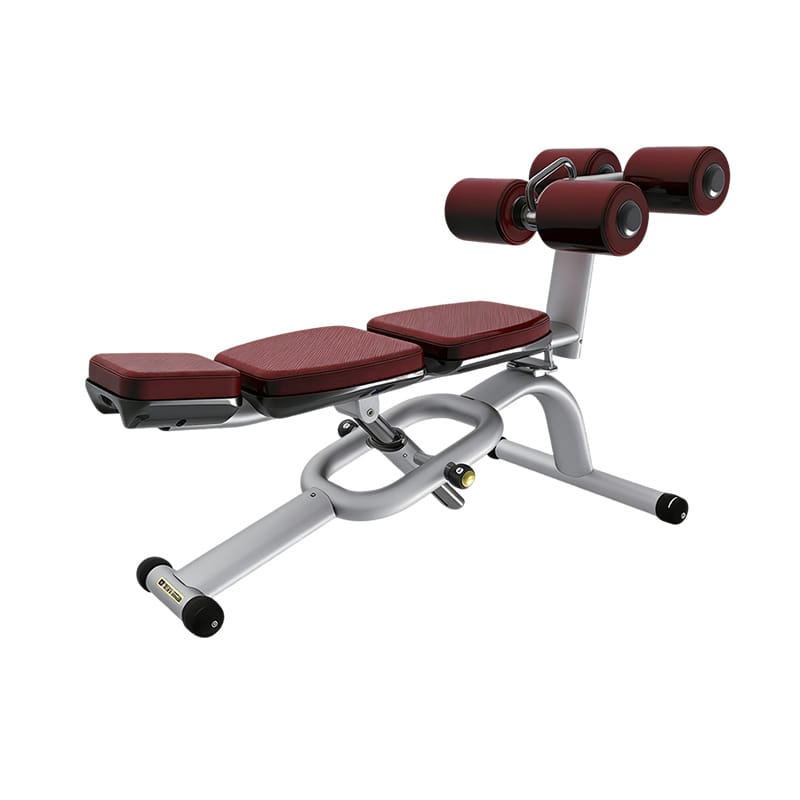
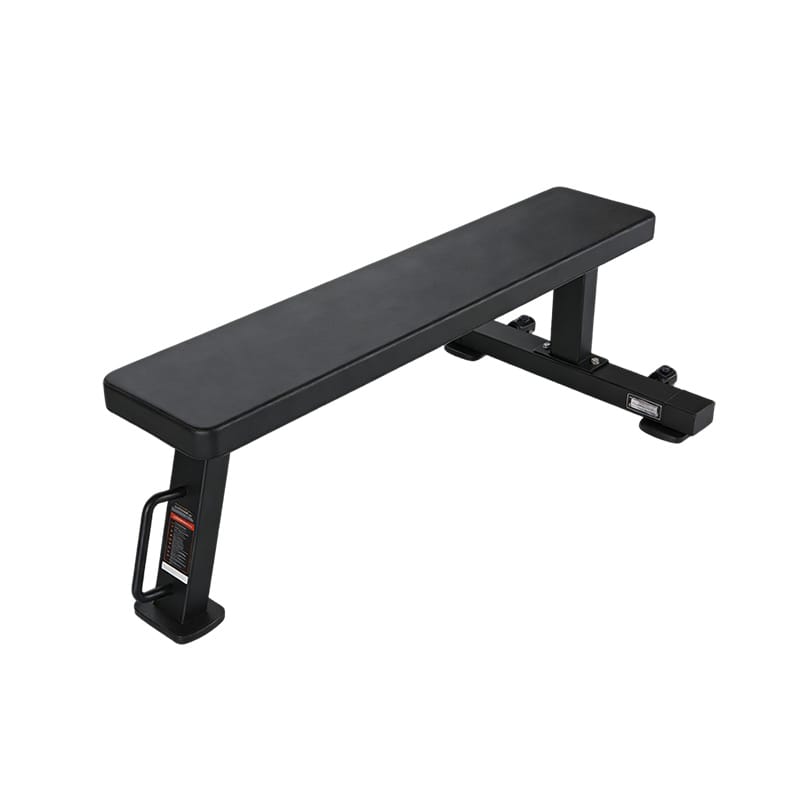
Corexo lists FB1001 as a flat bench at 1200 × 530 × 550 mm and FB1003 as a flat bench at 1276 × 658 × 400 mm. FB1002 is listed as an adjustable abdominal bench at 1535 × 665 × 1046 mm. These published descriptions should guide the initial shortlist. They do not establish that FB1002 is a general incline pressing bench or that any of the models folds. Ask for the current manual and rating information before introducing an unconfirmed function into the project specification.
Movable benches influence circulation because their positions change throughout the day. Establish where they are used, where they are reset and where an unavailable bench can be stored without blocking users. Surface care should follow the material instructions supplied with the equipment. Staff should report loose pads, unstable contact with the floor, damaged upholstery or a questionable adjustment mechanism. Keep ordinary cleaning separate from technical work and use the agreed process to authorize return to service after a fault.
Review the Benches Training Bench (FB Series) range alongside Training Bench – FB1001 and Training Bench – FB1002. Keep the model-specific information with the project record so a later option change does not silently alter the assumptions.
The mistake to avoid
A single pad height should not be presented as ideal for every user or activity. Facility selection needs to consider the intended population and qualified staff feedback.
For training benches, the review should explicitly cover pad dimensions, bench height, intended adjustment, load-rating scope, movement between stations and storage position. Record the information for the actual quoted configuration. If a value or function is missing, ask a focused question and keep it open until the supplier provides the relevant evidence. An unanswered question is not proof that a feature exists or that a requirement has been met.
Flat Training Bench Pad Height: Practical Review
Define the intended activities and user population before choosing a configuration. Published dimensions can identify differences between candidates, but they do not establish one universally suitable setup. Ask qualified staff to assess how people approach, adjust, use and leave the equipment within the manufacturer’s intended use. Keep individual exercise advice separate from the procurement comparison.
Arrange a structured trial where practical. Use the exact model and record the configuration, the staff observations and the questions that remain for the supplier. Focus on the controls and physical arrangement rather than making broad promises about comfort or performance. A trial involving a small group is useful evidence about those observations, but it should not be presented as proof that every future user will have the same experience.
Convert the findings into a selection reason and an induction requirement. The facility may need more than one equipment arrangement to support its intended program. If a candidate cannot meet an essential setup need, document that limitation. Preserve the accepted dimensions and configuration in the order so later substitutions receive the same review. This creates a clear link between what was evaluated and what the operator ultimately receives.
A practical scenario to work through
The FB1001 and FB1003 pages list different overall heights, 550 mm and 400 mm respectively. That difference should lead to a setup review, not an automatic judgment that one is better. Qualified staff can compare the intended activities and user needs with the actual bench arrangement. Keep the dimensions tied to the model and confirm them in the order. Do not turn a limited trial into a claim that one pad height is universally appropriate for every person or exercise.
Place candidate benches in the planned zone and review setup, foot placement and exit with qualified staff. Keep any exercise instruction tied to appropriate supervision and the manufacturer's guidance.
Treat this as a planning example, not a report of a measured customer installation. Record the room conditions, model revision and people involved in your own review. A useful result explains why the arrangement works under those conditions and identifies what would trigger another review, such as a different configuration, location, attachment or operating program.
Record the decision and its evidence
| Review item | Evidence to keep | Decision it supports |
|---|---|---|
| Primary question | Compare pad height, width and the way users approach the bench alongside its published footprint. Different flat benches may create different setup experiences even when they support similar activities. | The facility requirement being addressed |
| Configuration | pad dimensions, bench height, intended adjustment, load-rating scope, movement between stations and storage position | Whether the selected model matches the intended operation |
| Practical review | Place candidate benches in the planned zone and review setup, foot placement and exit with qualified staff. Keep any exercise instruction tied to appropriate supervision and the manufacturer's guidance. | Whether the proposed arrangement works in the actual room |
| Open questions | Missing or inconsistent drawings, functions or model references | What must be clarified before acceptance |
| Final output | A bench fit comparison recording the intended uses, confirmed dimensions and reasons for the chosen configuration. | A traceable handover to purchasing and operations |
Keep the final decision at the level of the installed asset. The handover should identify the selected configuration, accepted documents, outstanding non-critical actions and the people responsible for follow-up. For later replacements, retain references for pads, upholstery, adjustment mechanisms, feet, wheels where fitted and approved fasteners. That makes it easier to distinguish a supported replacement from a visually similar substitute and gives the service team a useful starting point when a question arises.
References and scope of the review
The references below provide context for equipment, access, inspection and maintenance review. They do not certify a Corexo model or replace the selected machine’s instructions. U.S. and UK guidance must be interpreted for the relevant project location; the responsible local professionals should determine applicable requirements.
- ISO 20957-1:2024 scope — General stationary-equipment safety framework; obtain applicable model evidence.
- U.S. Access Board sports-facility guidance — U.S. accessibility context; apply the requirements relevant to the project location.
- HSE equipment inspection guidance — Inspection planning, competence and condition records in the UK work-equipment context.
- HSE equipment maintenance guidance — Planning competent maintenance and safe working arrangements in the UK context.
Prepare a focused equipment enquiry
Send Corexo the intended facility type, project location, quantity, selected model options and the decision record described above. Include a measured drawing or the relevant operating observations when they affect the enquiry. Ask for confirmation of the exact configuration, current manual, packing information, installation scope and support terms. Do not let an unresolved technical question disappear into a general request for a quotation.
The Corexo cooperation process and project enquiry team are starting points for discussing the requirement. For flat training bench pad height, the requested outcome is specific: a bench fit comparison recording the intended uses, confirmed dimensions and reasons for the chosen configuration. Agree on that deliverable before the order is finalized, then use it during acceptance and operational handover.
Frequently asked questions
What should the team decide first?
Compare pad height, width and the way users approach the bench alongside its published footprint. Different flat benches may create different setup experiences even when they support similar activities. Start with the facility requirement and the exact configuration rather than a broad category label. Keep any unresolved information visible in the project brief.
What is the most common assumption to challenge?
A single pad height should not be presented as ideal for every user or activity. Facility selection needs to consider the intended population and qualified staff feedback. Request evidence for the selected model and do not transfer a capability from a similar-looking machine or another product in the series.
How can the proposed arrangement be checked?
Place candidate benches in the planned zone and review setup, foot placement and exit with qualified staff. Keep any exercise instruction tied to appropriate supervision and the manufacturer's guidance. Use competent personnel for technical work and retain the conditions of the review so the result is meaningful to the operating team.
Which record should be kept after selection?
A bench fit comparison recording the intended uses, confirmed dimensions and reasons for the chosen configuration. Link it to the equipment identity, quotation and applicable manual revision. Update the affected parts when the configuration or installation location changes.
What information should go with a Corexo enquiry?
Provide the facility type, location, intended use, quantity, model options and the specific questions still open. Include the relevant drawing or operating observations. Ask Corexo to confirm configuration, documentation, delivery scope and support terms in the quotation rather than assuming standard terms.