Table of Contents
Functional training rig zoning: Divide the space around an FT rig by actual activities and movement directions. Suspension work, rope use, bag work and loaded movements need their own operating zones and a circulation route outside them.
The practical output is an FT zone drawing with compatible activities, attachment locations and a clear route for users who are moving between stations. This guide focuses on that decision for commercial facility teams, using documented product information and a repeatable review process.
What the equipment configuration changes
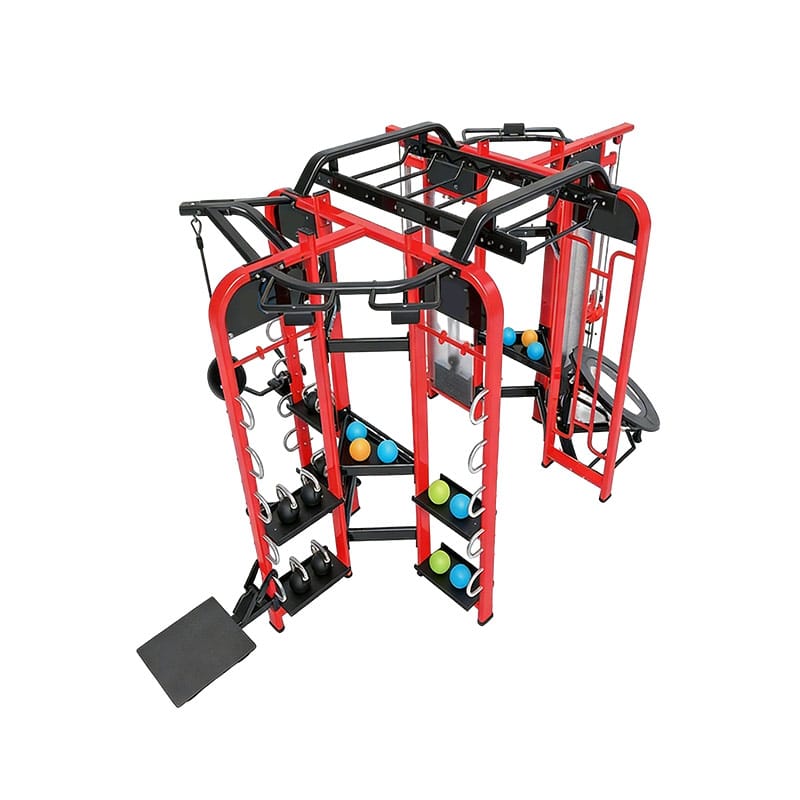
A functional rig is a framework for a defined activity program. Its practical capacity depends on the attachments, the surrounding room and the combinations of movement that qualified staff intend to supervise. A catalog photograph cannot establish a safe class size. Build the program around supplier-confirmed uses, then identify the movement zone and transition path for each activity. Keep circulation outside those active zones so people changing stations do not interrupt another user’s movement.
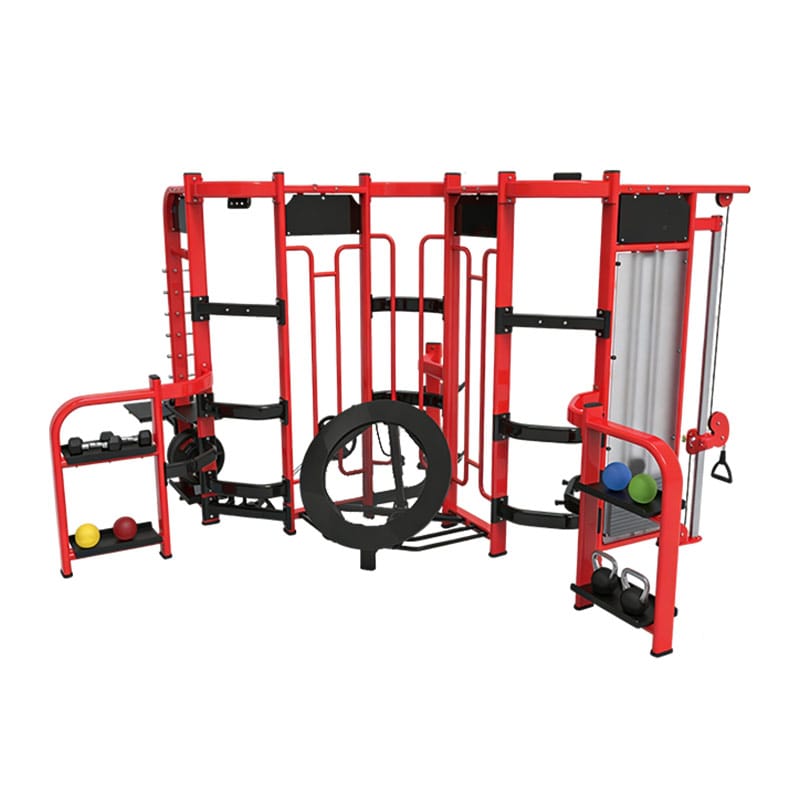
Corexo publishes a 3149 × 5192 mm footprint and 2252 mm height for FT-360XM. FT-360S is listed at 4594 × 4279 mm with a 2422 mm height, while FT-360XL is listed at 5559 × 4415 mm with a 2578 mm height. These are frame-level starting points for comparison. Add the activity envelopes and required clearances separately. Confirm the accessory schedule in the quotation because the model pages describe different packages and a promotional image may include items outside a standard order.
Installation and operations need to connect through a clear handover. The delivery team needs package-level information and a protected assembly area. The operator needs the accepted configuration, approved attachment uses, inspection guidance and a method for reporting damaged or missing items. Give every supplied accessory a defined storage position. A competent review should determine the consequences of a defect, including whether one activity or a larger part of the rig must remain unavailable until corrective work is complete.
Review the FT Multi Functional Training Stand Series range alongside Multi Functional Training Stand – FT-360XM and Multi Functional Training Stand – FT-360S. Keep the model-specific information with the project record so a later option change does not silently alter the assumptions.
The mistake to avoid
A multifunction rig is not simply a squat rack with extra storage. The installed attachments and the program determine the space and supervision requirements.
For FT multi-functional training rigs, the review should explicitly cover activity zones, attachment compatibility, class transitions, overhead movement, package breakdown and installer work space. Record the information for the actual quoted configuration. If a value or function is missing, ask a focused question and keep it open until the supplier provides the relevant evidence. An unanswered question is not proof that a feature exists or that a requirement has been met.
Functional Training Rig Zoning: Practical Review
Start with a measured room plan rather than an approximate area. Record doors and their swing, columns, fixed cabinets, windows, circulation routes and the locations of building services. Place the selected equipment on that drawing at its confirmed assembled size. Then add separate layers for the operating movement, user approach and prescribed service space. Keeping these layers distinct makes it easier to see why a machine that fits geometrically may still be unsuitable in practice.
Use a full-size floor mock-up to challenge the drawing before committing to an order. Tape outlines can represent fixed equipment, while staff can walk through the approach and changeover sequence. Include neighboring stations in the rehearsal. A single machine tested in an empty room will not expose the conflicts that appear during a busy period. Write down each conflict in concrete terms, such as a door crossing an approach route or an attachment extending into a walkway.
Revise the plan by resolving the highest-impact conflict first. Turning a station may help one route while reducing another, so review the whole area after every material change. Retain the final equipment orientation, drawing revision and assumptions in the purchase file. If the supplier changes the configuration or dimensions, reopen the affected layout review. A neat rendering is useful for communication, but the acceptance decision should rest on the measured plan and the actual workflow.
A practical scenario to work through
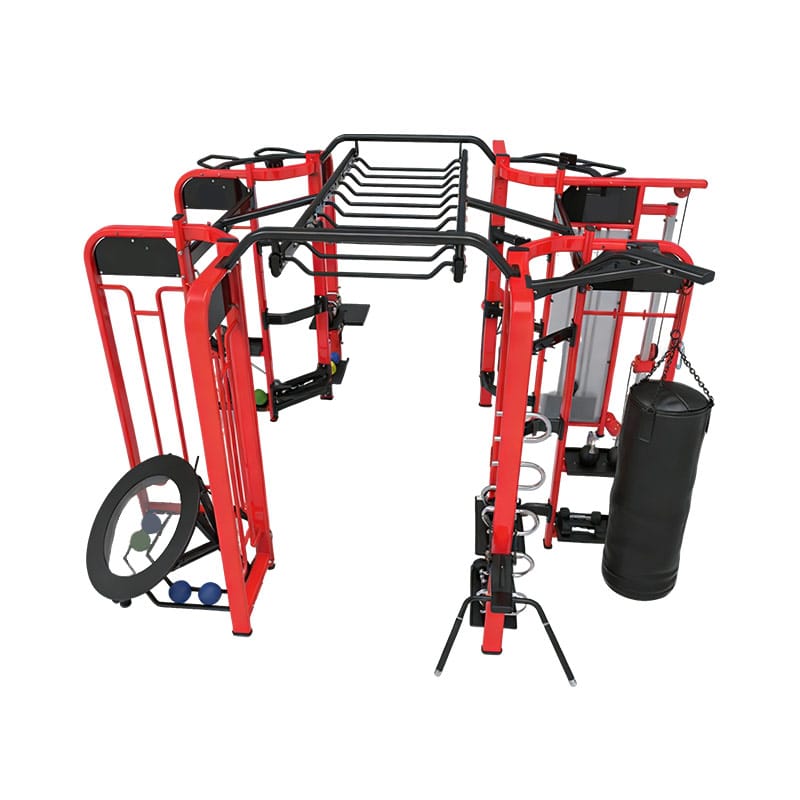
A rig used for suspension work and bag work can create a conflict if users transition through the same active zone. The frame footprint will not reveal that overlap. Draw the intended movements and transitions around the selected FT configuration, then rehearse the session with qualified staff. Some combinations may work together while others should be separated in time. Keep the approved activity map with the operating brief so later accessory additions receive the same spatial review.
Create a session map using only supplier-confirmed attachments. Have qualified staff rehearse transitions and identify combinations that bring users or moving equipment into the same space.
Treat this as a planning example, not a report of a measured customer installation. Record the room conditions, model revision and people involved in your own review. A useful result explains why the arrangement works under those conditions and identifies what would trigger another review, such as a different configuration, location, attachment or operating program.
Record the decision and its evidence
| Review item | Evidence to keep | Decision it supports |
|---|---|---|
| Primary question | Divide the space around an FT rig by actual activities and movement directions. Suspension work, rope use, bag work and loaded movements need their own operating zones and a circulation route outside them. | The facility requirement being addressed |
| Configuration | activity zones, attachment compatibility, class transitions, overhead movement, package breakdown and installer work space | Whether the selected model matches the intended operation |
| Practical review | Create a session map using only supplier-confirmed attachments. Have qualified staff rehearse transitions and identify combinations that bring users or moving equipment into the same space. | Whether the proposed arrangement works in the actual room |
| Open questions | Missing or inconsistent drawings, functions or model references | What must be clarified before acceptance |
| Final output | An FT zone drawing with compatible activities, attachment locations and a clear route for users who are moving between stations. | A traceable handover to purchasing and operations |
Keep the final decision at the level of the installed asset. The handover should identify the selected configuration, accepted documents, outstanding non-critical actions and the people responsible for follow-up. For later replacements, retain references for approved ropes, suspension components, storage fittings, connection hardware and supplied training accessories. That makes it easier to distinguish a supported replacement from a visually similar substitute and gives the service team a useful starting point when a question arises.
References and scope of the review
The references below provide context for equipment, access, inspection and maintenance review. They do not certify a Corexo model or replace the selected machine’s instructions. U.S. and UK guidance must be interpreted for the relevant project location; the responsible local professionals should determine applicable requirements.
- ISO 20957-1:2024 scope — General stationary-equipment safety framework; obtain applicable model evidence.
- U.S. Access Board sports-facility guidance — U.S. accessibility context; apply the requirements relevant to the project location.
- HSE equipment inspection guidance — Inspection planning, competence and condition records in the UK work-equipment context.
- HSE equipment maintenance guidance — Planning competent maintenance and safe working arrangements in the UK context.
Prepare a focused equipment enquiry
Send Corexo the intended facility type, project location, quantity, selected model options and the decision record described above. Include a measured drawing or the relevant operating observations when they affect the enquiry. Ask for confirmation of the exact configuration, current manual, packing information, installation scope and support terms. Do not let an unresolved technical question disappear into a general request for a quotation.
The Corexo cooperation process and project enquiry team are starting points for discussing the requirement. For functional training rig zoning, the requested outcome is specific: an FT zone drawing with compatible activities, attachment locations and a clear route for users who are moving between stations. Agree on that deliverable before the order is finalized, then use it during acceptance and operational handover.
Frequently asked questions
What should the team decide first?
Divide the space around an FT rig by actual activities and movement directions. Suspension work, rope use, bag work and loaded movements need their own operating zones and a circulation route outside them. Start with the facility requirement and the exact configuration rather than a broad category label. Keep any unresolved information visible in the project brief.
What is the most common assumption to challenge?
A multifunction rig is not simply a squat rack with extra storage. The installed attachments and the program determine the space and supervision requirements. Request evidence for the selected model and do not transfer a capability from a similar-looking machine or another product in the series.
How can the proposed arrangement be checked?
Create a session map using only supplier-confirmed attachments. Have qualified staff rehearse transitions and identify combinations that bring users or moving equipment into the same space. Use competent personnel for technical work and retain the conditions of the review so the result is meaningful to the operating team.
Which record should be kept after selection?
An FT zone drawing with compatible activities, attachment locations and a clear route for users who are moving between stations. Link it to the equipment identity, quotation and applicable manual revision. Update the affected parts when the configuration or installation location changes.
What information should go with a Corexo enquiry?
Provide the facility type, location, intended use, quantity, model options and the specific questions still open. Include the relevant drawing or operating observations. Ask Corexo to confirm configuration, documentation, delivery scope and support terms in the quotation rather than assuming standard terms.