Commercial Gym Equipment Accessibility Checklist: Contents
- Start with applicable requirements
- Plan the accessible route
- Review equipment types
- Position clear floor space
- Include operations and communication
- Frequently asked questions
A commercial gym equipment accessibility checklist helps owners and project teams plan a fitness room that more people can approach, understand, and use. It brings accessibility into equipment selection, layout, installation, signage, staff procedures, and ongoing reviews instead of treating it as a final inspection item.
This guide provides a practical commercial gym equipment accessibility checklist for gyms, hotels, apartments, offices, schools, and training centers. It is not legal advice. Accessibility laws and technical requirements vary by country, building type, project scope, and local authority. Confirm the rules for the project with a qualified accessibility professional.
Start With the Rules That Apply to the Project
Do not copy dimensions from another facility without checking jurisdiction and project conditions. For U.S. projects, the U.S. Access Board recreation-facility provisions address clear floor space at exercise machines and equipment, while the broader ADA Accessibility Standards address accessible routes and other building elements. Other locations may use different regulations and standards.
The first section of a commercial gym equipment accessibility checklist should record the authority having jurisdiction, applicable standard, reviewer, drawing revision, facility type, alteration or new-construction status, and approval date. This prevents a project team from relying on an informal assumption that cannot be traced later.
Plan a Continuous Accessible Route
The commercial gym equipment accessibility checklist begins before a user reaches a machine. Review the route from the building entrance through reception, doors, corridors, changing areas, drinking facilities, and the fitness floor. The route must remain continuous and unobstructed. Equipment, storage racks, waste bins, cleaning stations, benches, and temporary promotional displays should not narrow or block it.
For U.S. facilities, the Access Board accessible-route provisions describe walking surfaces, clearances, slopes, changes in level, and related elements. Use the commercial gym equipment accessibility checklist to confirm the route on the final equipment plan and again after installation. A compliant drawing is not enough if machines are positioned differently on site.
- Trace the route from the entrance to each accessible equipment location.
- Check doors, gates, turns, level changes, floor transitions, and potential obstructions.
- Keep emergency routes and accessible circulation compatible.
- Confirm that movable accessories and member belongings have defined storage.
- Repeat the route review after every major equipment change.
Identify Equipment Types Before Choosing Positions
A commercial gym equipment accessibility checklist should inventory equipment by type and intended use rather than treating all strength or cardio machines as interchangeable. The Access Board’s sports-facility guide explains that, in covered U.S. facilities, at least one of each type of exercise machine or equipment must have clear floor space and be served by an accessible route.
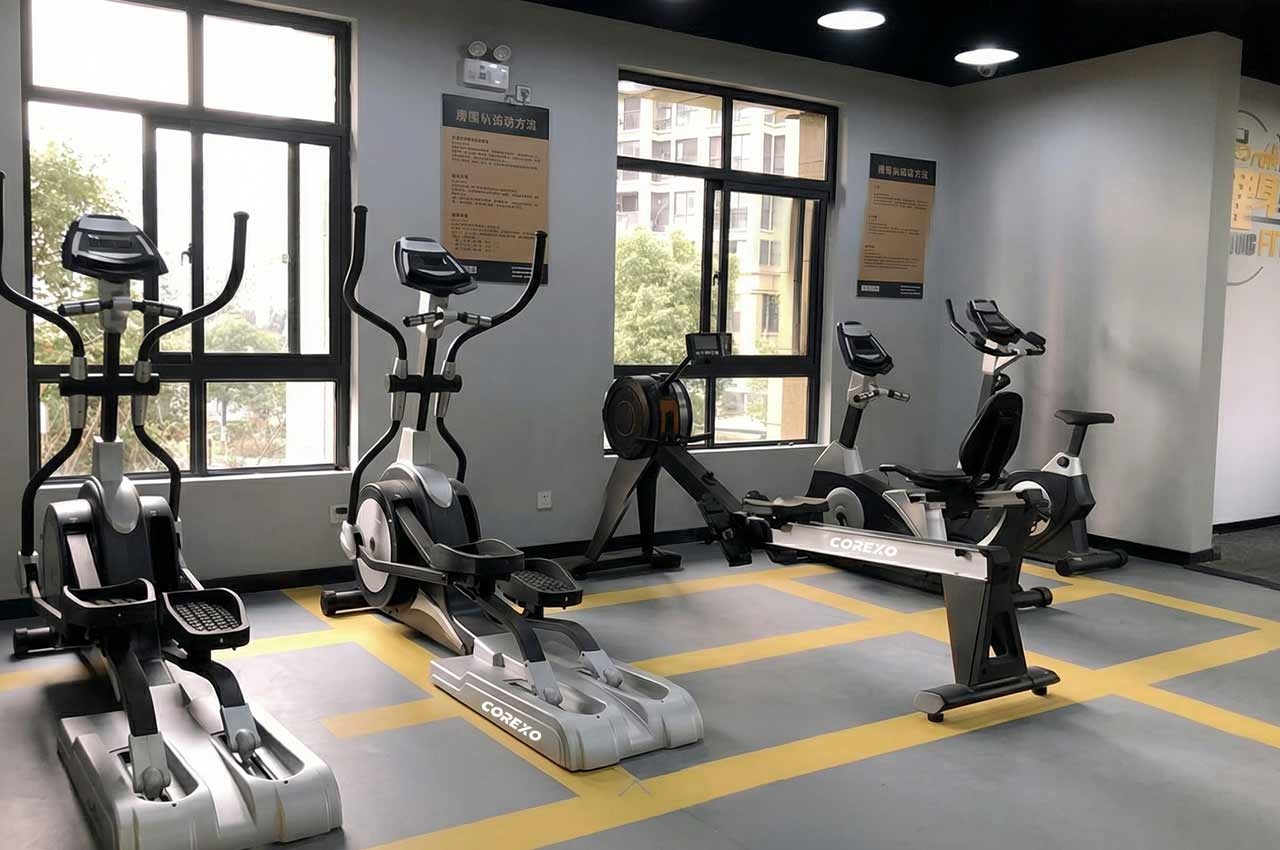
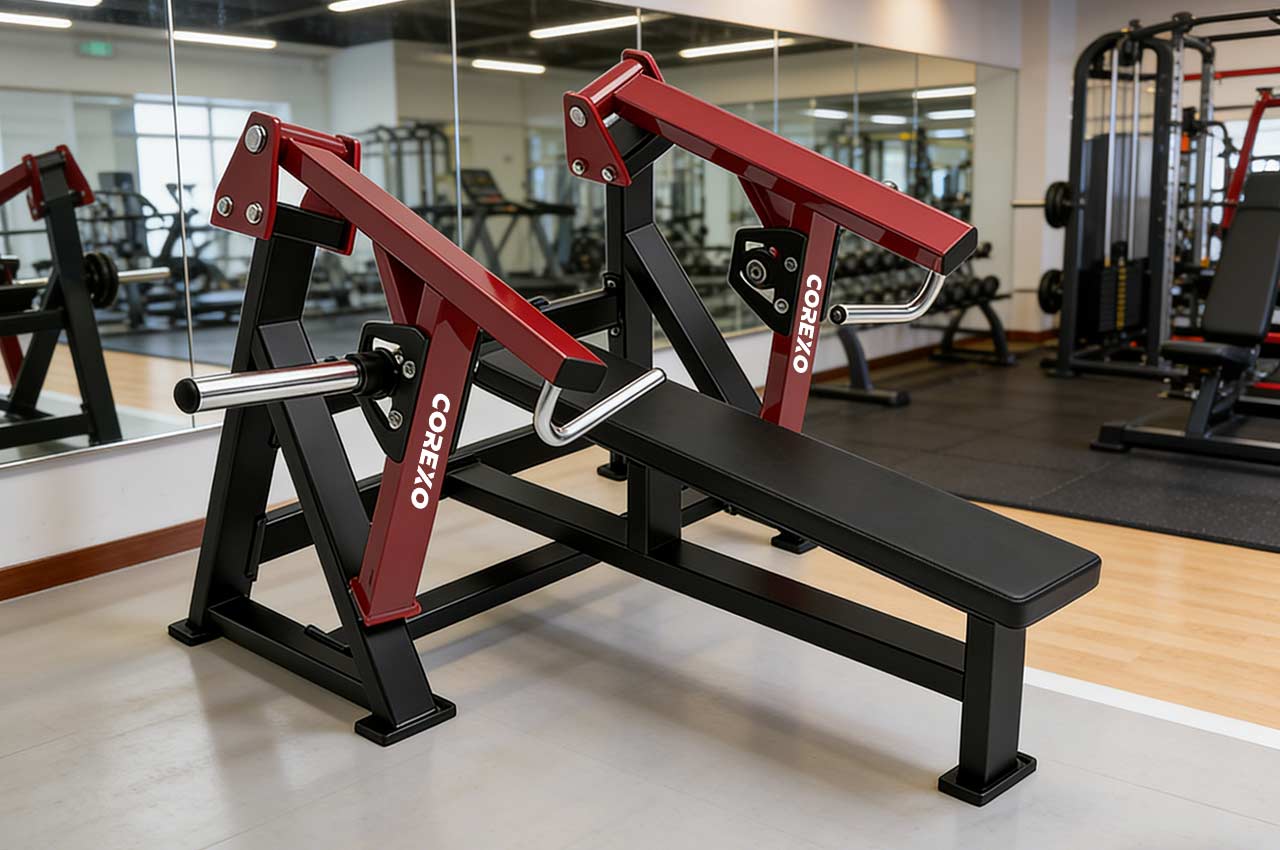
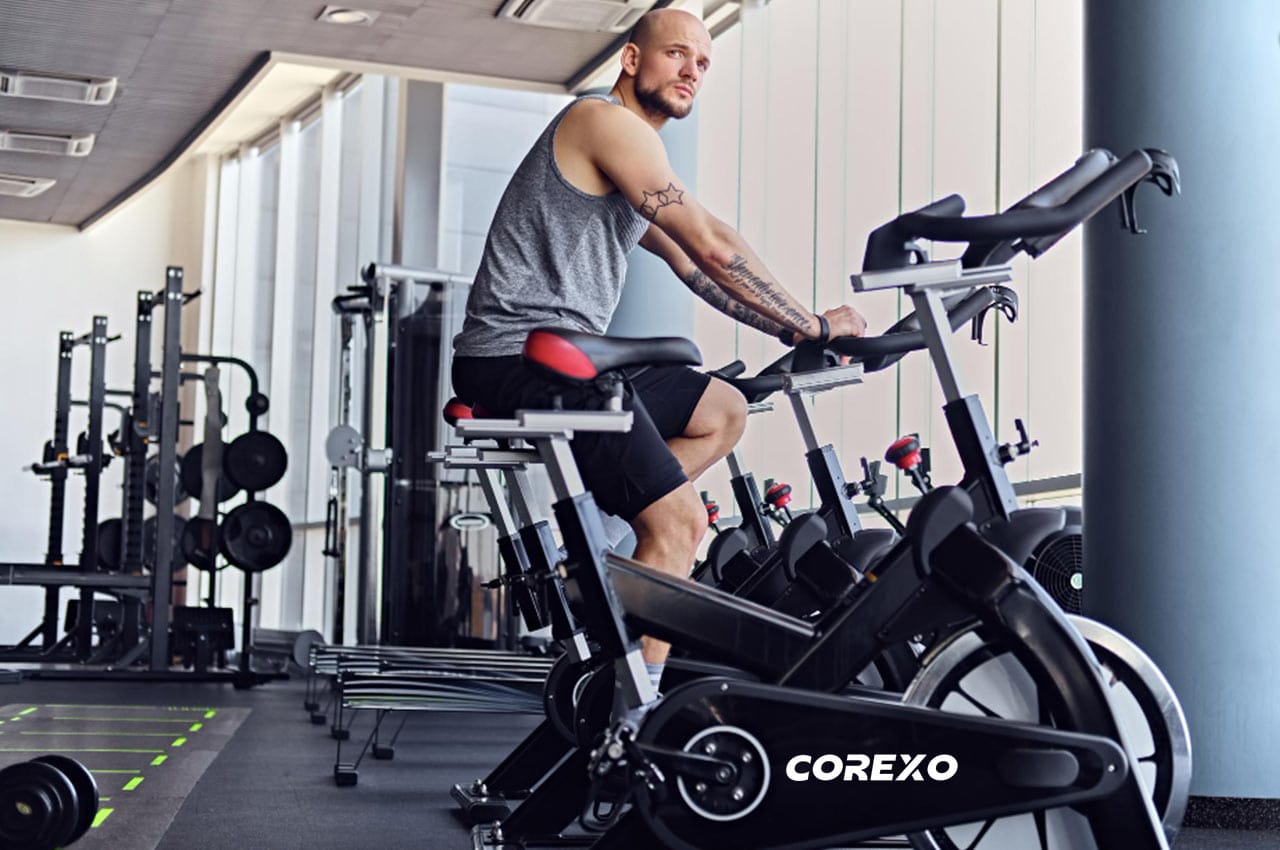
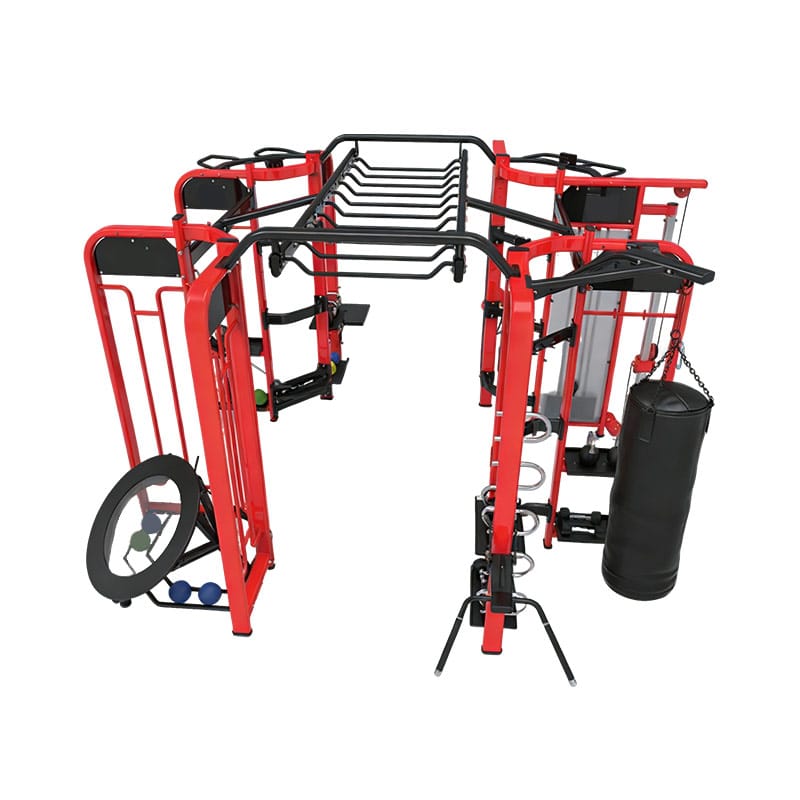
Create a schedule that lists the model, category, user position, transfer side, controls, adjustments, accessories, surrounding clear space, and route connection. Compare it with the Corexo aerobic equipment, strength training equipment, benches, racks, and functional-training options being considered.
| Equipment group | Accessibility review | Planning question |
|---|---|---|
| Cardio equipment | Approach, transfer or seated use, controls, moving parts | Can the user reach the intended position without crossing another machine? |
| Selectorized strength | Seat transfer, pin and adjustment access, handles | Is clear space positioned where the exercise is actually used? |
| Free weights and benches | Bench approach, storage, bar and plate access | Do stored items intrude into the route? |
| Functional accessories | Flexible use area, anchor points, movable equipment | Can the zone remain organized between sessions? |
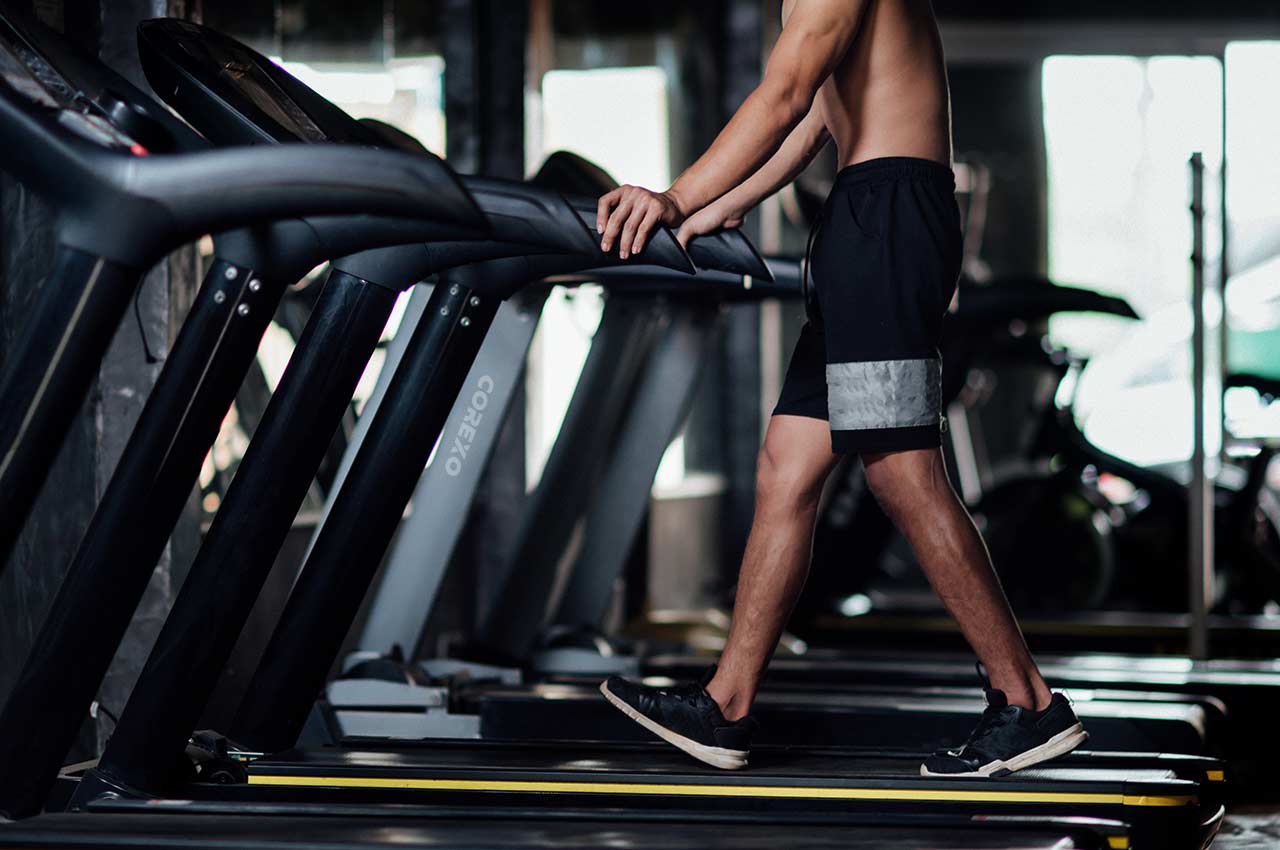
Position Clear Floor Space for Real Use
Use the commercial gym equipment accessibility checklist to position clear space where it supports transfer or use, not simply wherever an empty rectangle fits on the drawing. A shoulder press may require space beside a seat, while equipment intended for use from a wheelchair may require space aligned with the operating mechanism. The commercial gym equipment accessibility checklist should show the functional relationship between clear space, seat, controls, moving components, and route.
The commercial gym equipment accessibility checklist should prevent one machine’s operating envelope, weight-loading area, moving pedal, bench position, or plate storage from consuming another machine’s clear space. Shared clear spaces may be permitted under some standards, but only when the layout genuinely supports both pieces of equipment. Have the responsible reviewer approve the arrangement.
Coordinate accessibility before floor anchors and electrical connections are finalized. The commercial gym equipment installation checklist can carry the approved locations into receiving, assembly, commissioning, and handover. Add the commercial gym equipment accessibility checklist to the installer’s drawing set so accessibility decisions are not lost during field changes.
Review Controls, Adjustments, and User Information
The commercial gym equipment accessibility checklist should recognize that physical approach is only one part of access. Review whether a user can identify controls, understand labels, reach adjustments, stabilize themselves, and request assistance. Avoid making claims that a machine is suitable for every disability. Different users have different mobility, sensory, cognitive, balance, strength, and communication needs.
The commercial gym equipment accessibility checklist should record control location, display readability, label condition, adjustment range, seat configuration, hand supports, entry and exit method, and any staff assistance procedure. Obtain user feedback where possible. The CDC disability and physical-activity guidance emphasizes discussing barriers and finding activity options consistent with a person’s abilities.
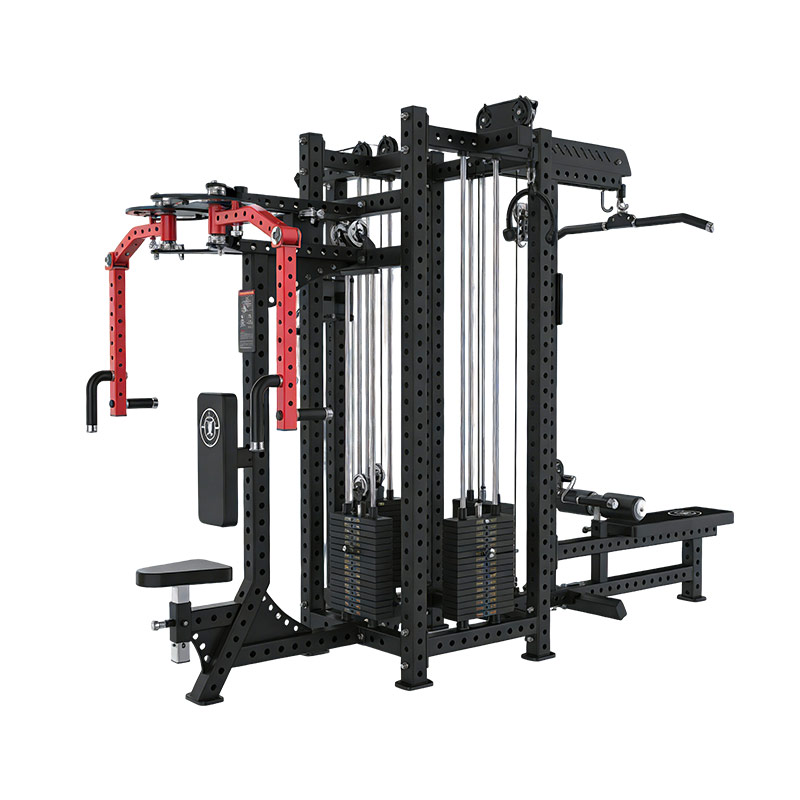
Make Accessibility Part of Daily Operations
A well-planned route can fail during operation when cleaning carts, loose weights, spare benches, or member belongings occupy it. Add an opening and closing review to the commercial gym equipment accessibility checklist. Staff should know which spaces must remain clear and where movable items belong.
- Walk the accessible route before opening.
- Confirm designated clear spaces are unobstructed.
- Return accessories and benches to approved locations.
- Check labels, adjustment points, and assistance information.
- Record damaged surfaces or controls that create a barrier.
- Escalate member feedback and repeated obstructions.
Add staff communication to the commercial gym equipment accessibility checklist. Train staff to communicate respectfully and ask before providing assistance. The WHO disability and health overview notes that people with disabilities face environmental and systemic barriers. Facility procedures should reduce barriers without making assumptions about an individual’s needs.
Audit Changes, Not Just the Original Layout
Equipment floors evolve, so keep the commercial gym equipment accessibility checklist active. New machines arrive, popular stations move, and accessories accumulate. Review the commercial gym equipment accessibility checklist whenever the equipment schedule, flooring, partitions, doors, or storage change. Also review it after a complaint, incident, renovation, or accessibility assessment.
Photograph approved positions and retain the marked layout with asset records. Connect findings to the equipment maintenance checklist when damaged components affect approach, transfer, controls, or safe use. Accessibility is an operating condition that must be maintained.
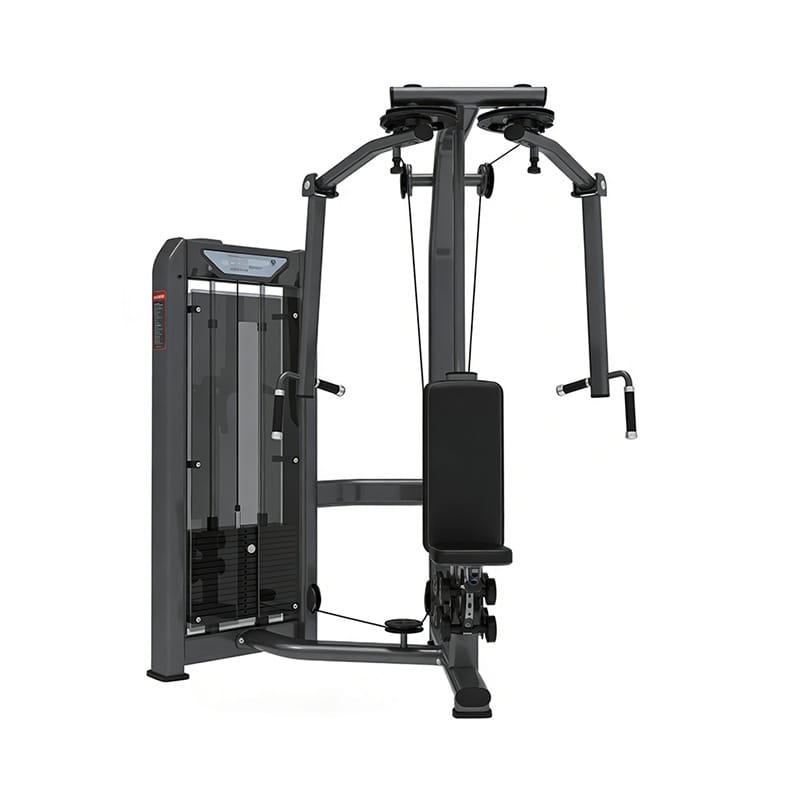
Frequently Asked Questions
Does every machine need its own clear floor space?
Requirements depend on the applicable standard and equipment type. Some rules allow clear spaces to overlap, but the position must still support real transfer or use and remain connected to an accessible route.
Can accessibility be checked after installation?
A final check is necessary, but planning should happen before purchase, anchoring, and electrical work. Late changes can be more difficult and may reduce the usefulness of the layout.
Is an accessible route the same as a general aisle?
Not necessarily. An accessible route must satisfy the technical requirements that apply to the project and connect the required accessible elements and spaces.
Should staff move equipment to create access on request?
Required access should not depend on unsafe or impractical last-minute moves. Plan permanent positions and define safe procedures for genuinely movable accessories.
How often should the checklist be reviewed?
Review the commercial gym equipment accessibility checklist after installation, during routine facility audits, and whenever equipment, storage, flooring, routes, or relevant requirements change.
Plan Accessibility Before Equipment Positions Become Fixed
A commercial gym equipment accessibility checklist turns accessibility into a coordinated project responsibility. Complete the commercial gym equipment accessibility checklist before positions become fixed. It connects applicable requirements, routes, equipment types, clear space, controls, installation, staff procedures, and ongoing audits.
Use the commercial gym equipment accessibility checklist while reviewing the Corexo commercial fitness equipment range, or contact the Corexo team when preparing equipment information for an accessible commercial fitness layout.