Commercial Gym Equipment Cleaning Checklist: Table of Contents
- Define the cleaning scope
- Build a surface map
- Daily cleaning workflow
- Weekly cleaning review
- Chemical and staff controls
- Records and escalation
- Frequently asked questions
A commercial gym equipment cleaning checklist gives operators a repeatable way to clean shared fitness equipment without confusing cleaning, sanitizing, disinfecting, and mechanical maintenance. It helps gym owners, hotel teams, apartment managers, office-fitness operators, and training centers decide what to clean, when to clean it, which instructions apply, and when damaged equipment should be removed from use.
This guide explains how to create a practical commercial gym equipment cleaning checklist for an indoor commercial facility. Always follow the equipment manual, the cleaning-product label, the Safety Data Sheet, local workplace rules, and public-health guidance that applies to the facility. A general checklist cannot replace instructions for a particular material, electronic component, or chemical product.
Define What Cleaning Means in Your Facility
The first section of a commercial gym equipment cleaning checklist should distinguish cleaning from disinfection. The CDC facility guidance explains that cleaning removes dirt and reduces germs, while disinfecting uses chemicals to kill remaining germs after cleaning. Routine cleaning is appropriate for many situations; additional disinfection may be appropriate when someone has been ill, during an outbreak, or when local guidance requires it.
Do not use “stronger” as a substitute for “compatible.” A product that is appropriate for one hard surface may damage upholstery, console coatings, plastics, touchscreens, painted frames, labels, grips, or adhesives. Build the commercial gym equipment cleaning checklist around approved surfaces and product directions instead of applying one chemical to every machine.
Build a Surface Map Before Setting Frequency
Use the commercial gym equipment cleaning checklist while walking through the facility and dividing equipment into cleaning zones. High-touch points may include handles, adjustment levers, selector pins, buttons, touchscreens, handrails, seats, back pads, benches, pedals, accessory grips, storage points, and locker-room touch surfaces. Floors beneath and around equipment require a separate method because liquid should not be sprayed toward electrical parts or moving assemblies.
Use the commercial gym equipment cleaning checklist to record material type, approved product, cleaning method, frequency, responsible role, and drying requirement. The CDC guidance for athletic facilities recommends keeping shared equipment clean, cleaning shared items after use, allowing them to dry, and following manufacturer instructions so the cleaning process does not harm the item.
| Surface group | Typical examples | Checklist control |
|---|---|---|
| Direct skin-contact surfaces | Handles, pads, benches, grips | Frequent cleaning with a compatible method |
| Electronic controls | Consoles, screens, keypads | Use equipment-specific instructions; avoid liquid intrusion |
| Frames and guards | Painted tubes, shrouds, covers | Clean visible soil and inspect for damage |
| Floors and circulation | Rubber flooring, walkways, equipment perimeter | Remove debris and moisture without obstructing access |
| Loose accessories | Handles, mats, bands, bars | Clean, dry, inspect, and return to assigned storage |
Daily Commercial Gym Equipment Cleaning Checklist
The daily commercial gym equipment cleaning checklist should combine member-facing expectations with staff verification. Provide clear locations for wipes or other approved supplies, but do not assume member participation replaces staff responsibility. Opening, peak-period, and closing checks create more reliable coverage in a busy facility.
- Inspect the cleaning station, labels, containers, waste bin, and available supplies.
- Remove visible dirt and debris from direct-contact surfaces using the approved method.
- Clean high-touch points according to the material and equipment instructions.
- Keep liquids away from electrical openings, bearings, belts, cables, and internal assemblies.
- Allow surfaces to dry for the required period before returning equipment to use.
- Clean loose accessories and place them in defined storage locations.
- Check floors for sweat, spills, loose debris, or chemical residue.
- Record damaged upholstery, cracked grips, unreadable labels, corrosion, or surfaces that cannot be cleaned adequately.
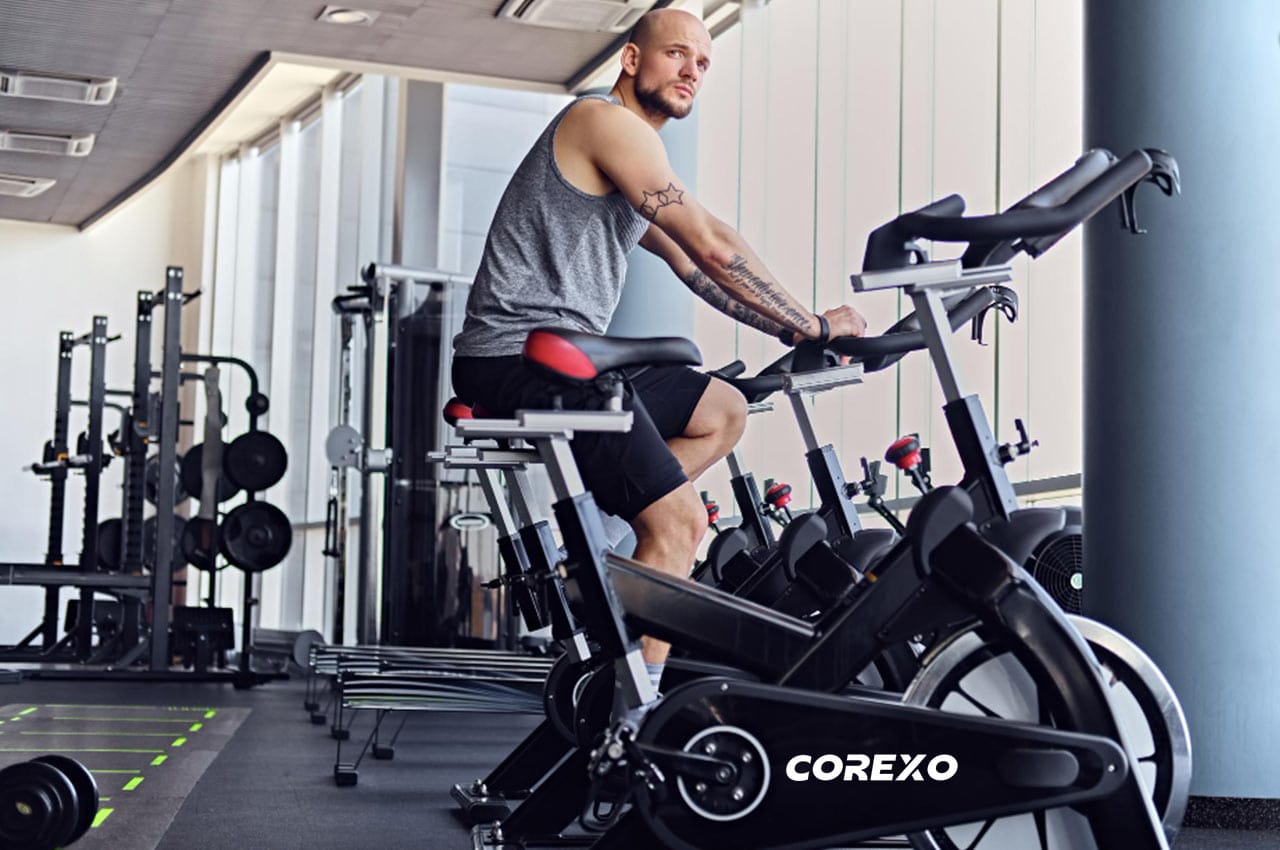
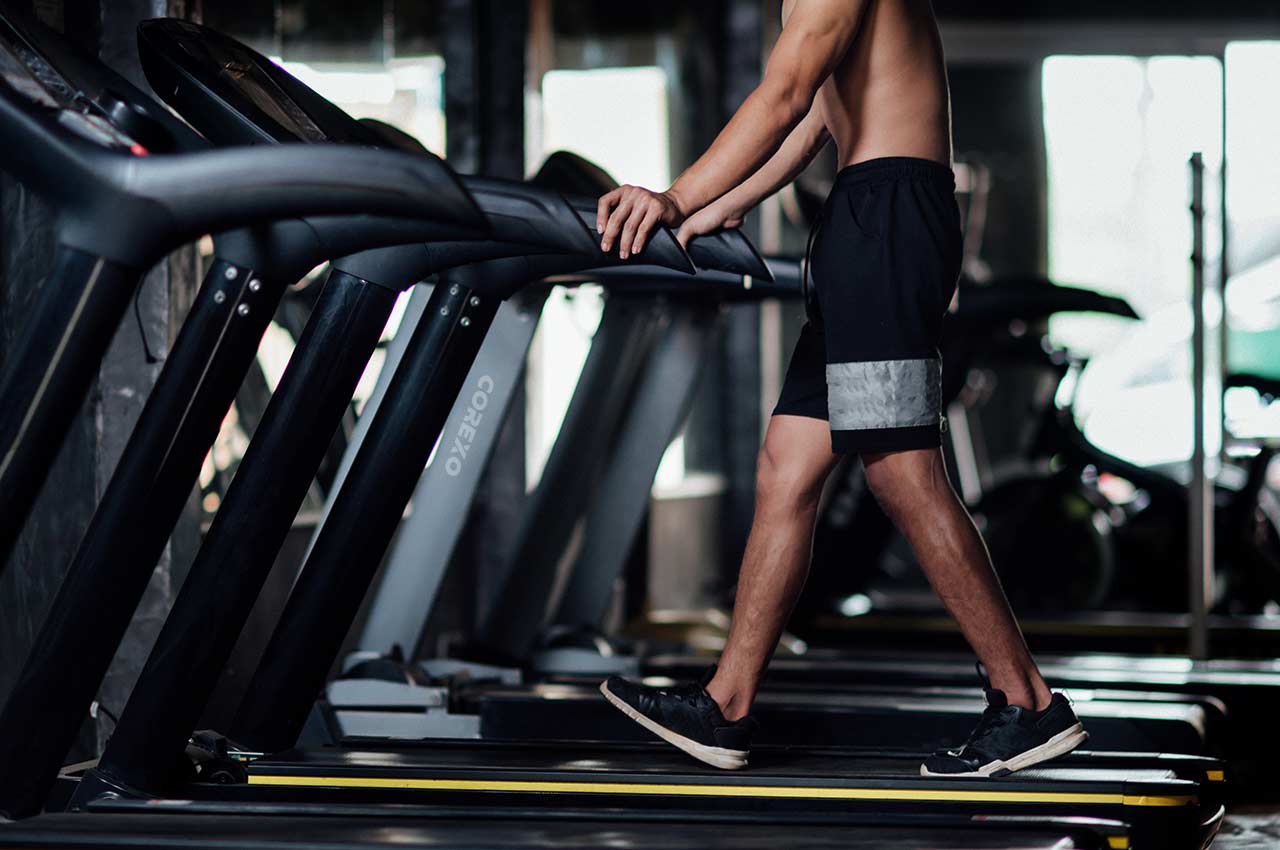
For cardio zones, connect the commercial gym equipment cleaning checklist with the Corexo aerobic training equipment categories. Treadmill consoles, handrails, emergency controls, bicycle seats, pedals, elliptical handles, and stair-climber contact points may require different access and drying procedures.

Weekly Cleaning and Condition Review
A weekly commercial gym equipment cleaning checklist should address areas missed during fast daily work. Review the sides and backs of machines, accessible frame joints, storage shelves, under-equipment floor areas, accessory racks, ventilation openings that can be cleaned without disassembly, and the condition of reusable cleaning tools.
Cleaning is also an observation opportunity. Staff may notice loose upholstery, torn seams, damaged grips, fluid intrusion, unusual residue, rust, or a change in equipment stability. Record these findings in the commercial gym equipment cleaning checklist, then transfer mechanical concerns into the commercial gym equipment maintenance checklist. Cleaning staff should not remove guards, adjust cables, or perform repairs beyond their training.
Adapt the Checklist by Equipment Category
Strength machines and benches
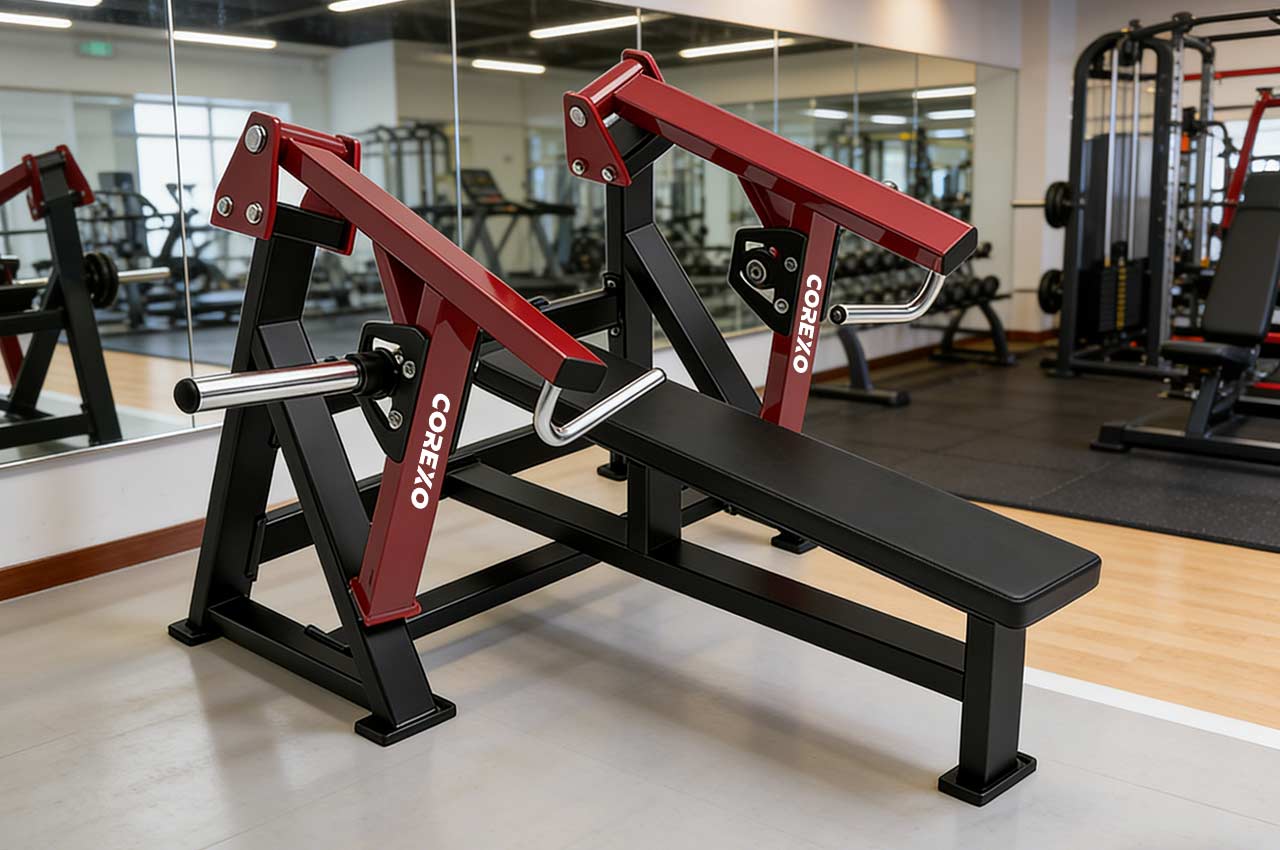
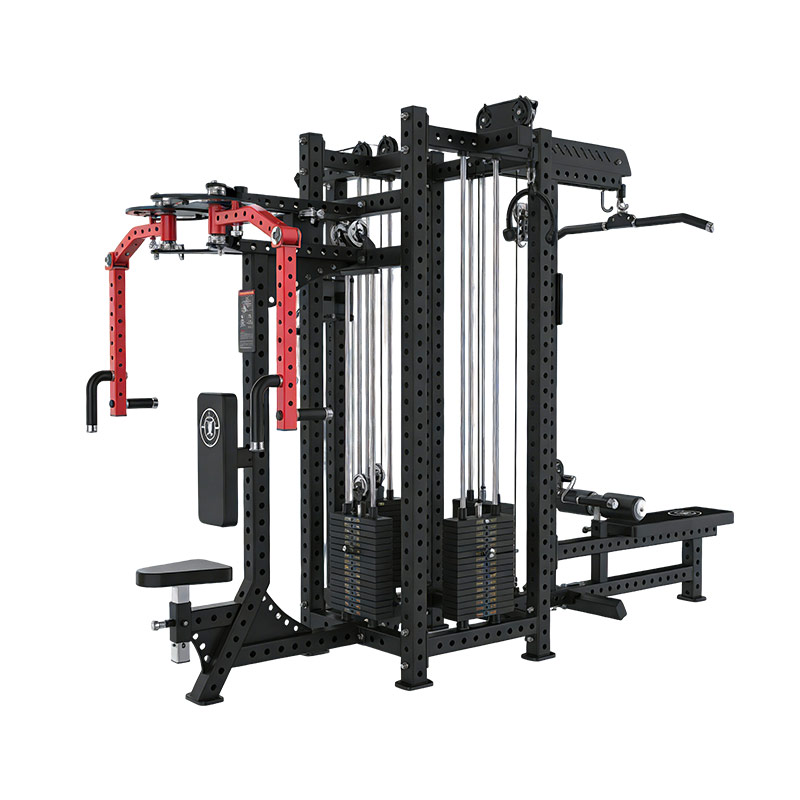
For selectorized, plate-loaded, multi-station, and bench equipment, include seats, back pads, adjustment handles, selector pins, grips, weight-storage points, accessible guards, and surrounding floors. Review the Corexo strength equipment range when building an asset-specific commercial gym equipment cleaning checklist.
Free weights and functional accessories
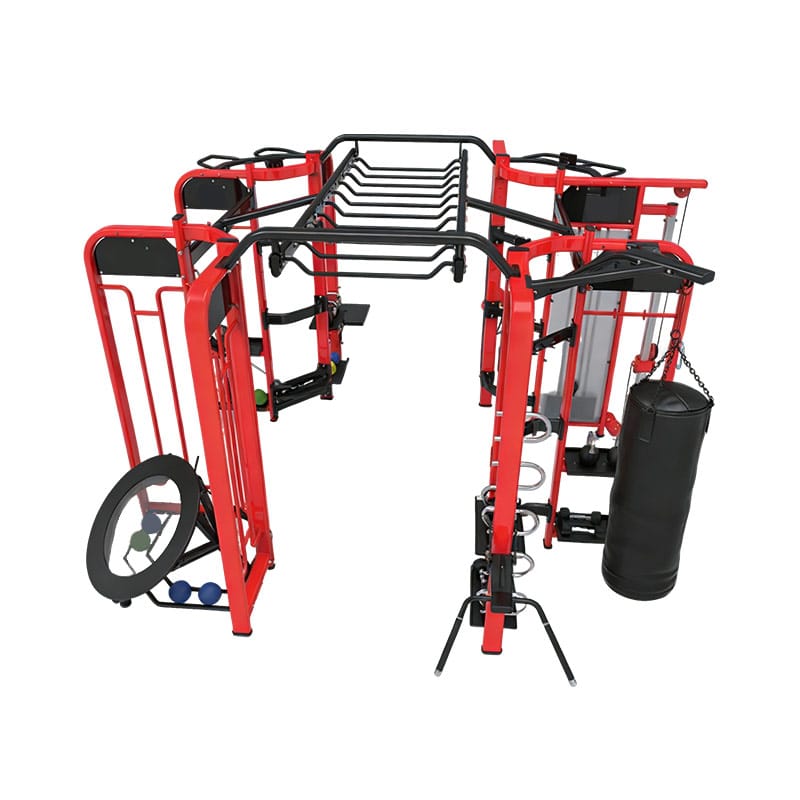
Dumbbells, plates, bars, handles, mats, bands, and other accessories move between users and zones. Give each item a cleaning method and storage location. Remove damaged items from service rather than returning them to the rack after wiping.
Control Chemicals, Contact Time, and Staff Exposure
When a disinfectant is required, the commercial gym equipment cleaning checklist must reflect the product label. The EPA disinfectant guidance explains that directions identify approved use sites, application methods, dilution, and contact time. A surface may need to remain visibly wet for the full labeled contact time. Wiping it dry too early can defeat the intended process.
The commercial gym equipment cleaning checklist should state that staff must never mix chemicals unless the product directions expressly permit it. Label secondary containers, provide ventilation, use required personal protective equipment, and store products securely. For U.S. workplaces, the OSHA Hazard Communication standard includes requirements concerning hazardous chemicals and Safety Data Sheets. Other jurisdictions have their own rules.
Train staff to read both the product label and Safety Data Sheet before adding a product to the commercial gym equipment cleaning checklist. Training should cover dilution, application, required protection, spill response, first aid, storage, and disposal. Keep the checklist operational: if the specified supply is unavailable, staff should escalate rather than substitute an unapproved chemical.
Use Records to Improve Accountability
A commercial gym equipment cleaning checklist becomes useful evidence only when entries identify the zone or asset, date, time, completed task, staff member, exception, and corrective action. Avoid a single end-of-day tick box for an entire facility. It cannot show which equipment was unavailable, which shift completed the task, or whether a reported defect was escalated.
Managers should review the commercial gym equipment cleaning checklist for repeated missed areas, excessive product use, member complaints, damaged surfaces, and supplies that run out too often. Use those findings to adjust staffing and frequency. Cleaning records should support operations, not become paperwork that no one reads.
When Equipment Should Stay Out of Service
Review the commercial gym equipment cleaning checklist before removing equipment from use when a surface cannot be cleaned adequately, liquid may have entered an electrical or mechanical area, a chemical has damaged a component, or safe operation is uncertain. Mark the item clearly and escalate it to the responsible manager or technician. The commercial gym equipment cleaning checklist should record the reason, equipment ID, isolation time, and person authorized to return it to use.
For recently installed facilities, connect cleaning procedures with the commercial gym equipment installation checklist. The handover package should identify cleaning limitations before operations begin.

Frequently Asked Questions
How often should commercial gym equipment be cleaned?
Set frequency according to contact level, traffic, visible soil, facility policy, public-health guidance, and equipment instructions. High-touch shared surfaces generally require more frequent attention than low-touch frame areas.
Can one product be used on every machine?
Do not assume so. Confirm compatibility with each material and follow the equipment and cleaning-product instructions. Electronics, upholstery, grips, painted frames, and flooring can require different methods.
Is member wiping enough?
Member participation can support hygiene, but the facility still needs a managed commercial gym equipment cleaning checklist with staff ownership, verification, supplies, and escalation.
Should equipment be disinfected after every use?
Cleaning and disinfection are different processes. Follow current health guidance, local requirements, the disinfectant label, and equipment instructions instead of applying a universal rule.
What should happen when cleaning reveals damage?
Record the defect, isolate the equipment when safe operation or adequate cleaning is uncertain, and transfer the issue to the responsible manager or qualified technician.
Create a Cleaning Routine Staff Can Follow
A reliable commercial gym equipment cleaning checklist defines surfaces, products, methods, frequency, ownership, drying, records, and escalation. It protects equipment materials while giving staff clear actions that can be checked and improved.
Explore Corexo commercial fitness equipment or contact the Corexo team when planning equipment documentation and operating requirements for a commercial fitness project.