Table of Contents
Introduction
Commercial strength training equipment is no longer an optional add-on for fitness facilities. It has become one of the most important parts of a professional gym, hotel fitness room, apartment fitness center, office wellness space, or training center.
Today’s users expect more than a few cardio machines and basic accessories. They want equipment that helps them build strength, improve body composition, train safely, and progress over time. For facility owners and project buyers, this means the strength area must be planned carefully. It should be durable, easy to use, space-efficient, attractive, and suitable for long-term commercial operation.
A strong equipment plan does not simply mean buying more machines. It means choosing the right mix of selectorized machines, plate-loaded machines, benches, racks, free power equipment, and functional training systems. Corexo provides commercial fitness equipment for different project scenarios, including commercial gyms, hotel and apartment fitness spaces, office gyms, and training centers.
This guide explains how to choose commercial strength training equipment from a practical project perspective, so your facility can support real users, reduce maintenance pressure, and create long-term value.
Why Strength Training Equipment Matters in Commercial Fitness Projects
Strength training has become a core part of modern fitness behavior. Many users now understand that resistance training supports muscle development, physical performance, daily movement ability, and long-term health. Public health organizations such as the World Health Organization and the CDC both emphasize muscle-strengthening activity as part of adult physical activity recommendations.
For commercial facilities, this creates a clear business opportunity. A well-planned strength zone can attract beginners, experienced gym users, personal trainers, athletes, office workers, hotel guests, and residents. It also increases the perceived value of the facility because strength equipment often looks professional, permanent, and performance-oriented.
Commercial strength training equipment helps facilities provide:
Guided training for beginners
Progressive resistance for experienced users
Full-body workout coverage
More training variety
Better member retention potential
Higher facility professionalism
Stronger brand positioning
Long-term equipment value
For gyms, strength equipment can become a key membership driver. For hotels and apartments, it can upgrade the fitness amenity from basic to premium. For offices, it can support employee wellness programs. For training centers, it can form the foundation of structured coaching and performance training.
Understand the Different Types of Commercial Strength Training Equipment
Before choosing equipment, buyers should understand the main categories. Each type serves a different user group and training purpose.
| Equipment Type | Main Advantage | Best For |
|---|---|---|
| Selectorized strength machines | Easy to use, guided movement, fast adjustment | Beginners, general gym users, hotels, apartments, offices |
| Plate-loaded machines | Stronger training feel, higher loading potential | Commercial gyms, strength zones, training centers |
| Benches and racks | Flexible free weight training | Gyms, training centers, advanced users |
| Multi-station machines | Multiple exercises in limited space | Hotels, apartments, compact gyms, office gyms |
| Functional training systems | Flexible movement and small group training | Modern gyms, studios, training centers |
Corexo’s strength training equipment category supports different facility needs, from guided resistance machines to multi-station systems. For buyers planning a complete strength area, it is usually better to combine several equipment types rather than rely on only one category.
Start With the Facility Type Before Choosing Machines
The right commercial strength training equipment depends heavily on where it will be used. A commercial gym, hotel gym, apartment fitness room, office gym, and training center all have different user expectations.
A commercial gym usually needs a complete strength system with selectorized machines, plate-loaded equipment, benches, racks, and free power equipment. Users may train frequently and expect variety.
A hotel gym usually needs equipment that is easy to understand, quiet, compact, and visually consistent with the property environment. Guests may not have time to learn complex machines.
An apartment fitness room needs durable equipment that can serve residents with different training levels while using space efficiently.
An office gym often needs simple, low-noise, low-maintenance equipment that supports short workouts during the workday.
A training center may need stronger structural performance, more free weight options, functional training systems, and equipment suitable for coached sessions.
This is why Corexo separates solutions by application scenario, including hotel and apartment fitness equipment and office gym equipment solutions. Matching equipment to the operating environment helps avoid overbuying, underbuying, or choosing machines that users will not actually use.
Build a Balanced Strength Zone Instead of a Random Machine List
A common mistake in gym planning is selecting machines one by one without thinking about the full training journey. A better approach is to build a balanced strength zone.
A complete strength area should support the major movement patterns:
Push movements
Pull movements
Squat and leg press movements
Hip hinge and posterior chain movements
Core training
Upper body isolation
Lower body isolation
Cable and functional movement
This does not mean every facility needs every possible machine. It means the final equipment mix should allow users to train the full body without obvious gaps.
For example, a commercial gym may include chest press, shoulder press, lat pulldown, seated row, leg press, leg extension, leg curl, cable crossover, benches, racks, and plate-loaded machines. A hotel gym may use fewer machines but still cover chest, back, legs, arms, and core through compact multi-function equipment.
A strong commercial strength training equipment plan should answer one question: Can users complete an effective full-body workout in this space?
Selectorized Machines Are Essential for User-Friendly Strength Training
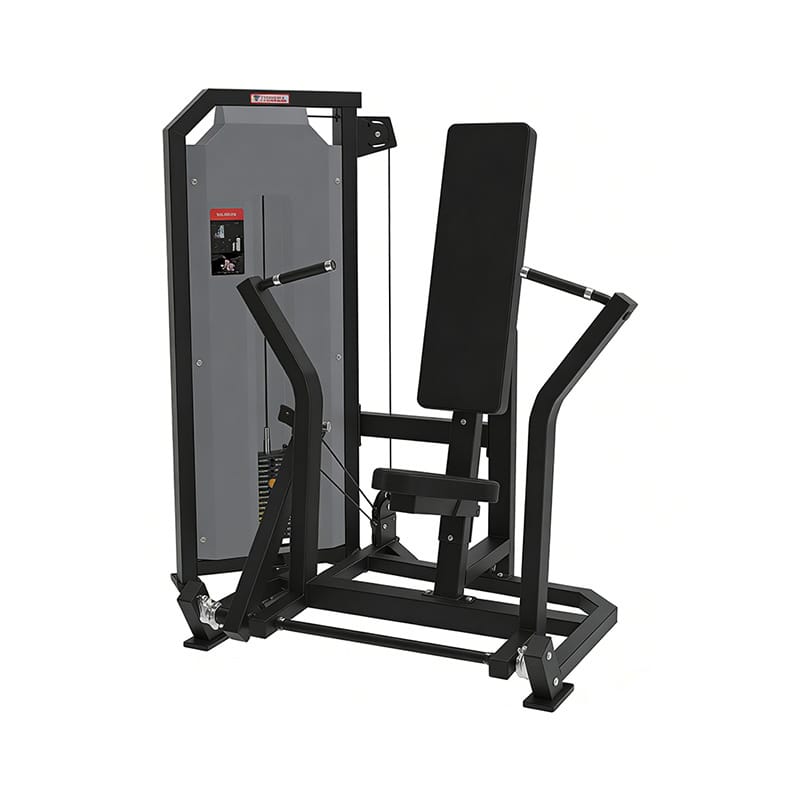
Selectorized machines are often the foundation of a commercial strength zone. They use a weight stack and pin adjustment system, making them easy for most users to operate.
These machines are especially valuable for beginners because the movement path is guided. Users do not need to load plates, balance a barbell, or understand complex setup steps. This makes selectorized equipment suitable for commercial gyms, hotels, apartments, offices, and shared fitness rooms.
Key advantages of selectorized strength machines include:
Simple weight adjustment
Guided movement path
Lower learning barrier
Cleaner training flow
Suitable for general users
Easy staff instruction
Good for full-body circuit planning
For project buyers, selectorized machines help make the strength zone more accessible. They are also useful in facilities where staff support may be limited, such as hotels, apartments, and office gyms.
When choosing selectorized equipment, pay attention to frame stability, seat adjustment, handle comfort, cable smoothness, pulley quality, cushion durability, and clear movement design.
Plate-Loaded Equipment Supports Serious Strength Users
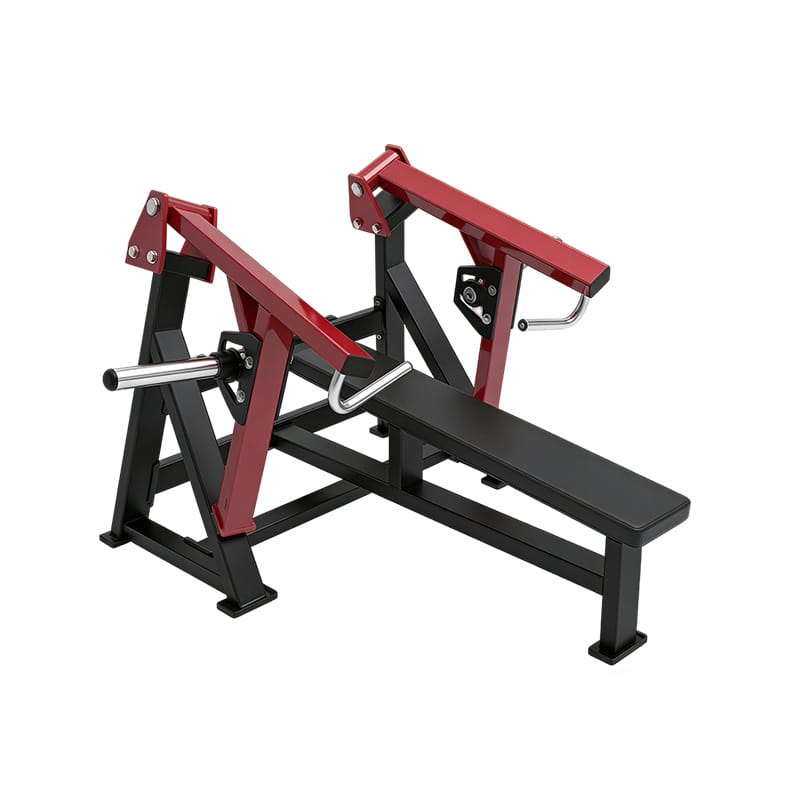
Plate-loaded machines are popular in commercial gyms and training centers because they provide a stronger resistance training experience. Users load weight plates manually, and the machines often feel closer to free weight training while still providing more guidance than a barbell.
Plate-loaded machines are useful for:
Advanced gym members
Strength-focused users
Bodybuilding-style training
High-load lower body movements
Commercial strength areas
Training centers and performance spaces
However, plate-loaded equipment requires more planning. It needs space for plate storage, user movement, loading and unloading, and safe circulation. If the layout is too tight, the equipment becomes harder to use and less safe during busy hours.
For buyers, plate-loaded equipment should not replace all selectorized machines. Instead, it should complement them. Selectorized machines serve general users and beginners, while plate-loaded machines serve users who want a more intense strength training experience.
A commercial gym that includes both can appeal to a wider range of members.
Benches, Racks, and Free Power Equipment Create Training Flexibility
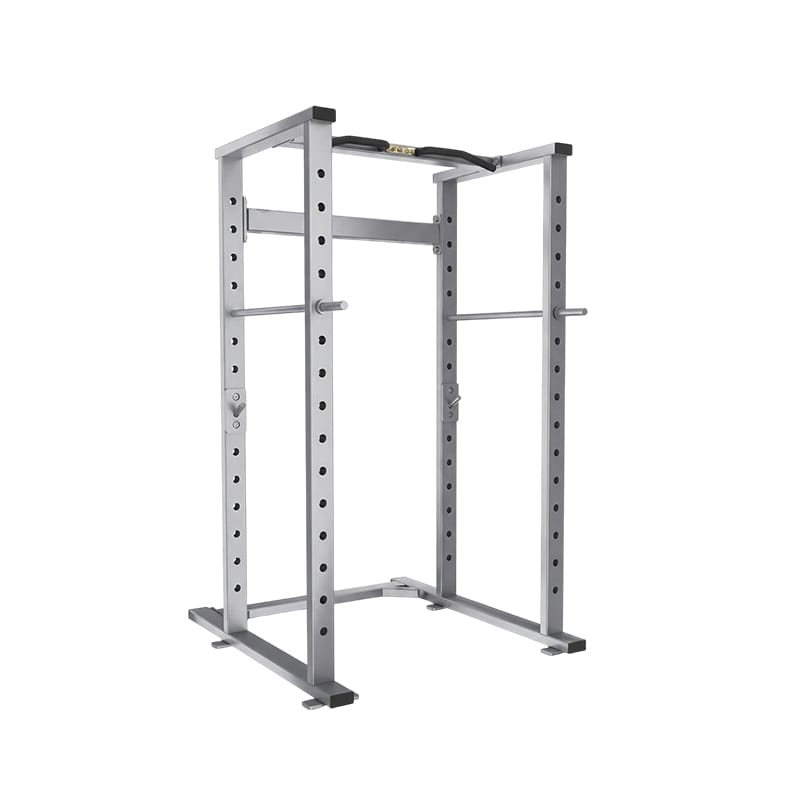
No serious strength zone is complete without benches, racks, and free power equipment. These pieces support flexible training and help users perform dumbbell, barbell, and bodyweight movements.
Corexo’s free power equipment includes options such as training benches and racks and frames. These products are important for commercial gyms and training centers because they allow users to train multiple movement patterns with fewer fixed machines.
A well-planned free power area can support:
Bench press variations
Incline and flat dumbbell training
Squats
Pull-ups
Barbell rows
Shoulder press movements
Core training
Functional strength work
The key is space. Benches and racks need more clearance than many buyers expect. Users move around the equipment, carry weights, adjust positions, and perform exercises with a wide range of motion.
A crowded free weight zone can reduce the value of otherwise good equipment. For commercial projects, the layout should allow safe movement and easy plate storage.
Multi-Station Machines Are Valuable for Compact Commercial Spaces
Not every facility has enough room for a large strength equipment lineup. This is where multi-station machines become useful.
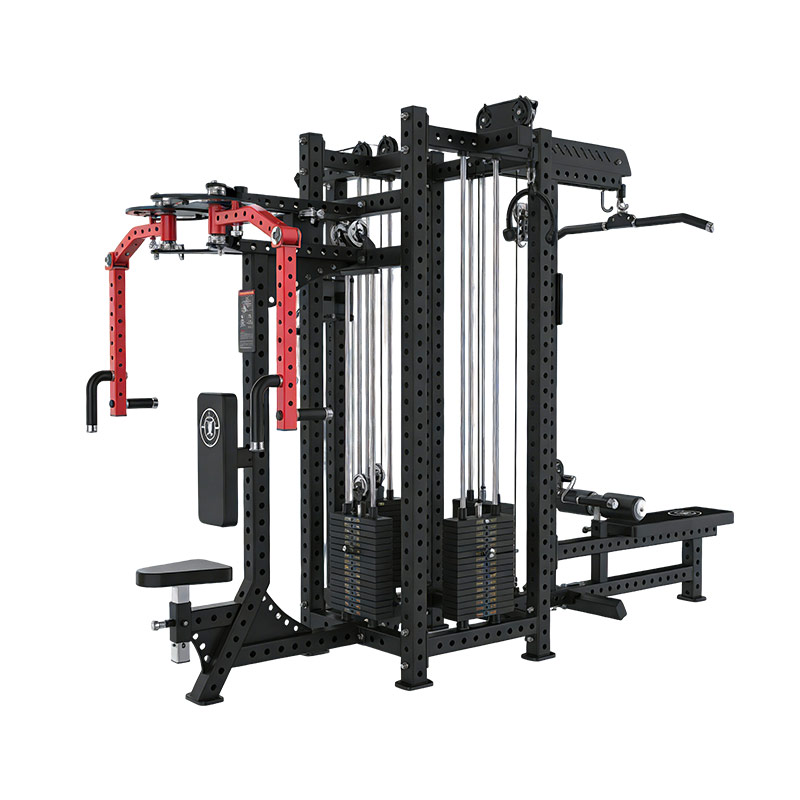
Corexo’s multi-station machines can support multiple exercises in one equipment system. This makes them especially practical for hotels, apartments, office gyms, and compact commercial fitness rooms.
Multi-station machines can help buyers provide more training variety without overcrowding the space. They may support movements such as cable training, pressing, pulling, leg training, and general strength exercises depending on the configuration.
When choosing a multi-station machine, buyers should consider:
Number of users it can support
Exercise variety
Access from different sides
Cable smoothness
Footprint and clearance
Ease of adjustment
Maintenance access
Suitability for beginners
A multi-station machine should not be placed in a tight corner if users need access from multiple sides. Its value depends on proper positioning and enough movement space.
Functional Training Systems Add Modern Training Variety
Modern strength training is not limited to fixed machines. Many users want open movement, cable training, core work, mobility exercises, and small group training. Functional training systems help meet this demand.
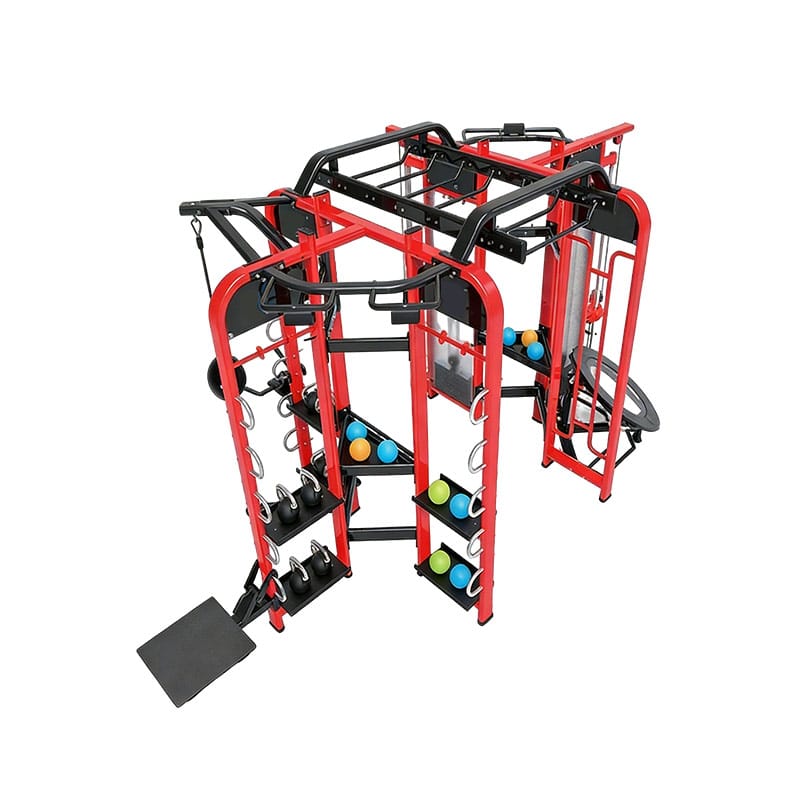
Corexo’s FT multi-functional training stand series supports flexible training spaces where users can perform different strength and conditioning movements.
Functional training systems are useful for:
Personal training areas
Small group training
Cable-based strength exercises
Mobility and core training
Athletic conditioning
Modern commercial gym zones
Training center programs
The main planning requirement is open space. Functional equipment should not be crowded by large fixed machines. Users need room to move, rotate, stretch, pull, step, and change direction.
For commercial gyms, functional training areas can improve user engagement. For offices and apartments, they create a flexible workout area without requiring too many machines. For training centers, they support coaching and performance programs.
Durability Should Be Evaluated Before Appearance
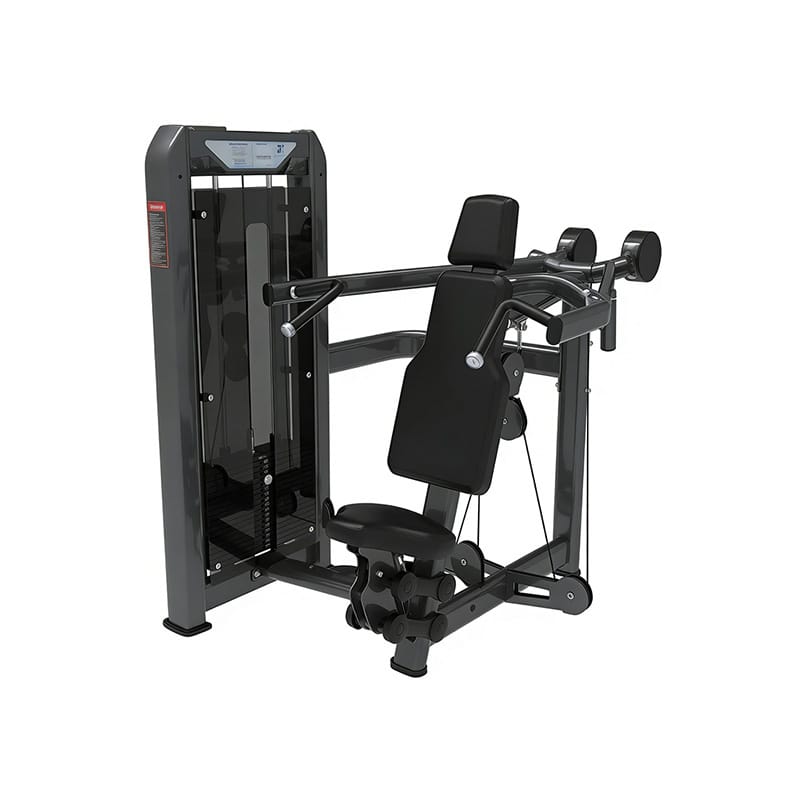
Commercial strength training equipment must handle repeated daily use. Appearance matters, but durability matters more.
A machine may look attractive in a catalog, but real commercial use tests its frame, welding, coating, cables, bearings, upholstery, adjustment system, and moving parts. In shared fitness environments, equipment is used by people with different strength levels, body sizes, and training habits.
Key durability factors include:
Stable frame structure
Consistent welding
Strong surface coating
Smooth cable and pulley system
Wear-resistant upholstery
Stable seat adjustment
Reliable moving parts
Low-noise operation
Easy cleaning
Long-term spare parts support
Industry standards also show why equipment design and safety matter. ASTM’s indoor fitness equipment standards, such as ASTM F2276, address design and manufacturing parameters for fitness equipment. For buyers, the practical point is simple: commercial equipment should be built with safety, stability, and repeated use in mind.
Corexo focuses on commercial-grade stability, durability, low-noise performance, and easy maintenance, making its equipment suitable for long-term fitness facility operation.
Plan Maintenance Access From the Beginning
Maintenance is often ignored during equipment selection, but it becomes important after installation. Commercial strength equipment needs cleaning, inspection, adjustment, and occasional part replacement.
A good strength zone should allow staff to access machines without moving multiple pieces of equipment. Cable systems, adjustment points, moving parts, and upholstery should be easy to inspect.
Buyers should ask suppliers about:
Maintenance guidance
Spare parts availability
Cable and pulley replacement
Upholstery durability
Frame cleaning requirements
Installation support
Technical documentation
After-sales communication
This is especially important for high-traffic commercial gyms and multi-location projects. Downtime can affect user satisfaction and daily operation. A supplier with reliable support can help reduce these risks.
Corexo supports project buyers through product matching, configuration support, and after-sales communication. Buyers can submit requirements through the contact page for equipment planning and project discussion.
Match Equipment Design With Facility Branding
Commercial strength training equipment also affects the visual identity of a facility. A professional strength zone can make the gym feel serious, modern, and trustworthy.
For hotels and apartments, the equipment should match the interior style and create a premium atmosphere. For commercial gyms, the strength zone should reflect the brand’s training positioning. For office gyms, the equipment should look clean, efficient, and approachable. For training centers, the design should communicate performance and durability.
Customization may include:
Frame color
Upholstery color
Logo placement
Equipment combination
Zone configuration
Visual consistency across product categories
However, customization should never weaken commercial performance. The best equipment combines visual identity with structural reliability.
Corexo supports custom fitness equipment configurations for different project types, helping buyers create a consistent and professional facility image.
Avoid Common Strength Equipment Purchasing Mistakes
Many commercial fitness projects face problems because equipment decisions are made too quickly. These mistakes can reduce user satisfaction and create long-term operational issues.
Common mistakes include:
Choosing machines only by appearance
Ignoring the target user group
Buying too many similar machines
Forgetting full-body training coverage
Leaving no space around benches and racks
Mixing equipment without a clear zone plan
Ignoring maintenance access
Choosing residential-style equipment for commercial use
Overlooking noise and adjustment quality
Not planning for spare parts and after-sales support
A smarter approach is to think from the user’s workout experience. Can beginners understand the machines? Can advanced users train seriously? Can staff maintain the equipment? Can the facility expand later? Does the equipment match the brand and operating environment?
These questions lead to better purchasing decisions.
Commercial Strength Training Equipment Checklist for Buyers
Before confirming an equipment order, use this checklist to review the project.
| Planning Area | What to Check | Why It Matters |
| User group | Beginners, general users, athletes, residents, guests, employees | Helps choose the right equipment level |
| Facility type | Gym, hotel, apartment, office, training center | Determines equipment mix and layout |
| Training coverage | Push, pull, legs, core, free weight, functional training | Supports complete workouts |
| Durability | Frame, welding, coating, cables, cushions | Affects long-term use |
| Space planning | Clearance, traffic flow, storage, access | Improves safety and experience |
| Maintenance | Spare parts, cleaning, inspection access | Reduces downtime |
| Customization | Color, logo, configuration | Supports brand identity |
| Supplier support | Product matching, layout advice, after-sales service | Reduces project risk |
This checklist helps buyers move from simple product comparison to complete project planning.
How Corexo Supports Commercial Strength Training Projects
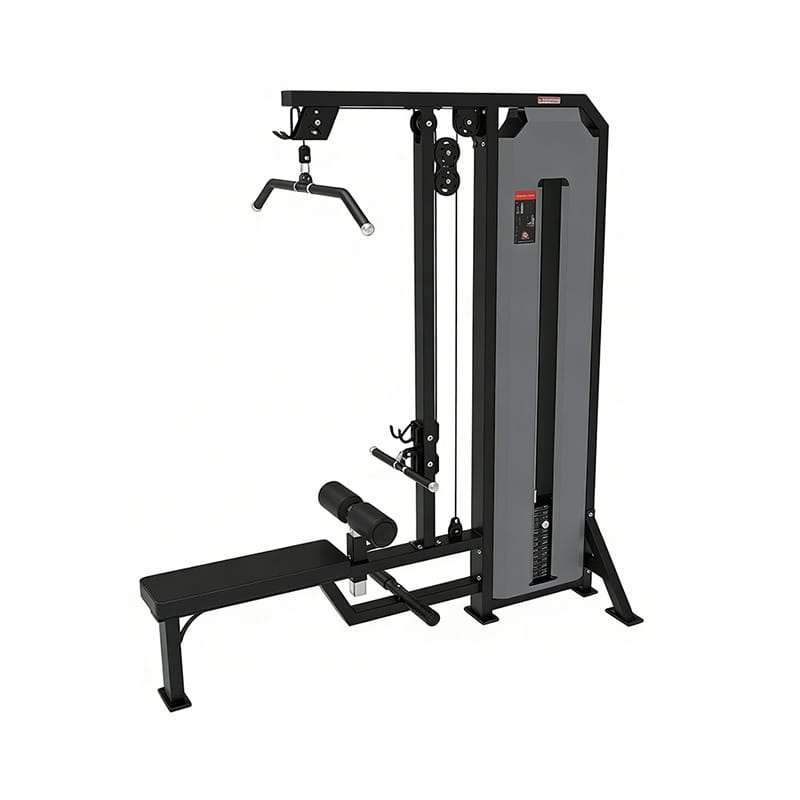
Corexo provides commercial strength training equipment for different fitness facility scenarios. Its product system includes selectorized strength machines, multi-station machines, benches, racks, free power equipment, cardio equipment, and functional training systems.
For commercial gyms, Corexo can support complete strength zone planning with durable equipment for high-frequency use. For hotels and apartments, Corexo offers equipment options that help balance space efficiency, visual quality, and user-friendly operation. For office gyms, Corexo helps create practical wellness spaces with reliable commercial equipment. For training centers, Corexo provides strength and functional training solutions for more intensive use.
Corexo’s project support focuses on:
Commercial-grade equipment selection
Application-based equipment matching
Custom configuration
Strength zone planning
Long-term durability
Easy maintenance
Stable supplier communication
For buyers planning a new facility or upgrading an existing one, Corexo can help match commercial strength training equipment to the project’s space, user profile, and business goals.
FAQ
What is commercial strength training equipment?
Commercial strength training equipment refers to strength machines, racks, benches, free power equipment, multi-station machines, and functional training systems designed for gyms, hotels, apartments, offices, and training centers.
What strength equipment should a commercial gym include?
A commercial gym usually needs selectorized machines, plate-loaded machines, benches, racks, cable systems, free power equipment, and functional training equipment to support full-body workouts and different training levels.
Is selectorized strength equipment suitable for beginners?
Yes. Selectorized machines are usually easier for beginners because they offer guided movement paths, simple weight adjustment, and clear exercise positioning.
Why do commercial gyms need free power equipment?
Free power equipment such as benches, racks, and frames supports flexible strength training, barbell exercises, dumbbell movements, and advanced training programs.
Are multi-station machines good for small fitness rooms?
Yes. Multi-station machines are useful for hotels, apartments, office gyms, and compact commercial spaces because they provide multiple exercise options within a smaller footprint.
How do I choose durable commercial strength equipment?
Focus on frame stability, welding quality, coating durability, cable and pulley smoothness, upholstery strength, adjustment stability, maintenance access, and supplier after-sales support.
Can strength training equipment be customized?
Yes. Many commercial projects require customization such as frame color, upholstery color, logo placement, and equipment configuration to match facility branding.
Can Corexo help with strength equipment project planning?
Yes. Corexo provides commercial strength training equipment and project support for gyms, hotels, apartments, offices, and training centers. Buyers can contact Corexo for equipment matching and configuration support.
Conclusion
Commercial strength training equipment plays a major role in the success of modern fitness facilities. It affects user satisfaction, training variety, facility image, safety, durability, and long-term operation.
The best strength zones are not created by choosing random machines. They are built by understanding the facility type, target users, training goals, available space, maintenance needs, and brand positioning. A balanced plan may include selectorized machines, plate-loaded equipment, benches, racks, multi-station machines, and functional training systems.
For project buyers, the key is to choose commercial-grade equipment that can support real daily use. Durability, user experience, layout planning, customization, and supplier support all matter.
Corexo provides commercial strength training equipment for gyms, hotels, apartments, offices, and training centers. To explore product options, visit the Corexo strength training equipment page or contact Corexo for project configuration support.