Table of Contents
Introduction
Choosing a commercial fitness equipment supplier is not just a purchasing decision. For gym owners, hotel developers, apartment operators, corporate wellness planners, distributors, and training center managers, it is a long-term operational decision that affects user experience, maintenance workload, equipment life, brand image, and future expansion.
Many buyers begin by comparing product photos, machine names, and catalog lists. However, real commercial fitness projects require more than attractive equipment. They need stable manufacturing, consistent quality control, clear product categories, reliable spare parts, customization capability, layout support, and after-sales response.
This guide explains how to evaluate a commercial fitness equipment supplier from a project buyer’s perspective. It focuses on what matters beyond the catalog, including durability, application matching, manufacturing standards, customization, compliance awareness, service support, and long-term cooperation.
Corexo provides commercial fitness equipment for gyms, hotels, apartments, offices, and training centers, with product categories covering strength training equipment, aerobic training equipment, free power equipment, and multi-functional training systems. For project buyers, the right supplier should help build a complete fitness environment, not simply ship individual machines.
Why the Supplier Decision Matters More Than One Machine
A single machine can be evaluated by structure, function, appearance, and comfort. A full commercial project is different. It involves many machines working together under repeated daily use.
A commercial gym may require equipment for strength zones, cardio zones, free weight areas, functional training zones, and recovery spaces. A hotel gym may need quieter equipment with a premium visual style. An apartment fitness room may need compact machines that are easy for residents to use. An office gym may need low-noise cardio and simple strength equipment for short workouts.
That is why selecting a commercial fitness equipment supplier should begin with project suitability. The supplier should understand how equipment performs in different environments and how product choices influence daily operation.
A good supplier helps answer questions such as:
Does the equipment match the target user group?
Can the machines handle repeated commercial use?
Can the supplier support space planning and product matching?
Are spare parts and technical support available after delivery?
Can product appearance be customized for the project?
Is the equipment system scalable for future expansion?
Corexo’s application solutions for commercial gyms, hotel and apartment fitness spaces, office gyms, and training centers are built around these scenario-based needs.
Start With Application Fit, Not Just Product Quantity
One of the most common procurement mistakes is asking, “How many machines can I buy for this space?” A better question is, “Which equipment combination will serve users properly for years?”
Application fit means the equipment matches the actual operating environment.
For a large commercial gym, the supplier should provide durable equipment for high traffic, including selectorized machines, plate-loaded machines, racks, benches, cardio machines, and functional training systems. For a hotel gym, the priority may be quiet operation, elegant appearance, compact size, and simple use. For an apartment gym, equipment should be space-efficient and low-maintenance. For a training center, structure, stability, and training variety may be more important.
This approach also aligns with global health recommendations. The World Health Organization and the CDC both emphasize the importance of aerobic activity and muscle-strengthening activity. For facility planners, this means a balanced equipment mix is usually more valuable than focusing only on cardio or only on strength.
A commercial fitness equipment supplier should help buyers create this balance. The goal is not only to fill space, but to support complete training needs.
Evaluate Manufacturing Capability Behind the Product
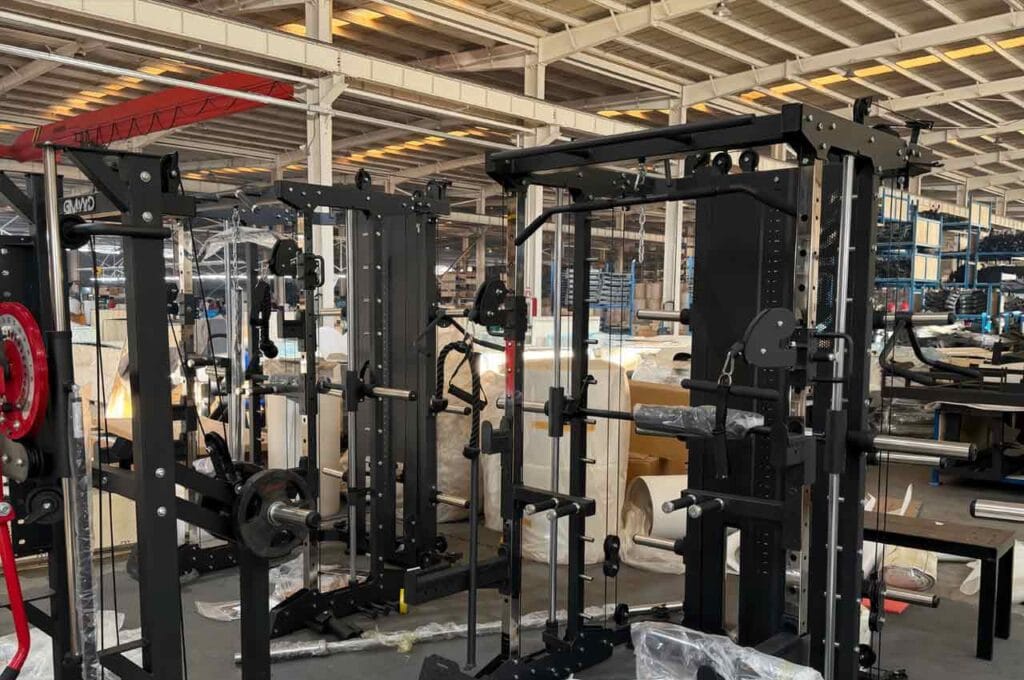
A professional supplier should be judged by what happens before the equipment reaches the showroom or project site. Manufacturing capability affects stability, durability, consistency, and maintenance performance.
Corexo’s brand story emphasizes manufacturing origin, commercial longevity, structural integrity, low-noise performance, surface durability, and modular design. These factors matter because commercial fitness equipment is exposed to repeated loading, continuous adjustment, sweat, cleaning chemicals, movement, vibration, and long operating hours.
When evaluating a supplier, pay attention to these manufacturing-related areas:
Frame structure and load-bearing geometry
Steel thickness and material consistency
Welding quality at stress points
Powder coating durability
Bearing and transmission system quality
Cable and pulley design
Cushion density and wear resistance
Adjustment mechanism stability
Batch consistency across multiple units
Inspection process before shipment
A supplier that only talks about appearance may not be suitable for serious commercial projects. Buyers should look for a supplier that can explain why the equipment is built for long-term use.
Check Product Category Coverage
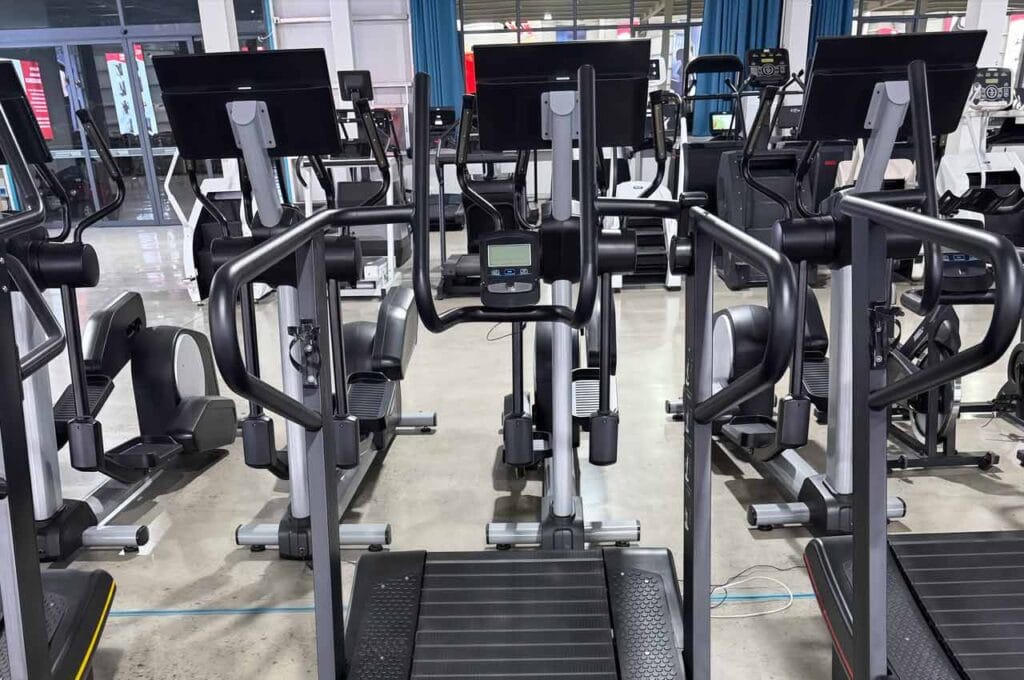
A strong commercial fitness equipment supplier should offer enough product coverage to support a complete facility. If the product range is too narrow, buyers may need to source from multiple suppliers, which can create inconsistency in design, quality, maintenance, and delivery.
A complete commercial fitness project usually requires several equipment categories.
| Equipment Category | Main Function | Best-Fit Project Areas |
|---|---|---|
| Strength training equipment | Guided resistance training and muscle development | Commercial gyms, training centers, apartments, offices |
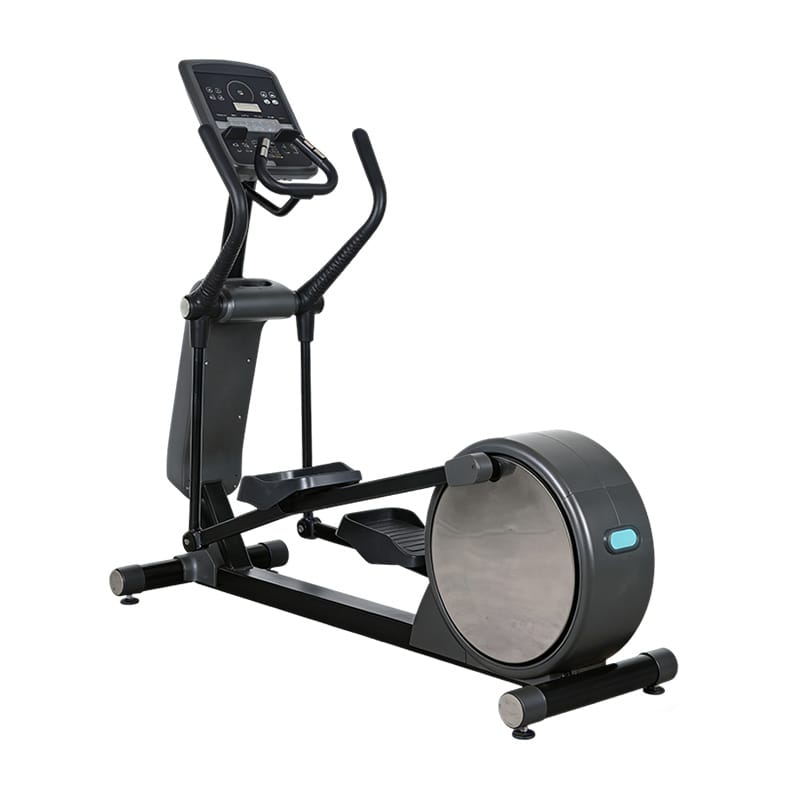
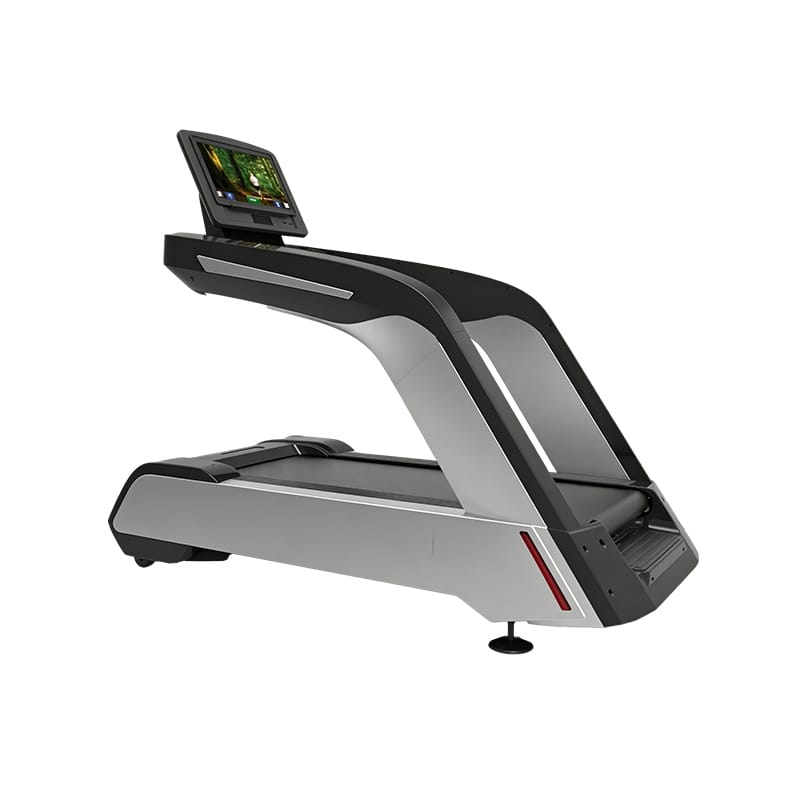
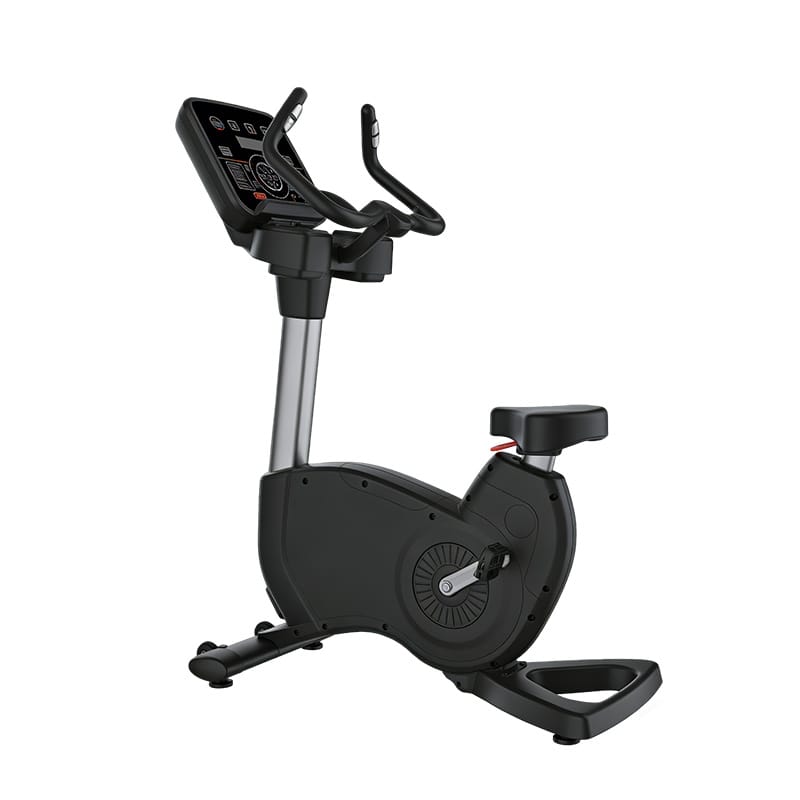
| Aerobic training equipment | Cardiovascular training and warm-up | Gyms, hotels, apartments, offices |
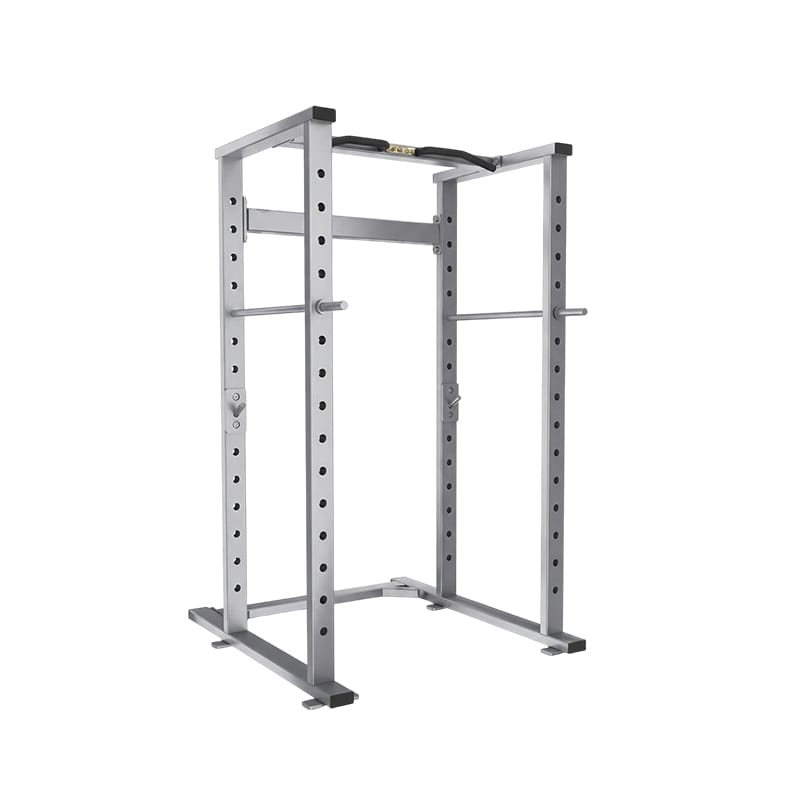
| Free power equipment | Bench, rack, and free weight training | Commercial gyms, strength areas, training centers |
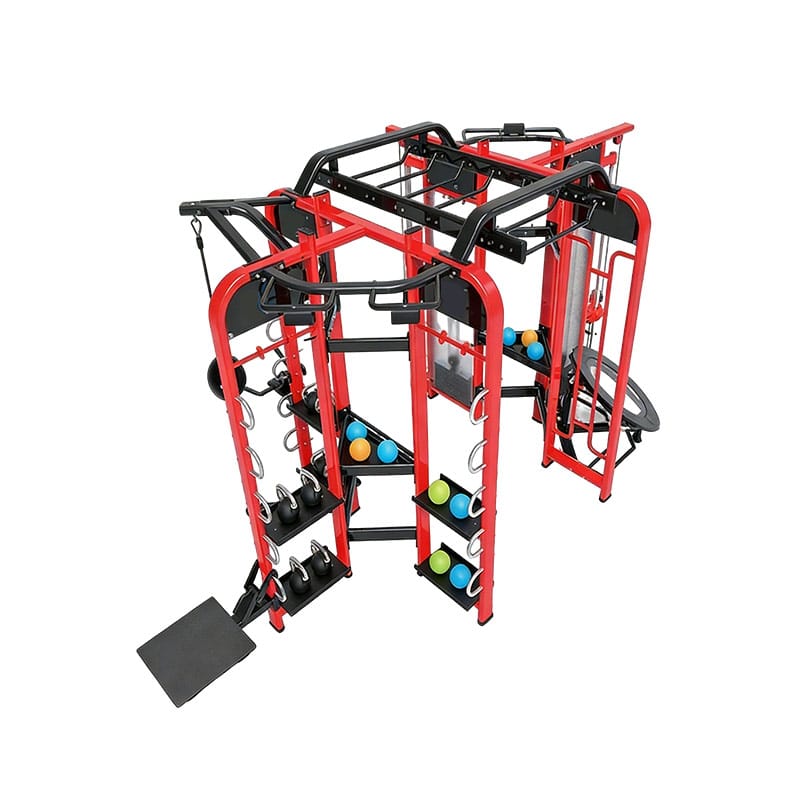
| Functional training systems | Flexible training, small group training, mobility work | Gyms, studios, training centers, office wellness spaces |
| Multi-station machines | Multiple exercises in limited space | Hotels, apartments, offices, compact gyms |
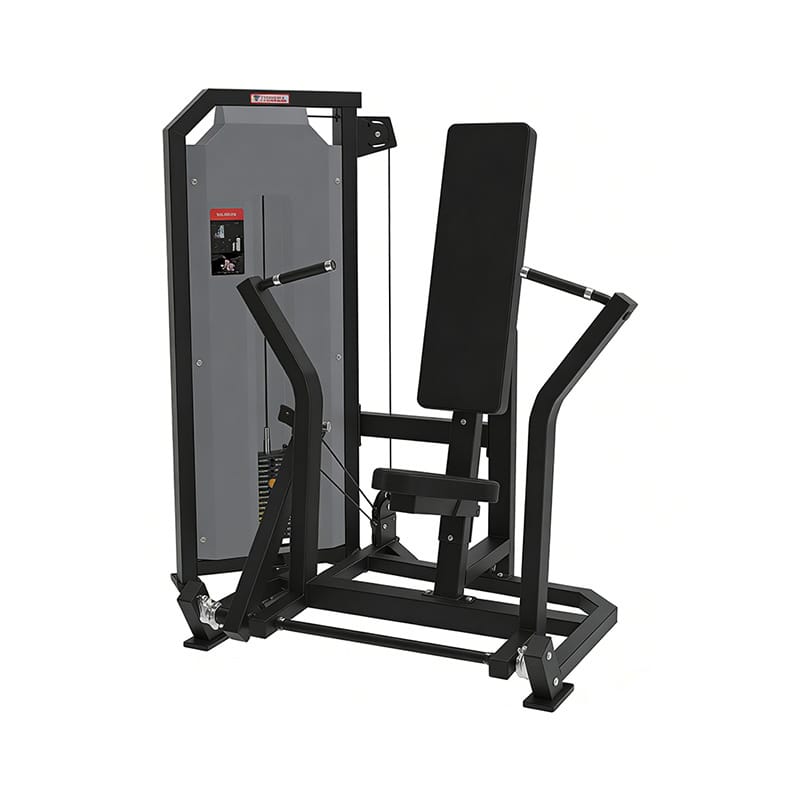
Corexo’s product system includes strength training equipment, aerobic training equipment, free power equipment, and FT multi-functional training stand series. This makes it easier for buyers to build a consistent equipment plan across different training zones.
Look for Commercial-Grade Durability, Not Residential Appearance
Commercial fitness equipment must survive conditions that residential equipment is not designed for. In a busy facility, machines may be used by many different users every day, with different body weights, training habits, adjustment styles, and intensity levels.
Commercial durability depends on repeated performance, not one-time strength.
A commercial fitness equipment supplier should be able to explain how equipment handles:
High-frequency daily use
Repeated loading and unloading
Frequent seat and handle adjustments
Long-term vibration
Sweat and cleaning exposure
Continuous user turnover
Noise control in shared environments
Maintenance access and replacement parts
Standards awareness is also important. For example, ASTM F2276 covers design and manufacturing parameters for indoor fitness equipment, including areas such as stability, support, edges, corners, tube ends, and accessible moving parts. A supplier does not need to turn every conversation into a technical standards discussion, but it should understand that safety and durability are part of commercial equipment design.
Assess Quality Control and Process Consistency
Quality control is not only about checking one sample before shipment. For commercial projects, especially bulk orders or multi-location rollouts, consistency matters across the entire order.
A professional supplier should have a repeatable quality process. This includes incoming material checks, production inspection, assembly verification, stability checks, finish inspection, packaging checks, and shipment preparation.
The official ISO 9001 quality management standard focuses on establishing, maintaining, and improving a quality management system. For buyers, the key lesson is simple: repeatable processes matter. A supplier with stable quality control is more likely to deliver consistent equipment across batches.
When discussing quality control with a commercial fitness equipment supplier, buyers can ask:
How are materials inspected before production?
How are welding and structure checked?
How is coating quality controlled?
How are moving parts tested?
How is final assembly inspected?
How are spare parts managed?
How is packaging designed to protect equipment in transit?
The best suppliers do not rely only on final inspection. They control quality throughout production.
Choose a Supplier That Supports Custom Configuration
Commercial fitness projects often require customization. This does not always mean a completely new product design. In many cases, customization includes frame color, upholstery color, logo placement, equipment combination, project configuration, or layout matching.
Customization is especially important for:
Hotel gyms that need a premium interior match
Apartment gyms that need compact and elegant equipment
Commercial gyms that need a consistent brand image
Training centers that need performance-focused equipment combinations
Distributors that need market-specific product positioning
Multi-location operators that need consistent visual identity
Corexo supports custom configurations for commercial fitness projects, including equipment matching for different application scenarios. Buyers can explore product categories through the Corexo products page and submit project requirements through the contact page.
A good customization process should not sacrifice durability. The supplier should maintain commercial-grade structure and production standards even when appearance or configuration changes.
Review Layout and Project Planning Support
A commercial fitness equipment supplier becomes more valuable when it can help buyers plan equipment around real space usage. Layout support reduces the risk of overcrowding, poor traffic flow, and equipment mismatch.
Project planning should consider:
Training zones
User movement paths
Clearance around equipment
Cardio visibility and ventilation
Free weight safety space
Functional training floor area
Noise-sensitive zones
Power requirements
Storage needs
Future expansion space
Cleaning and maintenance access
For a commercial gym, equipment should support multiple training styles. For a hotel, the layout should feel intuitive and comfortable for guests. For an office gym, the equipment should support efficient short workouts. For an apartment fitness room, every machine should earn its space.
Corexo’s commercial gym equipment solutions include modular equipment systems for free weight training, cardio training, and small group training areas, making layout planning easier for different project types.
Do Not Ignore After-Sales Support and Spare Parts
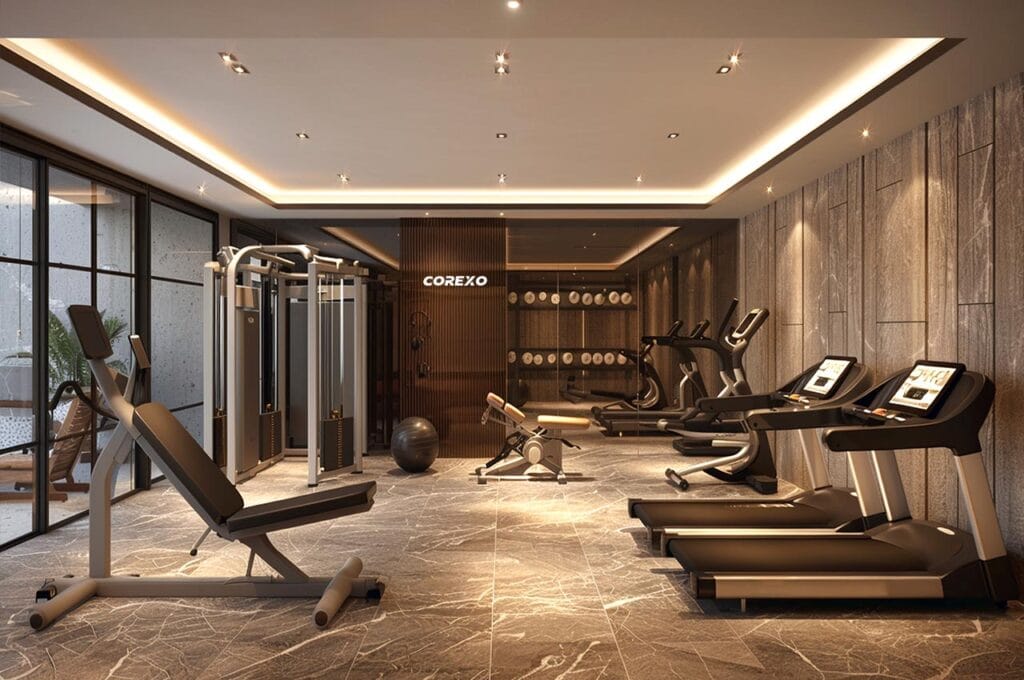
After-sales support is one of the clearest differences between a short-term seller and a long-term commercial fitness equipment supplier.
In real operation, equipment may need adjustment guidance, replacement parts, technical documents, maintenance advice, or installation support. A supplier that disappears after delivery can create major operational problems later.
Buyers should evaluate whether the supplier can provide:
Installation guidance
Technical documents
Maintenance recommendations
Spare parts availability
Fast communication
Support for bulk orders
Replacement part matching
Long-term cooperation for future expansion
This is especially important for distributors and project buyers. Stable spare parts support can reduce downtime and protect the user experience. When equipment is part of a revenue-generating facility, maintenance response directly affects daily operation.
Compare Supplier Types Carefully
Not every supplier operates the same way. Some focus on trading, some focus on manufacturing, and some provide full project support. Buyers should understand the difference before making a decision.
| Supplier Type | Possible Advantage | Possible Limitation |
| Trading supplier | Broad sourcing access | Less control over production consistency |
| Brand-only seller | Strong marketing presentation | May not provide deep manufacturing support |
| Manufacturing-based supplier | Better production control and customization | Requires clear project communication |
| Project solution supplier | Better equipment matching and planning | Needs accurate buyer requirements |
For commercial projects, a manufacturing-based supplier with project support is often more suitable because the buyer needs consistency, customization, technical communication, and long-term supply stability.
Corexo originates from a commercial fitness equipment manufacturing system and focuses on commercial durability, easy maintenance, and full-scenario equipment solutions. This is valuable for buyers who need more than a simple product list.
Ask the Right Questions Before Confirming an Order
Before selecting a commercial fitness equipment supplier, buyers should prepare practical questions. These questions reveal whether the supplier understands real project needs.
Useful questions include:
Which equipment categories do you recommend for my facility type?
Can you help match equipment to my space and user group?
What makes your equipment suitable for high-frequency commercial use?
How do you control frame, welding, coating, and assembly quality?
Do you support color customization or OEM/ODM requirements?
Can you provide installation guidance?
How do you support spare parts and maintenance?
Can your product system support future expansion?
Do you have experience with gyms, hotels, apartments, offices, or training centers?
How do you manage consistency for bulk orders?
A reliable supplier should answer these questions clearly. If the answers are vague, the buyer should slow down and request more details.
Match Equipment Selection With Business Goals
A gym project is not only about equipment. It is about the business outcome the equipment supports.
For example, a premium hotel gym may use fitness equipment to improve guest experience and property value. A commercial gym may use equipment variety to increase member satisfaction and retention. An apartment fitness room may use compact equipment to improve resident amenities. An office gym may support employee wellness and workplace appeal. A training center may need durable equipment for high-intensity use.
That means the same equipment category can serve different business goals.
Strength machines can help beginners train safely and confidently.
Plate-loaded machines can support serious strength users.
Cardio equipment can improve accessibility and warm-up options.
Free power equipment can create a professional strength zone.
Functional training systems can support flexible workouts and small group sessions.
Multi-station machines can improve space efficiency.
A good commercial fitness equipment supplier should understand this connection between equipment and business function.
Red Flags When Choosing a Commercial Fitness Equipment Supplier
Some supplier issues become visible only after the order is placed. Buyers can reduce risk by identifying red flags early.
Be cautious when a supplier:
Cannot explain product structure clearly
Focuses only on appearance
Avoids questions about materials and production
Provides unclear product categories
Has weak after-sales communication
Cannot support spare parts planning
Does not understand different facility scenarios
Cannot discuss layout or equipment matching
Has inconsistent product information
Cannot support customization requirements
Treats commercial and residential use as the same
Commercial projects need stable support. A supplier that cannot provide clear information before the order may be even harder to work with after delivery.
Practical Supplier Evaluation Checklist
Use this checklist before making a supplier decision.
| Evaluation Area | What to Check | Why It Matters |
| Product range | Strength, cardio, free power, functional systems | Supports complete project planning |
| Manufacturing capability | Structure, welding, coating, assembly | Affects durability and consistency |
| Commercial suitability | High-frequency use, low noise, easy maintenance | Reduces operational issues |
| Customization | Frame color, upholstery, logo, configuration | Supports project identity |
| Quality control | Production inspection and final checking | Improves batch consistency |
| Layout support | Equipment matching and zone planning | Prevents overcrowding and poor flow |
| After-sales support | Spare parts, documents, guidance | Reduces downtime |
| Application experience | Gym, hotel, apartment, office, training center | Improves project fit |
| Communication | Clear, fast, technical response | Reduces project risk |
| Scalability | Future orders and multi-location support | Supports long-term growth |
This checklist helps buyers evaluate suppliers with a long-term mindset instead of focusing only on the first shipment.
Why Corexo Is Built for Commercial Fitness Projects
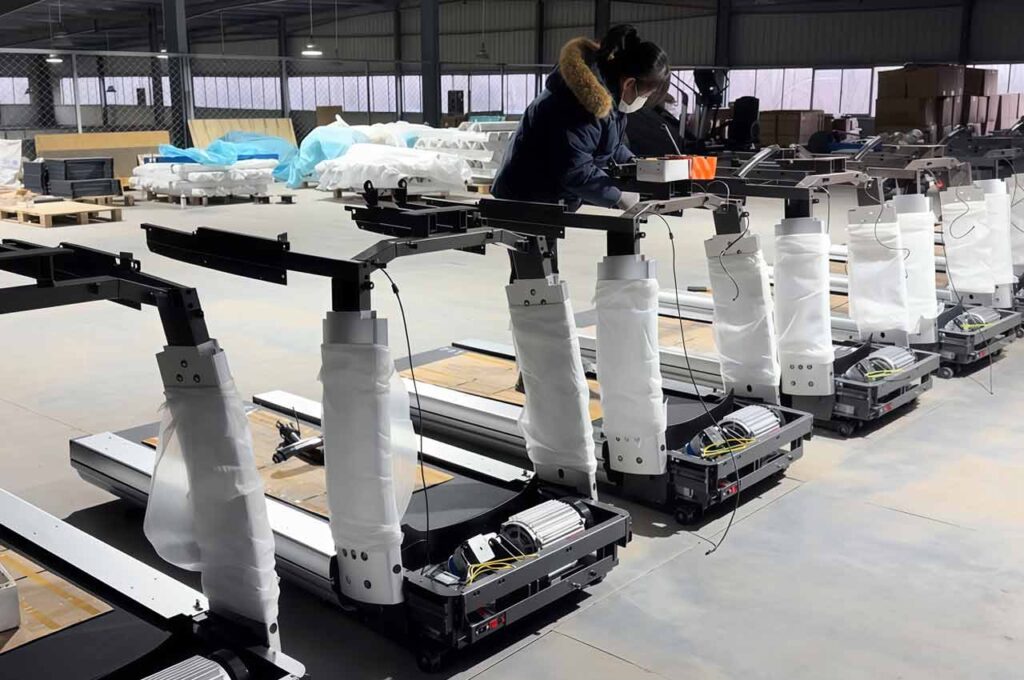
Corexo focuses on commercial fitness equipment manufacturing and project solutions. Its equipment is designed for high-frequency commercial use, with attention to stability, durability, low-noise operation, easy maintenance, and custom configuration.
Corexo serves multiple fitness scenarios, including commercial gyms, hotels, apartments, offices, and training centers. Its product system includes strength training machines, aerobic training equipment, free power equipment, and functional training stand systems.
For buyers who need a full project solution, Corexo can help match equipment to facility type, user needs, training zones, and long-term operation goals. Whether the project is a large gym, a compact hotel fitness room, a residential fitness space, or a professional training center, Corexo provides equipment options that support both performance and daily management.
To explore product options, visit the Corexo fitness equipment products page. For project configuration, customization, or bulk procurement support, contact Corexo through the contact us page.
Conclusion
Choosing a commercial fitness equipment supplier should never be based only on product photos or a simple equipment list. The right supplier should understand commercial use, manufacturing consistency, layout planning, customization, quality control, spare parts, and long-term after-sales support.
For project buyers, the best supplier is not just the one that can provide machines. It is the one that can support a complete fitness environment from planning to long-term operation.
A strong commercial fitness equipment supplier should help you select the right product categories, match equipment to the application scenario, maintain consistent quality, support customization, and reduce operational risk after installation.
Corexo is built around commercial fitness equipment manufacturing and full-scenario project support. For gyms, hotels, apartments, offices, training centers, and distributors, Corexo provides durable, stable, and customizable equipment solutions designed for long-term commercial value.
FAQ
What is a commercial fitness equipment supplier?
A commercial fitness equipment supplier provides fitness machines and project solutions for commercial-use environments such as gyms, hotels, apartments, offices, training centers, and fitness studios.
How do I choose the best commercial fitness equipment supplier?
Choose a supplier based on manufacturing capability, product range, commercial durability, quality control, customization support, layout assistance, spare parts availability, and after-sales service.
What equipment should a commercial gym supplier provide?
A complete supplier should provide strength training equipment, cardio equipment, free power equipment, benches, racks, functional training systems, and multi-station machines.
Why is manufacturing capability important?
Manufacturing capability affects equipment stability, durability, welding quality, coating performance, moving part reliability, and batch consistency across large commercial orders.
Should I choose a supplier that offers customization?
Yes. Customization helps match equipment appearance, configuration, and function to the project environment, especially for hotels, apartments, gym chains, distributors, and branded fitness spaces.
What is the difference between commercial and residential fitness equipment?
Commercial equipment is built for high-frequency use, stronger structure, better durability, easier maintenance, and longer operation in shared fitness environments. Residential equipment is usually designed for lighter personal use.
Can one supplier provide equipment for different facility types?
Yes, if the supplier has a complete product system and application experience. Corexo provides equipment solutions for commercial gyms, hotel gyms, apartment fitness rooms, office gyms, and training centers.
Why is after-sales support important?
After-sales support helps with installation guidance, maintenance advice, spare parts replacement, and long-term equipment operation. It reduces downtime and protects the user experience.