A home gym can start with a pair of dumbbells, a bench, or a barbell. But if you want a training space that can support real strength progress, a fitness gear squat rack quickly becomes the center of the room.
It is not just a frame for squats. A well-designed squat rack can support barbell squats, bench press, overhead press, rack pulls, pull-ups, resistance band work, and many accessory exercises. For many home gym owners, it is the piece of equipment that turns a spare room, garage, basement, or training corner into a serious strength training area.
The challenge is that many buyers choose a squat rack by looking only at size, appearance, or basic product photos. That often leads to problems later: the rack feels unstable, the ceiling is too low for pull-ups, the spotter arms are not compatible, the rack takes up more space than expected, or the frame is not strong enough for long-term training.
As a manufacturer, we look at a squat rack differently. The right rack is not only about how it looks after assembly. It is about steel structure, frame geometry, hole spacing, surface treatment, load capacity, safety accessories, packaging, and whether the rack can match the buyer’s actual training space.
This guide explains how to choose the right fitness gear squat rack for a home gym from a practical, manufacturer-level perspective.
Table of Contents
Start With the Real Purpose of Your Squat Rack
Before comparing models, start with one question:
What do you want the rack to do every week?
Some buyers only need a simple squat station for basic barbell training. Others want a full strength training rack that can support squats, bench press, pull-ups, dips, cable attachments, plate storage, and future upgrades.
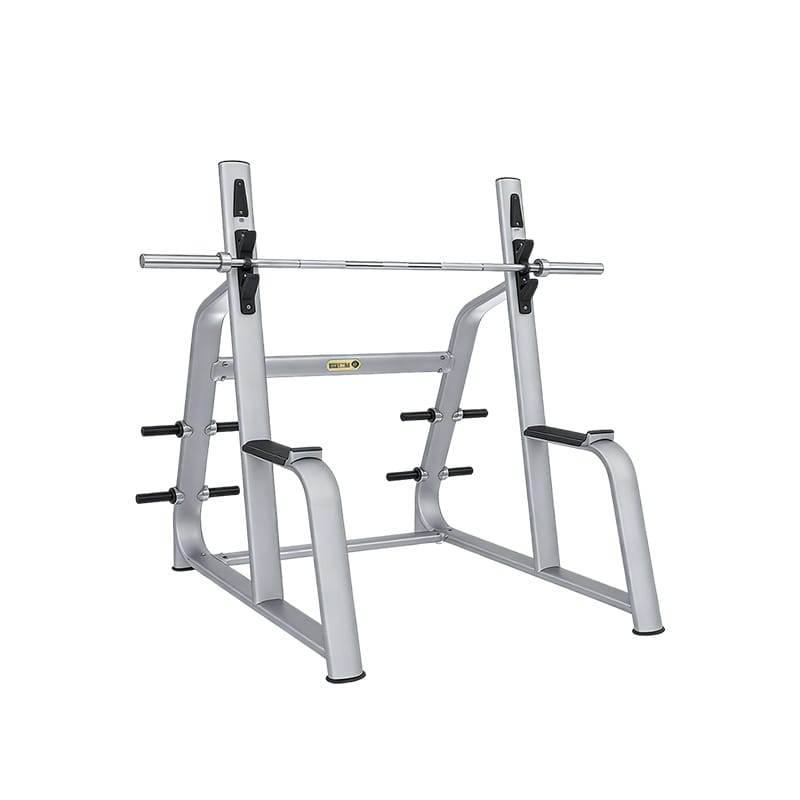
A fitness gear squat rack can be used in many ways, but different training goals require different structures.
For general home fitness, a compact squat rack or half rack may be enough. It can provide safe barbell support without taking over the whole room. For more advanced strength training, a heavier power rack may be better because it offers stronger stability, better safety coverage, and more attachment options. For small garages or multi-use rooms, a folding squat rack or wall mounted squat rack may be the most practical choice.
If you are buying for a commercial gym, studio, training center, or fitness equipment project, the decision becomes more technical. A commercial squat rack must handle repeated use, different user heights, frequent bar adjustments, and long-term wear. In that case, the frame design, coating quality, welding accuracy, and supplier reliability matter as much as the rack style itself.
A good rack should fit your training plan today and still make sense when your training becomes heavier, more frequent, and more varied.
Know the Main Squat Rack Types Before You Choose
A lot of buyers search for “squat rack,” but the product category includes several different designs. Understanding the differences helps you avoid choosing the wrong structure for your space.
Power Rack
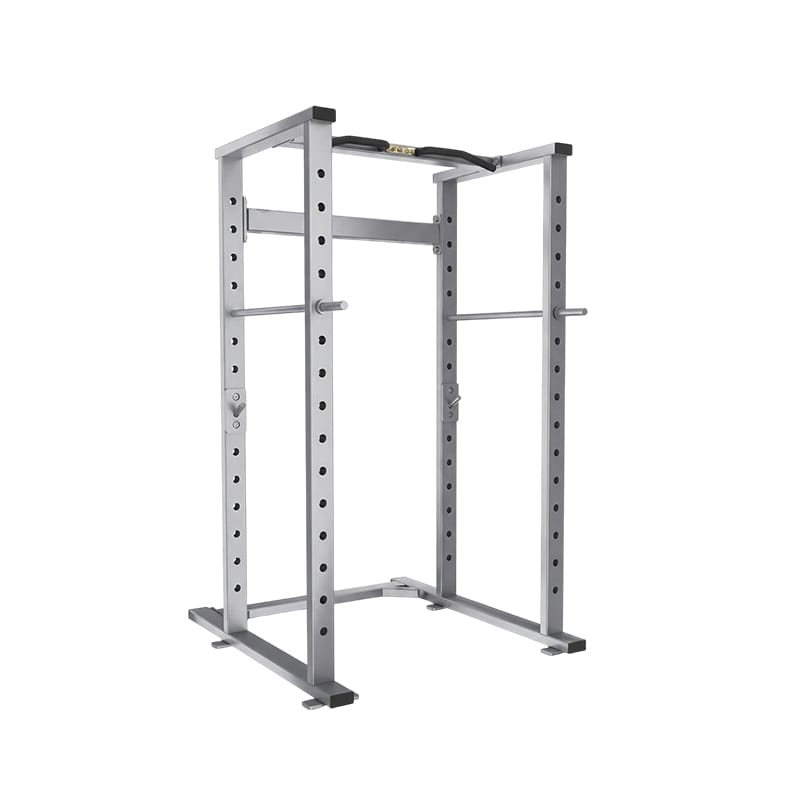
A power rack, sometimes called a power cage, is usually the strongest and most enclosed option. It often has four upright posts, safety bars or safety straps, J-hooks, a pull-up bar, and multiple attachment points.
This type is suitable for serious home gym users, heavy lifters, and buyers who want a long-term strength training rack. A power rack usually takes more floor space, but it also gives better training safety and upgrade potential.
Choose a power rack if you want:
- Better stability for heavy lifting
- More safety options for training alone
- More attachment compatibility
- A stronger frame for long-term use
- A rack that can support multiple training movements
For a manufacturer, a high-quality power rack depends on accurate hole spacing, strong upright tubes, reinforced crossmembers, and clean welding. These details affect how stable the rack feels during real use.
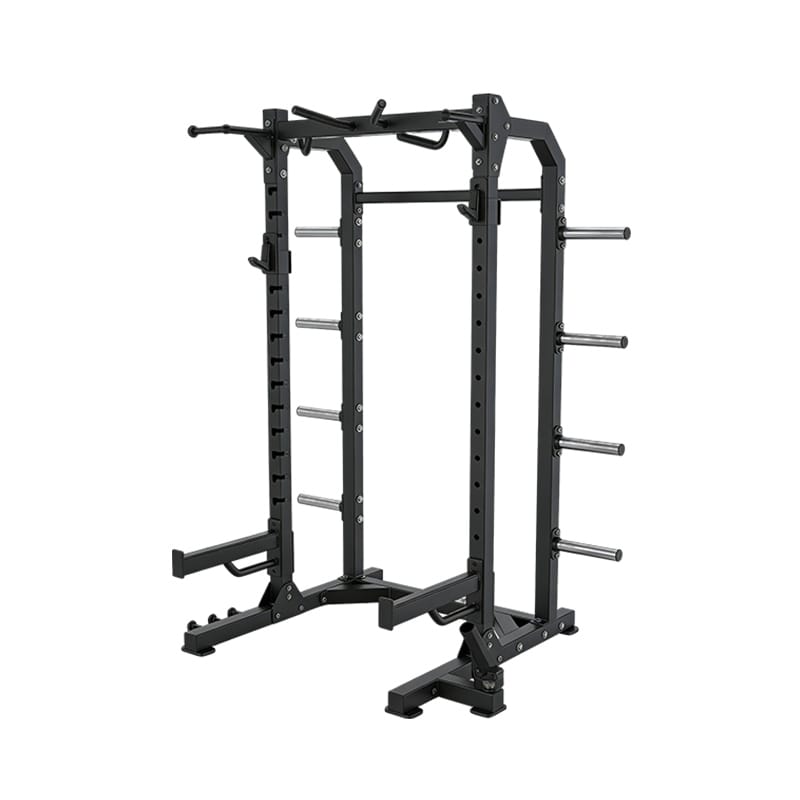
Half Rack
A half rack is more open than a full power rack. It usually has two main uprights with rear support or plate storage. It takes less space while still offering solid support for squats, bench press, and standing presses.
A half rack is a good option for home gyms where space is limited but the user still wants a stronger structure than a simple squat stand. It is also popular in training studios and commercial fitness rooms because it provides an open training feel.
Choose a half rack if you want:
- A smaller footprint than a power rack
- Easier movement around the rack
- Stable support for common barbell lifts
- A professional look for a compact gym area
The key is stability. A half rack should have a strong base, properly designed support legs, and enough rear weight or structure to reduce movement during training.
Folding Squat Rack
A folding squat rack is designed for tight spaces. It can be folded toward the wall when not in use, making it useful for garage gyms, small workout rooms, and spaces shared with storage or vehicles.
This type is popular because more people are building home gyms in limited spaces. However, a folding rack is not suitable for every wall or every training style. The wall structure, installation method, mounting hardware, and frame alignment all matter.
Choose a folding squat rack if you want:
- A space saving squat rack
- A cleaner garage gym setup
- A rack that can be stored after training
- A wall mounted training solution
Before choosing this type, check whether the wall can support the rack and whether you have enough clearance for the barbell, plates, and body movement.
Squat Stand
A squat stand is usually simpler and more portable. It may have two independent stands or a connected base. It can work well for beginners, light training, or users who need a basic barbell support system.
However, it normally offers less safety coverage and less stability than a power rack or heavy duty squat rack. For heavy lifting or training alone, buyers should be more careful.
Choose a squat stand if you want:
- A simple barbell support solution
- Lower space requirements
- Easy movement or storage
- Basic strength training functions
For long-term use, make sure the stand has a stable base, secure height adjustment, and reliable J-hooks.
Measure the Room Before Measuring the Rack
Many buyers check only the product size. That is a mistake.
A rack may fit into the room, but training may still feel cramped. You also need space for the barbell, plates, bench, body movement, plate loading, and safe walking around the rack.
A standard barbell needs space on both sides. When plates are added, users need extra room to load and unload weight safely. If the rack has a pull-up bar, the ceiling height also becomes important. If the rack has plate storage, rear clearance matters.
Before choosing a fitness gear squat rack, measure:
- Room width
- Room depth
- Ceiling height
- Barbell clearance
- Bench movement area
- Plate loading space
- Door and storage interference
- Floor condition
- Wall structure if choosing a wall mounted rack
For a small home gym, the best rack is not always the smallest one. It is the rack that gives enough training space while still remaining stable and safe.
For a garage gym, also consider the floor slope, wall strength, lighting, temperature, and whether the rack needs to share space with tools, storage, or a vehicle.
Space Planning Table for Home Gym Buyers
| Training Space | Better Rack Choice | What to Check Before Buying |
|---|---|---|
| Small spare room | Compact squat rack or half rack | Ceiling height, barbell clearance, bench position |
| Garage gym | Power rack, folding rack, or half rack | Floor level, wall strength, storage space |
| Basement gym | Low-height power rack or compact rack | Ceiling clearance and pull-up space |
| Apartment training area | Compact squat rack or squat stand | Noise, floor protection, movement space |
| Dedicated home gym room | Power rack or heavy duty squat rack | Future attachments and training upgrades |
| Personal training studio | Half rack or commercial squat rack | User flow, durability, repeated adjustment |
| Commercial gym project | Commercial power rack or custom rack | Steel strength, coating, safety, bulk supply |
This table can help buyers narrow down the right direction before comparing detailed specifications.
Frame Strength Is More Important Than It Looks
A squat rack may look simple, but small structural differences can change the entire user experience.
Frame strength depends on several factors:
- Steel tube size
- Steel wall thickness
- Upright design
- Base width
- Crossmember strength
- Welding quality
- Bolt connection points
- Hole spacing accuracy
- Surface coating
- Overall frame geometry
A heavy duty squat rack is not just heavier. It is designed to control movement, reduce shaking, and support repeated training over time. Stability comes from the full structure, not one single part.
From a manufacturing point of view, the upright posts must be straight, the holes must be accurately placed, and the crossmembers must connect tightly. If the frame is slightly misaligned, attachments may not fit smoothly. If the base is too narrow, the rack may feel less secure. If the coating is weak, the surface may wear faster from bar contact and accessory adjustment.
This is why serious buyers should not judge a rack only by photos. They should check specifications, frame material, safety accessories, and whether the supplier can provide consistent manufacturing quality.
Weight Capacity Should Match Real Training Conditions
Many product pages list weight capacity, but buyers should understand what that number means.
In real training, a squat rack does not only hold a still barbell. It also experiences movement, impact, re-racking force, uneven loading, pull-up force, and accessory pressure. A rack used for light home training and a rack used in a commercial gym face very different conditions.
When checking squat rack weight capacity, consider:
- Your current lifting level
- Your expected future progress
- Whether you train alone
- Whether the rack will be used for bench press
- Whether pull-ups will be performed
- Whether attachments will be added
- Whether multiple users will use the rack
- Whether the rack is for home or commercial use
A home gym user may not need the same structure as a professional training facility. But choosing a rack with better strength and safety margin can make the equipment more useful over the long term.
For commercial buyers, weight capacity should be considered together with durability, coating quality, user frequency, and maintenance needs.
Safety Features Are Not Optional
A squat rack is often used with heavy free weights. Safety should never be treated as a small accessory detail.
The most important safety-related parts include J-hooks, safety arms, safety bars, spotter arms, and frame stability. If the rack is used for bench press or heavy squats, these components become even more important.
J-Hooks
J-hooks hold the barbell at different heights. A good J-hook should be strong, easy to adjust, and shaped to hold the bar securely. Protective lining can help reduce bar wear and noise.
Poorly designed J-hooks can make re-racking awkward, especially when the user is tired after a heavy set.
Safety Arms and Safety Bars
Safety arms or safety bars help protect the user if a lift cannot be completed. This is especially important for home gym users who train alone.
For squats, safety arms can catch the bar if the user fails at the bottom. For bench press, they can reduce risk when no spotter is available. The safety system must match the rack structure and be easy to set at the correct height.
Pull-Up Bar
A squat rack with pull up bar adds more training value. It allows pull-ups, chin-ups, hanging knee raises, and band work. But it also requires enough ceiling height and a stable frame.
If the pull-up bar is too high for the room, it becomes difficult to use. If the rack is too light or narrow, pull-up movement may create shaking.
Stable Base
A stable base affects every exercise. Buyers should check whether the rack needs to be bolted down, whether it has rear plate storage, whether the base is wide enough, and whether the floor surface is suitable.
For heavy training, stability is not a luxury feature. It is part of safe use.
Attachments Can Decide the Long-Term Value of a Rack
A basic rack can support squats. A well-planned rack system can support a full home gym.
That is why attachment compatibility matters. Buyers often start with simple training, then later want more functions. If the rack does not support accessories, they may need to replace it sooner.
Common squat rack attachments include:
- J-hooks
- Safety arms
- Dip handles
- Pull-up bars
- Weight plate holders
- Barbell holders
- Landmine attachments
- Cable pulley systems
- Lat pulldown attachments
- Resistance band pegs
- Storage hooks
For manufacturers and wholesale buyers, attachment compatibility is also a business advantage. A complete rack system can serve different customer groups, from beginner home gym users to advanced strength training buyers.
When checking attachments, pay attention to upright size, hole diameter, hole spacing, and locking method. A rack with poor compatibility can limit future upgrades.
Home Gym Squat Rack vs Commercial Squat Rack
A home gym squat rack and a commercial squat rack may look similar, but they are built for different use conditions.
A home gym rack usually serves one or two users. It may be used several times per week. The buyer may care more about space saving, easy setup, quiet use, and multifunctional training.
A commercial squat rack may be used by many people every day. It needs stronger durability, smoother adjustment, better surface protection, stronger safety components, and easier maintenance.
| Feature | Home Gym Squat Rack | Commercial Squat Rack |
|---|---|---|
| Main focus | Space, safety, function | Durability, stability, high-frequency use |
| User type | Individual or family use | Gym members, athletes, training clients |
| Rack type | Compact rack, folding rack, half rack, power rack | Heavy duty rack, full rack, multi-station system |
| Key concern | Room size and training versatility | Long-term wear and user safety |
| Accessories | Pull-up bar, safety arms, plate storage | Full attachment system and replacement parts |
| Supplier need | Clear specs and easy installation | Stable production, quality control, customization |
For commercial buyers, choosing the right squat rack supplier is as important as choosing the rack itself. A reliable manufacturer should provide consistent production, accurate specifications, export-ready packaging, and customization support.
What Manufacturers Look at When Building a Better Squat Rack
Most buyers see the finished rack. Manufacturers focus on the details behind it.
Steel Selection
Steel quality affects strength, stability, and service life. A stronger frame starts with suitable steel tubes and controlled material quality.
Cutting and Hole Accuracy
The holes on the uprights must be consistent. If the spacing is not accurate, J-hooks and safety arms may not lock smoothly. This affects both safety and user experience.
Welding Quality
Welding affects frame strength and appearance. Clean welding, proper penetration, and accurate positioning help create a stronger structure.
Surface Treatment
A squat rack surface must handle repeated contact from barbells, hooks, hands, and accessories. A good coating helps resist wear and keeps the rack looking professional.
Assembly Fit
Even a strong rack can feel poor if the parts do not align well during assembly. Accurate manufacturing makes installation easier and improves frame stability.
Packaging
For export and bulk orders, packaging matters. A rack includes heavy steel parts, bolts, accessories, and coated surfaces. Protective packaging helps reduce damage during shipping and handling.
These details are why a manufacturing-based article can be more useful than a simple product list. Buyers need to understand not only what a rack includes, but why those features matter.
A Practical Buyer Checklist Before Ordering
Before ordering a fitness gear squat rack, buyers should confirm the following points:
| Question | Why It Matters |
|---|---|
| What type of rack fits my space? | Prevents buying a rack that is too large or too limited |
| What is the rack’s footprint? | Helps plan floor space and training movement |
| Is the ceiling high enough? | Important for pull-ups and overhead movement |
| What is the weight capacity? | Helps match the rack with training intensity |
| Are safety arms included or optional? | Important for users training alone |
| What steel structure is used? | Affects durability and stability |
| Can attachments be added later? | Improves long-term value |
| Is the rack suitable for home or commercial use? | Prevents mismatched product selection |
| Can the rack be customized? | Useful for brands, gyms, and project buyers |
| Does the supplier support bulk orders? | Important for distributors and commercial buyers |
This checklist can also be used by gym owners, fitness brands, and equipment distributors when comparing rack suppliers.
Mistakes Buyers Often Make
Choosing Only by Appearance
A rack can look strong in photos but feel unstable in real use. Buyers should check frame structure, base design, steel specifications, and safety accessories.
Ignoring Training Space
Many people measure the rack but forget the barbell. A full training setup needs more space than the frame itself.
Buying Too Small for Future Progress
A basic rack may work at the beginning, but as training becomes heavier, users may need better safety arms, more stability, and more attachments.
Forgetting About Bench Press
If the rack will be used with a bench, the buyer should check J-hook height, safety arm position, bench clearance, and walk-in space.
Not Checking Supplier Capability
For wholesale buyers and commercial projects, supplier capability matters. Product quality, packaging, customization, and production consistency directly affect the final customer experience.
How to Choose a Reliable Squat Rack Manufacturer
If you are buying one rack for personal use, product specifications may be enough. But if you are sourcing racks for a gym project, fitness brand, retail business, or equipment distribution, the manufacturer should be evaluated more carefully.
A reliable squat rack manufacturer should be able to provide:
- Clear product specifications
- Stable steel structure
- Custom height, color, logo, and attachment options
- Consistent hole spacing and frame accuracy
- Strong welding and surface treatment
- Export-ready packaging
- OEM and bulk order support
- Practical installation guidance
- Responsive communication before production
A good supplier should not simply offer a rack. They should help buyers choose the right structure for the market, training environment, and user group.
For example, a compact home gym squat rack may need a smaller footprint and simple accessories. A commercial gym rack may need stronger uprights, better coating, and more durable safety parts. A fitness brand may need custom logo options, packaging design, and product line consistency.
This is where manufacturer experience becomes valuable.
Best Rack Features for Different Buyer Types
| Buyer Type | Recommended Rack Direction | Features to Prioritize |
|---|---|---|
| Beginner home gym user | Adjustable squat rack or compact rack | Easy adjustment, safety arms, stable base |
| Garage gym user | Folding rack, wall mounted rack, or power rack | Space saving design, wall strength, barbell clearance |
| Heavy strength training user | Heavy duty squat rack or power rack | High stability, strong steel frame, safety system |
| Personal training studio | Half rack or commercial rack | Easy adjustment, clean design, durable coating |
| Commercial gym owner | Commercial squat rack | Strong frame, repeated-use durability, attachment options |
| Fitness equipment distributor | OEM squat rack system | Custom logo, packaging, bulk supply, product consistency |
This approach helps buyers match rack design to real use instead of choosing based on a single feature.
Why the Right Squat Rack Can Improve the Whole Home Gym
A good squat rack does more than support one exercise. It changes how the whole training space works.
With the right rack, users can organize a strength training routine around compound movements. Squats, presses, pull-ups, and accessory lifts can all happen in one area. This makes the home gym more efficient and easier to use.
For many people, consistency is the hardest part of training. When the rack is stable, convenient, and properly fitted to the room, training becomes easier to maintain. The equipment no longer feels like an obstacle. It becomes part of the routine.
That is why the best rack is not always the biggest rack. It is the one that fits the space, supports the training goal, protects the user, and can grow with future needs.
Conclusion
Choosing the right fitness gear squat rack is not only about finding a rack that fits your room. It is about choosing a safe, stable, and durable training structure that can support long-term strength training.
For home gym users, the most important factors are space, ceiling height, safety arms, frame stability, pull-up bar design, and attachment compatibility. For commercial gym owners, the focus shifts toward durability, coating quality, high-frequency use, replacement parts, and supplier reliability.
A good squat rack should match the user’s training goals today while still supporting future progress. It should feel stable under the bar, fit naturally into the room, and allow safe adjustment for different exercises.
As a fitness equipment manufacturer, we understand that every buyer has different space limitations, training needs, and market requirements. Whether you need a compact home gym squat rack, a heavy duty commercial squat rack, or a custom OEM squat rack solution, choosing the right manufacturing partner can help you build a stronger, safer, and more practical training space.
FAQ
What is a fitness gear squat rack used for?
A fitness gear squat rack is mainly used for barbell squats, but it can also support bench press, overhead press, pull-ups, rack pulls, and other strength training exercises when equipped with the right accessories.
Is a squat rack suitable for a home gym?
Yes. A squat rack is one of the most useful pieces of equipment for a home gym. Buyers should choose the right size, frame structure, safety arms, and pull-up bar height based on their available space.
What is the difference between a squat rack and a power rack?
A squat rack is often more open and compact, while a power rack usually has a larger cage-like structure with stronger safety coverage and more attachment options. The better choice depends on space, training intensity, and safety needs.
How much space do I need for a squat rack?
You need enough space for the rack, barbell length, plate loading, bench movement, and safe walking clearance. Always measure the full training area, not just the rack footprint.
Should I choose a folding squat rack for a small gym?
A folding squat rack can be a good choice for small spaces or garage gyms, but the wall must be strong enough and the installation must be correct. It is best for buyers who need to save space after training.
What weight capacity should a squat rack have?
The right weight capacity depends on the user’s training level, future progress, and whether the rack is for home or commercial use. Heavy lifters and commercial gyms should choose a stronger rack with a stable frame and reliable safety accessories.
Are safety arms necessary for a squat rack?
Safety arms are highly recommended, especially for users who train alone. They help reduce risk during squats and bench press when a lift cannot be completed.
Can squat racks be customized by a manufacturer?
Yes. A squat rack manufacturer can often customize size, color, logo, attachments, packaging, and structure for home gym, commercial gym, wholesale, or OEM fitness equipment projects.